


Comprehensive Eye Exam in Vietnam — What to Expect and Why It Matters
Comprehensive Eye Exam in Vietnam — What to Expect and Why It Matters
You walk into an optical shop in a Vietnamese highland town, expecting a basic vision check — a letter chart, a pair of trial frames, and a quick prescription. Instead, you’re guided through a 12-step professional examination using equipment worth over 1 billion VND. The optician explains every finding in English, answers your questions about astigmatism you didn’t know you had, and hands you a detailed prescription card before you even look at frames.
This is what a comprehensive eye exam in Vietnam actually looks like at the right shop — and it surprises nearly every foreign visitor who experiences it for the first time.
Whether you’re a tourist passing through, an expat living in the country, or a traveler who’s been putting off an eye check for months, Vietnam offers professional-grade optometry at a fraction of what you’d pay back home. But not all eye exams are created equal. The difference between a 2-minute autorefractor scan and a thorough 12-step examination can mean the difference between glasses that give you headaches and glasses that genuinely transform how you see.
This guide walks you through exactly what happens during a comprehensive eye exam in Vietnam, why each step matters, and where to find a shop that takes your vision as seriously as any clinic in your home country.
Why Should You Get a Comprehensive Eye Exam in Vietnam?
A comprehensive eye exam in Vietnam combines professional-grade equipment, experienced opticians, and significantly lower costs than Western countries — making it an ideal opportunity for anyone who needs accurate vision correction. Most visitors discover that Vietnamese optical shops deliver examination quality that rivals or exceeds what they’re used to at home.
Three practical reasons bring foreign visitors to Vietnamese optical shops for a full exam.
The first is cost. A comprehensive eye exam in Vietnam typically costs nothing when bundled with a lens purchase — the examination is included as part of the service. In the United States, a standalone eye exam runs $100 to $250 USD. In Australia, even with Medicare coverage, out-of-pocket costs add up quickly. In Vietnam, you get the same thoroughness for a fraction of the price, or entirely free when you order glasses.
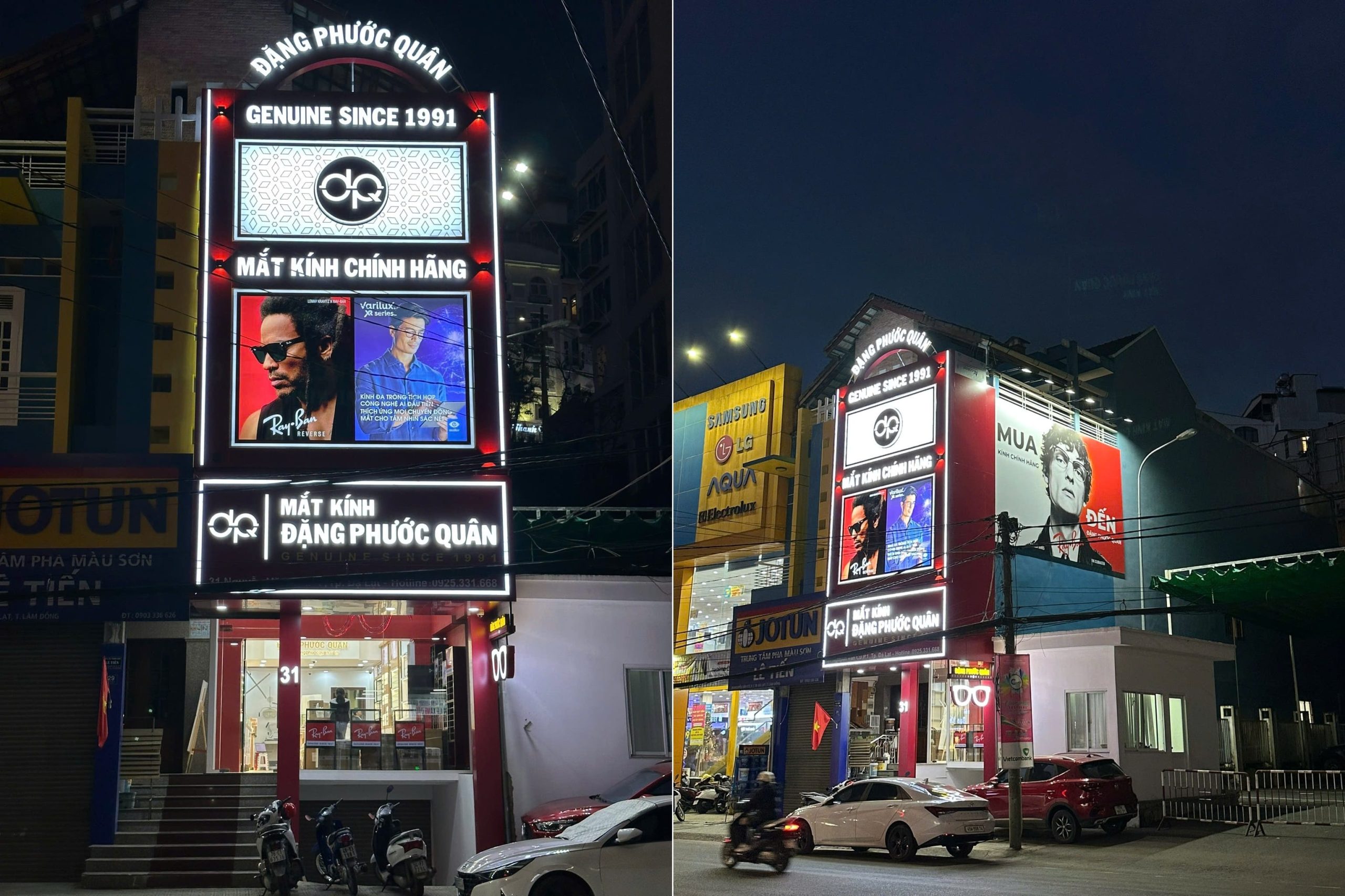
The second is accessibility. You don’t need a referral from a general practitioner, you don’t need an appointment at most shops, and you don’t need to navigate a hospital system in a foreign language. At established shops like Đặng Phước Quân Eyewear at 31 Nguyễn Văn Cừ, Da Lat, you simply walk in during business hours. The staff speaks English, and the entire process — from examination to frame selection to lens crafting — happens under one roof.
The third is equipment quality. Premium Vietnamese optical shops invest heavily in technology. At Đặng Phước Quân, the autorefractor machine alone is valued at over 1 billion VND (approximately $40,000 USD), and the precision lens edging machine costs 790 million VND ($32,000 USD). This is diagnostic equipment comparable to what you’d find in certified optometry clinics in Bangkok, Singapore, or Sydney — installed in a family-run shop in Vietnam’s central highlands.
What Does a Professional 12-Step Eye Examination Include?
The 12-step comprehensive eye exam in Vietnam at Đặng Phước Quân goes far beyond a basic refraction test. Each step serves a specific diagnostic purpose, and together they produce a prescription that accounts for factors most quick exams miss entirely. Here’s what happens at each stage and why it matters for the accuracy of your final glasses.
Step 1 — Patient History and Visual Complaint Assessment
The optician begins by asking about your visual needs, current symptoms, and medical history relevant to your eyes. Do you work long hours on screens? Do you drive at night? Have you noticed recent changes in your vision? If you wear glasses currently, they’ll examine your existing pair using a lensometer to read the exact prescription of your current lenses. This baseline information shapes every decision that follows.
Step 2 — Preliminary Visual Acuity Test
You read a standardized eye chart — first without correction, then with your current glasses if you have them. This establishes your baseline visual acuity (how well you see at a specific distance) and reveals how effectively your current prescription is working. The optician records results for each eye independently.
Step 3 — Autorefraction Measurement
The autorefractor — the machine where you look at a target image while the device takes readings — measures your eyes’ refractive error automatically. At Đặng Phước Quân, this premium autorefractor (valued over 1 billion VND) captures multiple readings per eye in seconds, providing an objective starting point for the manual refinement that follows. This step eliminates guesswork and gives the optician precise data to work from.
Step 4 — Retinoscopy (Objective Refraction)
The optician uses a retinoscope to observe how light reflects off your retina while placing different lenses in front of your eye. This objective technique confirms and supplements the autorefractor readings. It’s particularly valuable for detecting irregularities the machine might miss and is essential for patients who have difficulty responding to subjective tests.
Step 5 — Subjective Refraction with Trial Lenses
This is the familiar “which is better, one or two?” phase. The optician places trial lenses of varying powers in a phoropter or trial frame while you report which option provides clearer vision. Starting from the autorefractor and retinoscopy results, they systematically narrow down the exact sphere (SPH) power your eyes need. This subjective refinement is critical because your brain’s visual processing adds a layer that machines alone cannot measure.
Step 6 — Astigmatism Axis and Power Refinement
If the earlier steps detect astigmatism, the optician now fine-tunes the cylinder (CYL) power and axis angle. Small errors in astigmatism correction — even 5 degrees off on the axis — can cause blurred vision, eyestrain, and headaches. This step uses cross-cylinder techniques to pinpoint the exact correction your cornea needs.
Step 7 — Binocular Balance Test
Your two eyes need to work together, not just independently. The binocular balance test ensures that the prescription for each eye creates equal visual effort, preventing one eye from dominating or straining. This step catches imbalances that a monocular-only exam would miss entirely — and it’s one of the steps that separates a comprehensive eye exam in Vietnam from a basic check.
Step 8 — Dominant Eye Determination
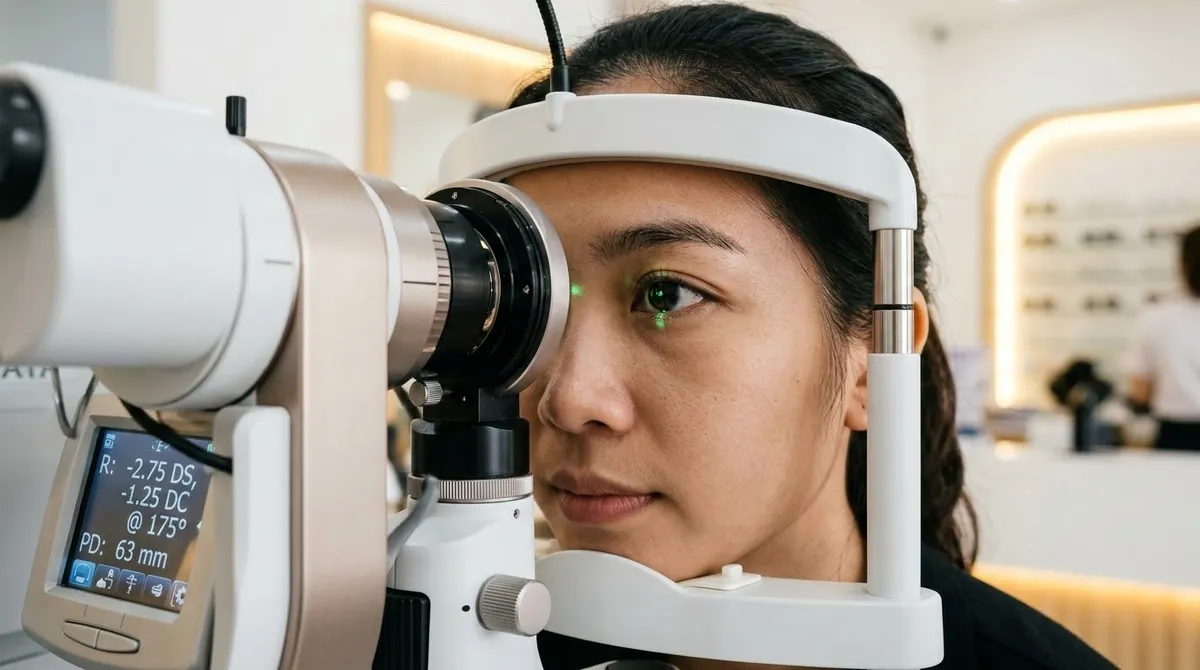
Everyone has a dominant eye, similar to being right-handed or left-handed. The optician identifies your dominant eye because it affects prescription decisions — particularly for progressive (multifocal) lenses and for patients considering monovision correction. Knowing your dominant eye ensures the final prescription optimizes your natural visual preference.
Step 9 — Near Vision and Reading Assessment
For patients over 40 or anyone reporting difficulty with close-up tasks, the optician tests near vision using reading cards at standardized distances. This determines whether you need ADD power (the additional correction for close-up vision built into progressive or bifocal lenses). Even younger patients benefit from this step, as it reveals early signs of presbyopia or accommodative stress from excessive screen time.
Step 10 — Pupillary Distance Measurement
PD — the distance between the centers of your pupils — determines where the optical center of each lens must be positioned. At Đặng Phước Quân, PD is measured using both manual methods and digital instruments for maximum accuracy. An error of just 2mm in PD alignment can cause eyestrain, double vision, and persistent headaches — especially with higher prescriptions or progressive lenses.
Step 11 — Lens Simulation and Comparison
Before you commit to a prescription, the optician lets you experience the difference between lens options in real-world conditions. You’ll look through your proposed prescription at various distances — reading your phone, viewing objects across the room, checking screen clarity. This simulation step ensures you’re comfortable with the correction before any lenses are cut. It’s your opportunity to flag any discomfort or preference before the prescription is finalized.
Step 12 — Final Prescription and Consultation
The optician compiles all findings into your final prescription, explains each value (SPH, CYL, AXIS, ADD, PD), and discusses lens recommendations based on your lifestyle and visual needs. You receive a printed prescription card to keep. If you brought a prescription from your home country, they’ll cross-reference it with their findings and explain any differences. This consultation phase ensures you understand exactly what you’re getting and why.
This complete 12-step process takes approximately 20 to 30 minutes — a small investment that determines whether your glasses will serve you well for the next one to two years.
What Equipment Makes a Comprehensive Eye Exam in Vietnam Reliable?
The quality of any comprehensive eye exam in Vietnam depends directly on the equipment used. Premium equipment produces precise measurements; basic equipment produces approximations that lead to prescription errors and uncomfortable glasses. Understanding equipment quality helps you evaluate any optical shop before trusting them with your vision.
At Đặng Phước Quân Eyewear, the investment in professional-grade equipment reflects a commitment to accuracy that matches international optometry standards. The premium autorefractor, valued at over 1 billion VND, captures highly detailed refractive data including corneal curvature measurements that inform astigmatism correction. The precision lens edging machine (790 million VND) cuts lenses to exact specifications with tolerances measured in hundredths of a millimeter — ensuring every lens matches your prescription precisely.
Beyond these flagship instruments, a properly equipped shop maintains retinoscopes, phoropters or trial lens sets, lensometers for reading existing prescriptions, PD rulers and digital PD measurement tools, near vision test cards, and cross-cylinder instruments for astigmatism refinement.
As an authorized dealer for Essilor, Zeiss, Chemi, and Kodak lenses, Đặng Phước Quân ensures that the lenses crafted from your comprehensive eye exam in Vietnam are manufactured to the same standards as any certified optical lab worldwide. When you pair accurate measurements with authentic, premium lenses, the result is prescription glasses that perform identically to what you’d receive at a top-tier optometrist in any Western capital.
How Does the Exam Experience Differ for Foreign Visitors?
Foreign visitors getting a comprehensive eye exam in Vietnam often worry about the language barrier, unfamiliar processes, or whether they’ll receive the same attention as local customers. At shops experienced with international visitors, these concerns evaporate within the first few minutes.
At Đặng Phước Quân Eyewear, English-speaking staff guide foreign visitors through every step of the 12-step examination. Instructions during the exam — “look at the target,” “which is clearer, option one or two,” “read the smallest line you can see” — are delivered in clear English. There is no appointment needed; walk-in service is the norm, and international visitors receive the same thorough examination as local customers.
If you carry a prescription from your home country, the optician reads it immediately — prescription notation (SPH, CYL, AXIS, ADD, PD) follows international standards regardless of which country issued it. Numbers and optical terminology are universal, so there’s zero translation ambiguity for the technical aspects of your exam.
The overall eyewear fitting experience is designed to feel familiar and professional. Frame selection, lens consultation, and fitting adjustments follow the same workflow you’d experience at any quality optical shop globally. The only difference most visitors notice is the price — and the pleasant surprise of getting more thorough service for significantly less money.
For visitors exploring Da Lat’s vibrant optical scene, Đặng Phước Quân also ranks as the best optician in the area, with over 30 years of continuous operation and thousands of satisfied international customers.
How Much Does a Comprehensive Eye Exam in Vietnam Cost?
A comprehensive eye exam in Vietnam at Đặng Phước Quân Eyewear is complimentary when you purchase lenses — the entire 12-step examination is included at no additional charge. This stands in sharp contrast to Western pricing, where a standalone comprehensive exam costs $100 to $250 USD in the United States, £20 to £50 in the UK, or $50 to $80 AUD in Australia.
Even if you want only the exam without purchasing glasses, the cost at a Vietnamese optical shop is minimal — typically 200,000 to 500,000 VND ($8 to $20 USD). For the level of equipment and thoroughness involved, this represents extraordinary value.
Complete glasses packages — exam, frame, lenses, fitting, and aftercare — range from 500,000 VND to 8,000,000 VND ($20 to $320 USD) depending on your frame brand and lens specifications. Premium combinations with Ray-Ban or Oakley frames paired with Essilor or Zeiss progressive lenses sit at the higher end, while quality domestic frames with standard lenses deliver excellent value at the lower end.
The pricing at reputable shops like Đặng Phước Quân is transparent and identical for locals and foreign visitors. There is no tourist surcharge. Every product carries standardized pricing, and the staff provides clear explanations of what each price tier includes before you commit.
When Should You Schedule a Comprehensive Eye Exam?
A comprehensive eye exam in Vietnam should happen if you’re experiencing any vision changes, haven’t had an exam in over 12 months, or have specific visual complaints like headaches, eyestrain, or difficulty reading. You don’t need to wait for a problem to become severe — early detection through regular exams prevents small issues from becoming expensive corrections later.
Specific situations where an exam is particularly important include extended travel (months of adjusting to different light conditions and screen habits can shift your visual needs), age-related changes (presbyopia typically begins around age 40 and progresses gradually), and occupational demands (screen-heavy work, driving, or outdoor activities each place different demands on your eyes).
For children, annual exams are critical. Myopia progression in children aged 7 to 15 can be rapid, and catching changes early allows for interventions like myopia control lenses (Essilor Stellest or Myopilux) that slow progression.
At Đặng Phước Quân, no appointment is needed for a comprehensive eye exam in Vietnam. Walk in during business hours, and the optician will conduct the full 12-step examination. If you’re a tourist with limited time in Da Lat, arriving in the morning allows the complete exam plus same-day lens crafting for most standard prescriptions — you can explore the city and return to collect your finished glasses the same afternoon.
The optical service at Đặng Phước Quân covers everything from the initial examination through frame selection, lens crafting, fitting adjustments, and follow-up care — all under one roof, with English-speaking support throughout.
Frequently Asked Questions About Eye Exams in Vietnam
Do I need an appointment for a comprehensive eye exam in Vietnam?
No. At most established optical shops, including Đặng Phước Quân Eyewear at 31 Nguyễn Văn Cừ, Da Lat, walk-in service is standard. Simply arrive during business hours, and the optician will begin your examination. Mornings tend to have shorter wait times, especially during tourist season.
Can I bring my existing prescription from another country?
Absolutely. International prescription formats are standardized. The optician will read your existing prescription, conduct their own independent examination, and cross-reference both sets of results. Minor differences between prescriptions are normal due to equipment variation and testing conditions — your optician will explain any discrepancies clearly.
Is a comprehensive eye exam in Vietnam safe and hygienic?
Professional optical shops maintain the same hygiene standards you’d expect anywhere. Equipment is sanitized between patients, trial frames and lenses are cleaned, and the examination environment is well-maintained. At Đặng Phước Quân, with over 30 years of operation, maintaining clinical standards is foundational to their reputation.
What if the exam reveals I need specialty lenses like progressives?
The comprehensive eye exam in Vietnam at Đặng Phước Quân includes assessment for progressive (multifocal) lenses, which are recommended if you have presbyopia (ADD power on your prescription). As an authorized Essilor and Zeiss dealer, the shop offers the full range of progressive lens designs — from entry-level to premium. Progressive lenses typically require 1 to 3 business days for crafting, depending on stock and specifications.
Can tourists get an eye exam even if they don’t plan to buy glasses?
Yes. While the exam is complimentary with a lens purchase, you can also request a standalone examination for a small fee. You’ll receive a printed prescription card that’s valid at any eyeglasses shop worldwide. Many travelers get examined in Vietnam to take advantage of the professional equipment and low cost, then decide whether to order glasses on the spot or use the prescription later.
—
Your vision affects everything about your travel experience — from reading street signs and menus to navigating motorbike-filled roads and capturing photographs of misty highland landscapes. A comprehensive eye exam in Vietnam gives you the clarity and confidence to enjoy every moment, backed by professional-grade equipment and experienced opticians who take your vision seriously.
Đặng Phước Quân Eyewear at 31 Nguyễn Văn Cừ, Da Lat has delivered thorough eye examinations for over 30 years, serving both local customers and international visitors with the same meticulous 12-step process. With premium equipment, authorized partnerships with Essilor, Zeiss, Chemi, and Kodak, and English-speaking staff ready to guide you through every step — your comprehensive eye exam in Vietnam starts with walking through the door. No appointment needed.
Liên Hệ Ngay Để Trải Nghiệm Không Gian Mua Sắm Kính Mát Tuyệt Vời Nhất Đà Lạt
Mắt Kính Đặng Phước Quân — Nơi bạn tìm thấy sự khác biệt trong từng sản phẩm kính mắt.
- Địa chỉ: 31 Nguyễn Văn Cừ, Phường Xuân Hương — Đà Lạt
- Hotline: 0925 331 668
- Email: [email protected]
- Fanpage: Mắt Kính Đặng Phước Quân Đà Lạt
- Goolemap: https://maps.app.goo.gl/7KNZr7v82PAKAKb47
Bài viết cùng chủ đề:
-
Zeiss DuraVision — Phân Tích Chi Tiết Các Dòng Lớp Phủ Cao Cấp
-
Dòng Tròng Hoya — Review Chi Tiết Thương Hiệu Nhật Bản
-
So Sánh 3 Thương Hiệu Tròng Kính Hàng Đầu
-
Dòng Tròng Zeiss — Review Chi Tiết Công Nghệ Quang Học Đức
-

Vision Test for Foreigners in Da Lat — What to Expect From a 12-Step Professional Eye Exam
-
Tròng Kính Essilor — Review Chi Tiết Thương Hiệu Số 1 Thế Giới
-
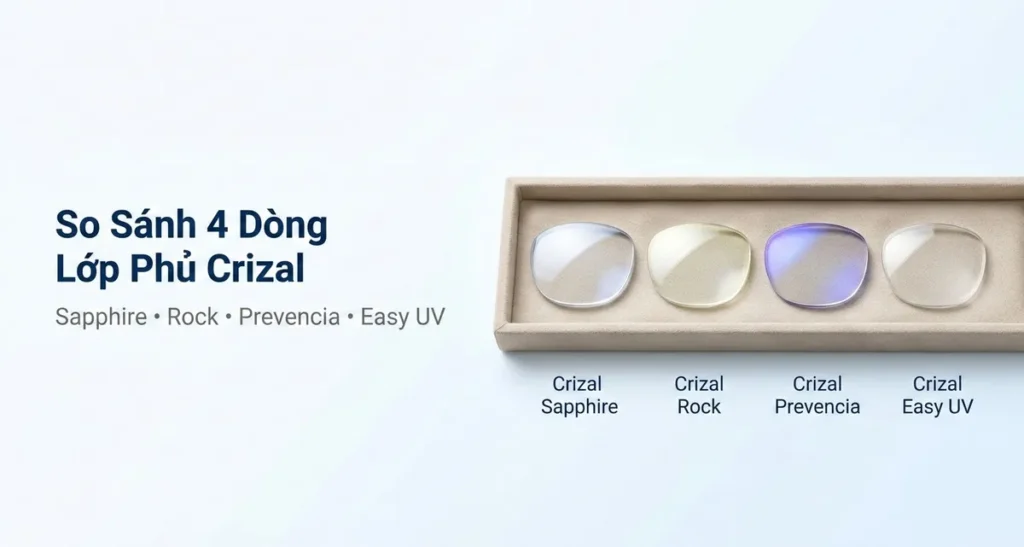
So Sánh Đầy Đủ Các Dòng Lớp Phủ Crizal — Sapphire, Rock, Prevencia, Easy UV
-

Tròng Kính Trivex — Chất Liệu Cao Cấp Ít Người Biết Đến
-
Tròng Có Phủ vs Không Phủ — So Sánh Thực Tế Sau 1 Năm Sử Dụng
-

Tròng Kính Polycarbonate — Lựa Chọn An Toàn Cho Trẻ Em Và Người Chơi Thể Thao
-

Độ Cận Độ Viễn — 4 Điều Khách Hàng Hay Hiểu Sai Khi Đọc Đơn Kính
-

Tròng Kính Nhựa Vs Thủy Tinh — So Sánh Chi Tiết Để Chọn Đúng
-

Chọn Tròng Kính Cận Lần Đầu — 5 Sai Lầm Khiến Bạn Tốn Tiền Mà Đeo Không Thoải Mái
-

Chọn tròng kính theo ngân sách
-

5 bí quyết chọn gọng để tròng kính mỏng hơn
-
So sánh tròng kính chiết suất cao 1.67 vs 1.74

