


English Speaking Eye Doctor in Da Lat — What You Actually Need to Know
English Speaking Eye Doctor in Da Lat — What You Actually Need to Know
You type “english speaking eye doctor da lat” into Google, expecting a straightforward answer. Instead, you find a mix of results — hospital listings, optical shops, travel forums with outdated advice, and not a single clear explanation of what you actually need.
Here is the problem most foreigners run into: the term “eye doctor” covers two very different things. One is an ophthalmologist — a medical doctor who treats eye diseases, performs surgery, and handles emergencies. The other is an optician or optometrist — a professional who tests your vision, determines your prescription, and fits you with the right glasses or contact lenses.
Most foreigners searching for an english speaking eye doctor in Da Lat do not need surgery or treatment for an eye disease. They need a reliable eye exam, a new pair of prescription glasses, or a replacement for frames that broke during travel. This article explains exactly where to go for each situation, so you spend your time in Da Lat wisely instead of sitting in the wrong waiting room.
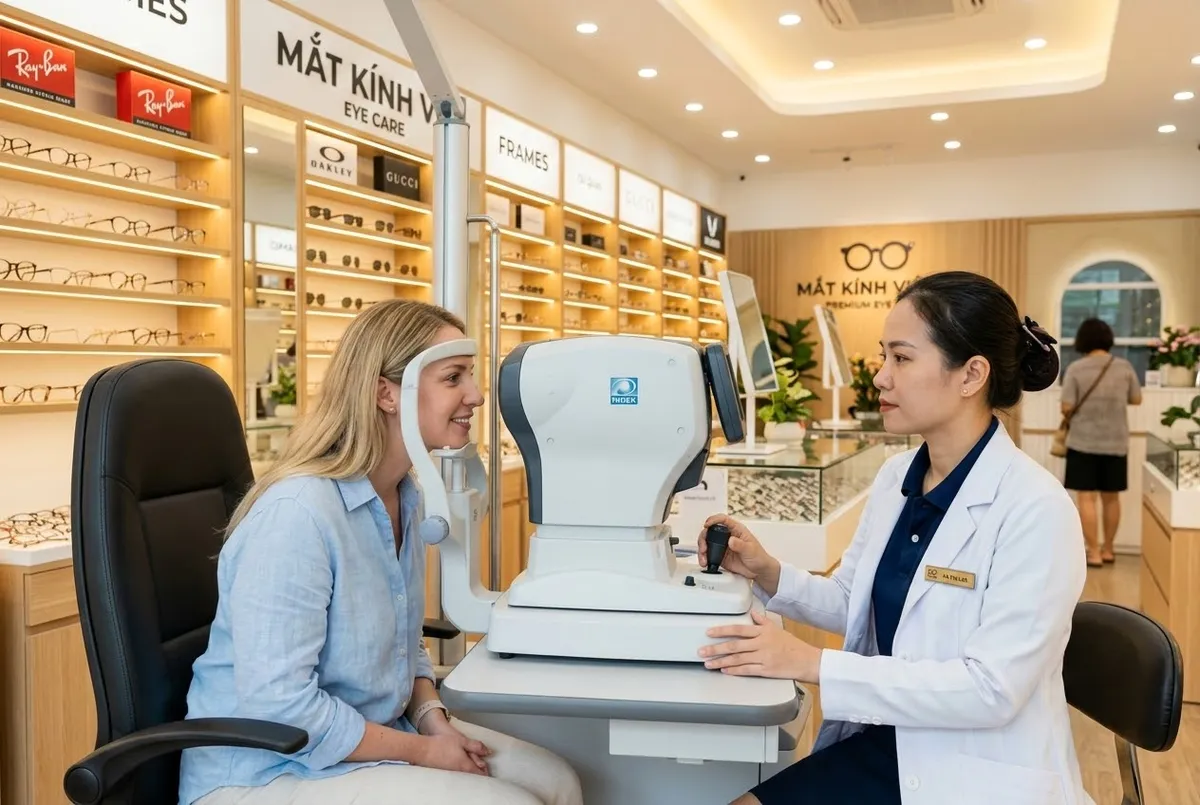
Do You Need an Eye Doctor or an Optician in Da Lat?
Before you start searching, the most important question is what kind of eye care you actually need. The answer determines where you should go and how much time and money you will spend.
An optician (optical shop) handles vision correction. This means comprehensive eye exams to measure your refractive errors — nearsightedness, farsightedness, astigmatism — and fitting you with prescription glasses or contact lenses. This is what roughly 80 percent of foreigners searching for an english speaking eye doctor in Da Lat actually need.
An ophthalmologist (medical eye doctor) handles eye diseases and conditions. This includes glaucoma, cataracts, retinal problems, eye infections, eye injuries, and other medical issues that require diagnosis, medication, or surgery. If you are experiencing sudden vision loss, severe eye pain, flashes of light, or a visible injury, you need an ophthalmologist at a hospital — not an optical shop.
The confusion happens because in many Western countries, optometrists operate independently and can prescribe medication for minor eye conditions. In Vietnam, the system works differently. Optical shops focus purely on refraction and eyewear. Medical eye care happens at hospitals and clinics with licensed ophthalmologists.
Knowing this distinction saves you from two common mistakes: going to a hospital and waiting hours for a simple prescription update, or going to an optical shop when you actually need medical treatment.
What Does “English Speaking Eye Doctor in Da Lat” Actually Mean?
When foreigners search for an english speaking eye doctor in Da Lat, they usually want one of these three things: someone who can communicate clearly in English during an eye exam, a place that provides prescription glasses with English-language service, or a medical eye doctor who speaks English for a health concern.
Da Lat is not Bangkok or Ho Chi Minh City. It is a smaller highland city with a growing but still limited number of English-speaking medical professionals. Finding an ophthalmologist who speaks fluent English in Da Lat is genuinely difficult. Most hospital-based eye doctors communicate primarily in Vietnamese, and you may need a translator.
However, finding an optical shop with English-speaking staff is much easier. Several established optical shops in Da Lat — particularly those accustomed to serving tourists and expats — have staff members who communicate comfortably in English. This is especially true at premium eyeglasses shops in Da Lat that regularly serve international customers.
The key takeaway for anyone searching for an english speaking eye doctor in Da Lat: if you need vision correction and eyewear, you can absolutely find English-speaking service here. If you need medical eye treatment, your English-language options are more limited, and you may want to consider traveling to Ho Chi Minh City for a fully bilingual ophthalmologist.
Where to Find English Speaking Eye Care in Da Lat
Your options for finding an english speaking eye doctor in Da Lat fall into two categories: optical shops for vision correction and eyewear, and hospitals for medical eye conditions.
Optical Shops with English-Speaking Staff
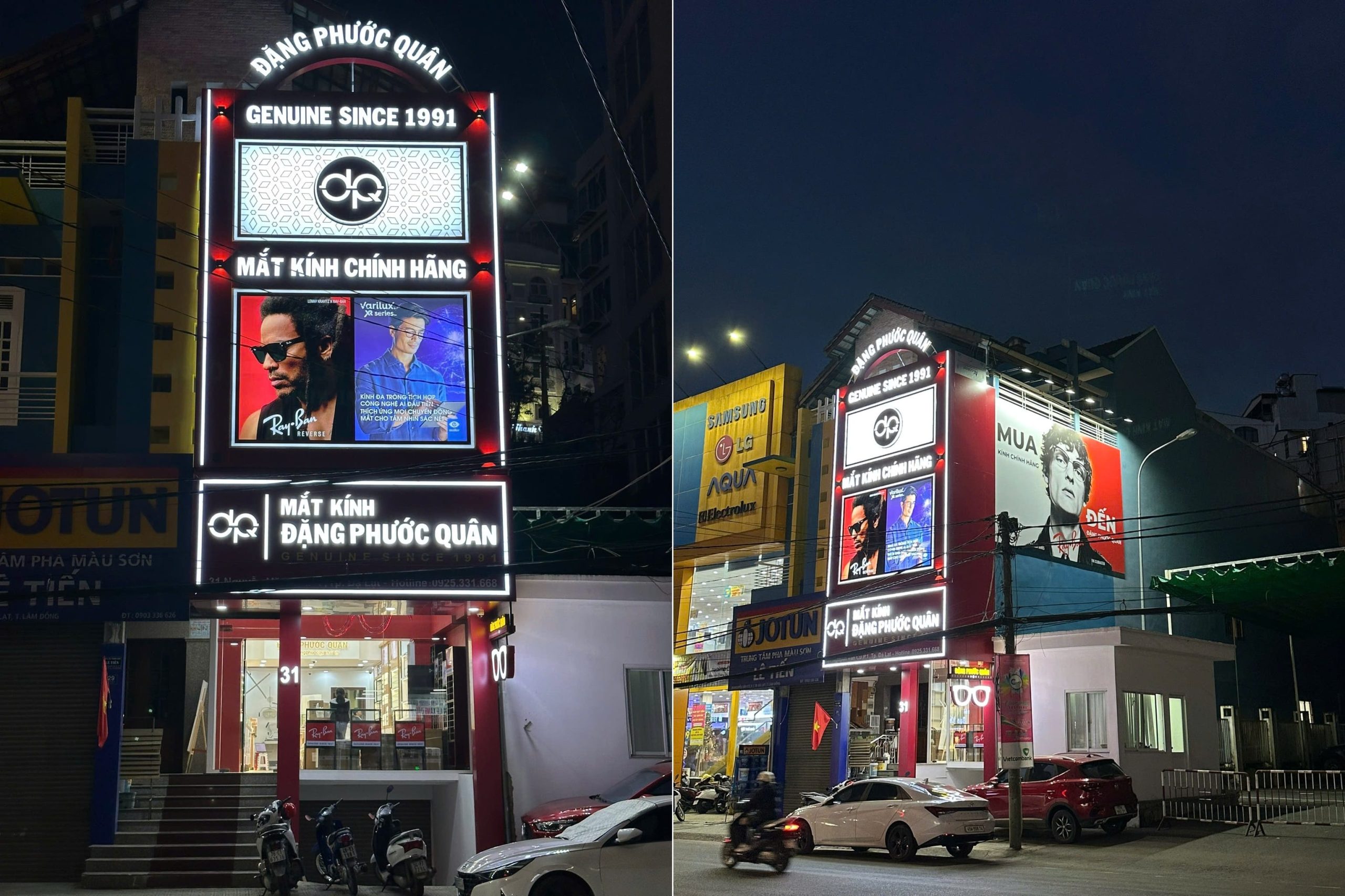
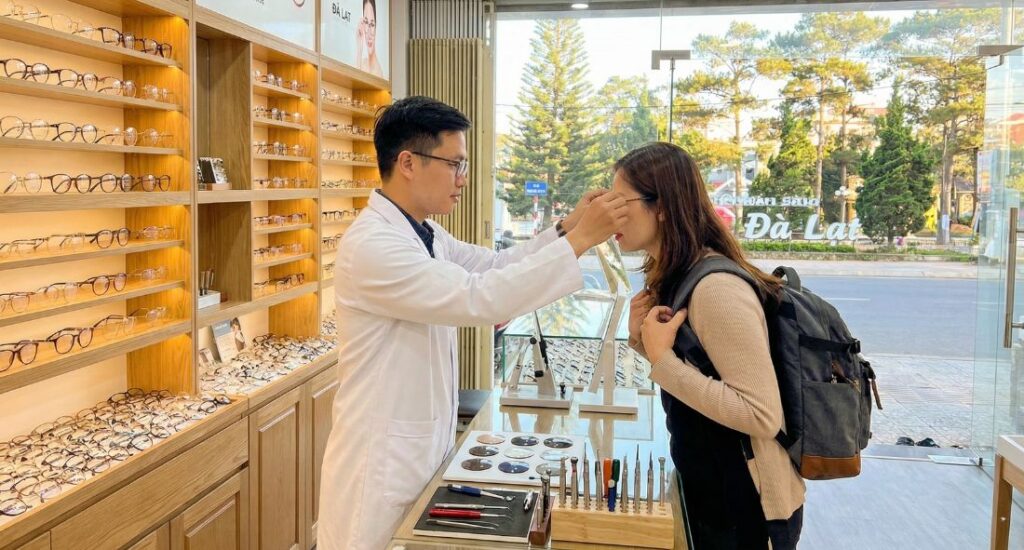
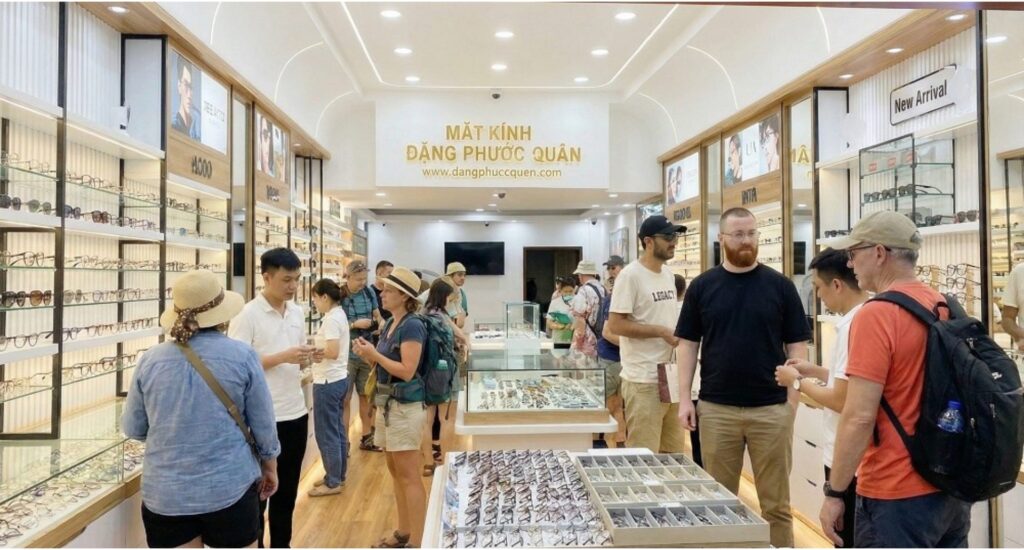
The most established option for foreigners is Dang Phuoc Quan Eyewear, located at 31 Nguyen Van Cu, Phuong Xuan Huong, Da Lat. With over 30 years in business, this is one of the longest-running optical shops in the city. The staff includes English-speaking team members who regularly assist foreign tourists, expats, and digital nomads.
What makes this shop relevant when you search for an english speaking eye doctor in Da Lat is the level of service: a 12-step computerized eye examination using premium equipment, same-day or next-day lens cutting, and authorized dealership for international brands including Ray-Ban, Oakley, Essilor, Zeiss, Chemi, and Kodak.
Other optical shops exist in Da Lat’s city center, but English-speaking capability varies significantly. Some smaller shops may have basic English skills sufficient for simple transactions, while others operate entirely in Vietnamese.
Hospitals with Ophthalmology Departments
For medical eye conditions, Da Lat has several options. Lam Dong General Hospital has an ophthalmology department that handles common eye diseases and basic surgeries. Da Lat Hospital also provides eye care services. However, English-speaking ophthalmologists at these facilities are rare. Most foreign patients who need medical eye treatment in Da Lat either bring a Vietnamese-speaking friend to translate or use a translation app during consultations.
For complex eye surgeries or specialized treatment, many foreigners choose to travel to Ho Chi Minh City, where international hospitals like FV Hospital and Vinmec offer fully bilingual ophthalmology departments.
What Dang Phuoc Quan Eyewear Offers Foreigners
Since most people searching for an english speaking eye doctor in Da Lat need refraction and eyewear rather than medical treatment, here is what you can expect at Dang Phuoc Quan.
The shop provides comprehensive refraction testing — a full assessment of your visual acuity, refractive errors, and lens requirements. This is not a quick autorefractor reading. The 12-step eye exam includes both automated measurements and manual refinement by experienced opticians who have been doing this for decades.
For prescription glasses in Da Lat, you choose from an extensive range of frames and lenses. Frames include internationally recognized brands — Ray-Ban, Oakley, Bolon, and Molsion among others. Lenses come from Essilor (including Crizal coatings, Transitions photochromic lenses, and Stellest for myopia management), Zeiss, Chemi, and Kodak. Every product is genuine and sourced through authorized distribution channels.
Turnaround time depends on your prescription and lens choice. Simple single-vision lenses can often be ready within a few hours. Progressive lenses or specialized coatings may take one to two days. If you are a traveler with limited time, the staff can advise on the fastest options — see the eyewear service for tourists in Da Lat for more details.
Pricing is transparent. You receive a clear breakdown of frame cost, lens cost, and any additional services before committing. There are no hidden fees, and the shop provides warranties on both frames and lenses.
How the 12-Step Eye Exam Works
One reason foreigners trust Dang Phuoc Quan when searching for an english speaking eye doctor in Da Lat is the thoroughness of the eye examination process. Here is what the 12-step exam covers.
The process begins with a patient history discussion — your current glasses prescription if you have one, any vision complaints, your daily visual demands (computer work, driving, reading), and relevant health information. This conversation happens in English with their bilingual staff.
Next comes automated refraction using a digital autorefractor and keratometer. These machines provide an initial measurement of your refractive error and corneal curvature. The equipment at Dang Phuoc Quan represents a significant investment — premium-grade machines that deliver measurement accuracy comparable to hospital-grade devices.
The automated readings are then refined through subjective refraction — the classic “which is clearer, one or two?” process using a phoropter or trial frame. This step is critical because machines alone cannot determine your ideal prescription. An experienced optician adjusts for your visual comfort, binocular balance, and real-world viewing habits.
Additional steps include pupillary distance measurement, assessment of dominant eye, near vision testing for presbyopia, and a discussion of lens options based on your lifestyle and budget. The entire process typically takes 20 to 30 minutes — significantly longer than the 5-minute autorefractor-only tests offered at some budget optical shops.
After over 30 years of performing these examinations, the opticians at Dang Phuoc Quan have seen virtually every refractive situation. They can identify when a prescription needs further medical investigation and will refer you to a hospital ophthalmologist when appropriate.
When Should You See a Medical Eye Doctor Instead?
An optical shop — even one as well-equipped as Dang Phuoc Quan — is not a substitute for medical eye care. Here are the situations where you should go directly to a hospital ophthalmologist, not an optical shop.
Sudden vision changes. If you experience a rapid decrease in vision, sudden blurriness that does not clear with blinking, or loss of vision in one eye, this requires immediate medical attention. These symptoms could indicate retinal detachment, optic nerve problems, or vascular issues in the eye.
Eye pain or redness. Mild discomfort from dry eyes or allergies is common, but sharp pain, severe redness, or sensitivity to light can signal an infection, inflammation, or acute glaucoma that needs medication.
Floaters and flashes. Seeing a few floaters is normal, especially as you age. But a sudden increase in floaters, accompanied by flashes of light or a shadow across your vision, could indicate a retinal tear or detachment — a medical emergency.
Eye injuries. Any physical trauma to the eye — from a foreign object, a scratch, or a blow — should be evaluated by an ophthalmologist. Do not attempt to remove embedded foreign objects yourself.
Existing eye conditions. If you have been diagnosed with glaucoma, macular degeneration, diabetic retinopathy, or other chronic eye conditions, you need follow-up with an ophthalmologist, not an optician.
If you are unsure whether your situation requires medical attention or just a new prescription, a responsible optical shop will tell you. At Dang Phuoc Quan, the opticians are trained to recognize signs of eye disease during the examination and will advise you to seek medical care when necessary.
Where to Go for Medical Eye Treatment in Da Lat
If you determine that you need a medical eye doctor rather than an optician, here are your options in and near Da Lat.
Lam Dong General Hospital on Phan Dinh Phung Street has an ophthalmology department with Vietnamese-speaking doctors. This is the primary option for medical eye care in Da Lat. For routine conditions like conjunctivitis, stye removal, or basic eye disease screening, this facility is adequate. Bring a translation app or a Vietnamese-speaking companion.
For specialized treatment, the nearest major medical center is Ho Chi Minh City, approximately a 5-hour drive or a 45-minute flight from Da Lat. FV Hospital, Vinmec International Hospital, and the Eye Hospital of Ho Chi Minh City all have English-speaking ophthalmologists and advanced surgical capabilities.
If your situation is not urgent but you want an English-speaking ophthalmologist for a routine checkup, scheduling an appointment in Ho Chi Minh City before or after your time in Da Lat is a practical approach.
Meanwhile, for all non-medical eye care needs — refraction, prescription updates, new glasses, frame repairs, or lens replacements — an experienced optician in Da Lat like Dang Phuoc Quan can handle everything with clear English communication.
Frequently Asked Questions About English Speaking Eye Care in Da Lat
Can I get my eyes tested in English in Da Lat?
Yes. Dang Phuoc Quan Eyewear at 31 Nguyen Van Cu has English-speaking staff who conduct full 12-step eye examinations. The entire process — from patient history to prescription discussion to frame and lens selection — can be done in English. This is the most reliable option if you are looking for an english speaking eye doctor in Da Lat for vision correction needs.
How much does an eye exam cost in Da Lat?
At most reputable optical shops in Da Lat, the eye examination is complimentary when you purchase glasses. If you only need a refraction test without purchasing eyewear, there may be a modest fee. Hospital-based eye exams typically cost between 200,000 and 500,000 VND, depending on the tests required.
Can I get prescription glasses made in one day in Da Lat?
In many cases, yes. For single-vision lenses with standard prescriptions, same-day service is often available at established shops like Dang Phuoc Quan. Progressive lenses, high-index lenses, or specialized coatings may require one to two additional days. If time is critical, discuss your schedule with the staff upfront so they can recommend the fastest option.
Is the prescription format in Vietnam the same as in my home country?
Yes. Eye prescriptions worldwide use the same standard notation: SPH (sphere), CYL (cylinder), AXIS, ADD, and PD (pupillary distance). If you bring a prescription from your home country, any qualified optician in Da Lat can read it and produce matching lenses. Likewise, a prescription obtained in Da Lat is valid internationally.
Should I bring my current glasses to the eye exam?
Absolutely. Your current glasses provide valuable information — the optician can measure your existing prescription and compare it with your new test results. This helps identify how your vision has changed and ensures the new prescription is comfortable. If your glasses broke during travel, bring the pieces — the prescription can often be read from the damaged lenses, and glasses repair services in Da Lat may be able to fix or replace the damaged components.
What brands of lenses and frames are available in Da Lat?
At authorized dealers like Dang Phuoc Quan, you can find international brands including Ray-Ban, Oakley, Essilor, Zeiss, Chemi, and Kodak. These are genuine products with manufacturer warranties — not imitations. The selection is comparable to what you would find at premium optical shops in larger Vietnamese cities.
—
Finding the right eye care in Da Lat comes down to understanding what you need. For vision correction, prescription glasses, and professional refraction — the services most foreigners actually search for when they type “english speaking eye doctor da lat” — Dang Phuoc Quan Eyewear at 31 Nguyen Van Cu provides exactly that, with clear English communication and over 30 years of expertise. For medical eye conditions, head to Lam Dong General Hospital or consider a trip to Ho Chi Minh City for English-speaking ophthalmologists. Either way, your eyes are in good hands.
Practical keyword consistency note
english speaking eye doctor in da lat should be reviewed regularly to keep daily vision stable and comfortable.
english speaking eye doctor in da lat should be reviewed regularly to keep daily vision stable and comfortable.
Liên Hệ Ngay Để Trải Nghiệm Không Gian Mua Sắm Kính Mát Tuyệt Vời Nhất Đà Lạt
Mắt Kính Đặng Phước Quân — Nơi bạn tìm thấy sự khác biệt trong từng sản phẩm kính mắt.
- Địa chỉ: 31 Nguyễn Văn Cừ, Phường Xuân Hương — Đà Lạt
- Hotline: 0925 331 668
- Email: [email protected]
- Fanpage: Mắt Kính Đặng Phước Quân Đà Lạt
- Goolemap: https://maps.app.goo.gl/7KNZr7v82PAKAKb47
Bài viết cùng chủ đề:
-

Expat Optician Recommendations in Da Lat — An Honest Guide From Someone Who Has Been There
-
Reliable Optical Store for Expats in Vietnam — How to Find One You Can Actually Trust
-
Emergency Broken Glasses Fix in Da Lat — Fast Walk-In Repair When You Need It Most
-
English Speaking Optician in Da Lat — Your Complete Guide to Đặng Phước Quân Eyewear
-

Quick Glasses Replacement for Travelers — What to Do When Your Glasses Break in Vietnam
-
1 Hour Glasses Making in Da Lat — Get Quality Prescription Glasses While You Travel
-

Where to Buy Glasses in Da Lat as a Tourist — Your Complete Guide
-
Walk In Eye Check in Da Lat — No Appointment, Professional 12-Step Exam
-

Khám Mắt Miễn Phí Cho Học Sinh Tháng 3 — Chương Trình Tại Đà Lạt
-
5 bí quyết chọn gọng để tròng kính mỏng hơn
-

Vì sao đeo kính mới lại thấy chóng mặt trong vài ngày đầu?
-
Khi Nào Nên Thay Tròng Kính?
-
Eyewear Service for Travelers in Da Lat
-
Eyewear Service for Tourists in Da Lat
-

Eyewear Store Near Lam Vien Square
-
Cửa hàng mắt kính gần Quảng trường Lâm Viên

