


International Prescription Conversion in Vietnam — How It Works
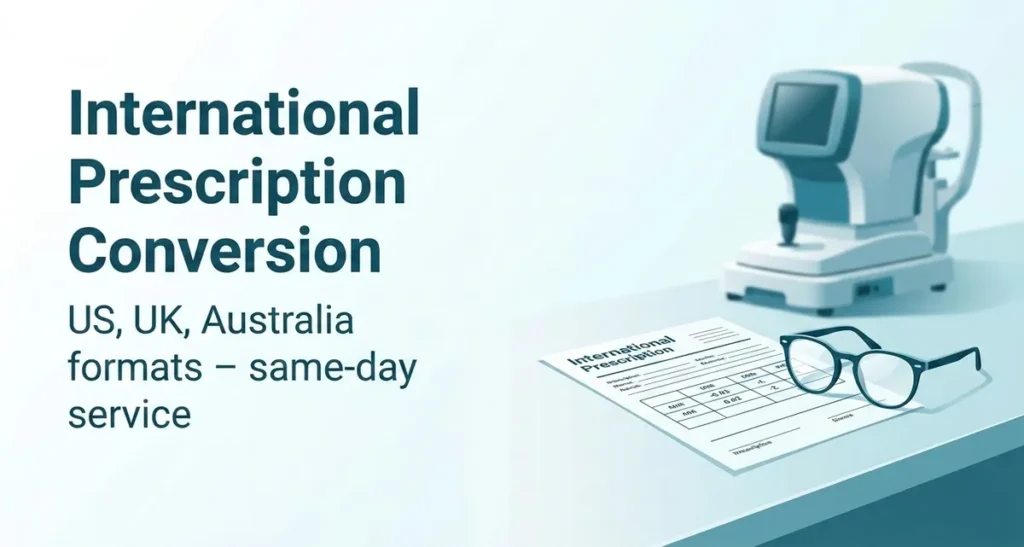
International Prescription Conversion in Vietnam — How It Works
You packed everything for your trip to Vietnam — passport, travel insurance, sunscreen, camera. But you forgot to get a spare pair of glasses. Or maybe you brought your prescription from your optometrist back home, folded into a paper slip at the bottom of your bag, and now you are standing in Da Lat wondering if anyone here can actually read it.
The short answer is yes. International prescription conversion optical Vietnam is a straightforward process when you visit the right optical shop. The format differences between countries are smaller than most travelers assume, and an experienced optician can interpret your prescription within minutes — regardless of whether it was written in New York, London, Sydney, or Toronto.
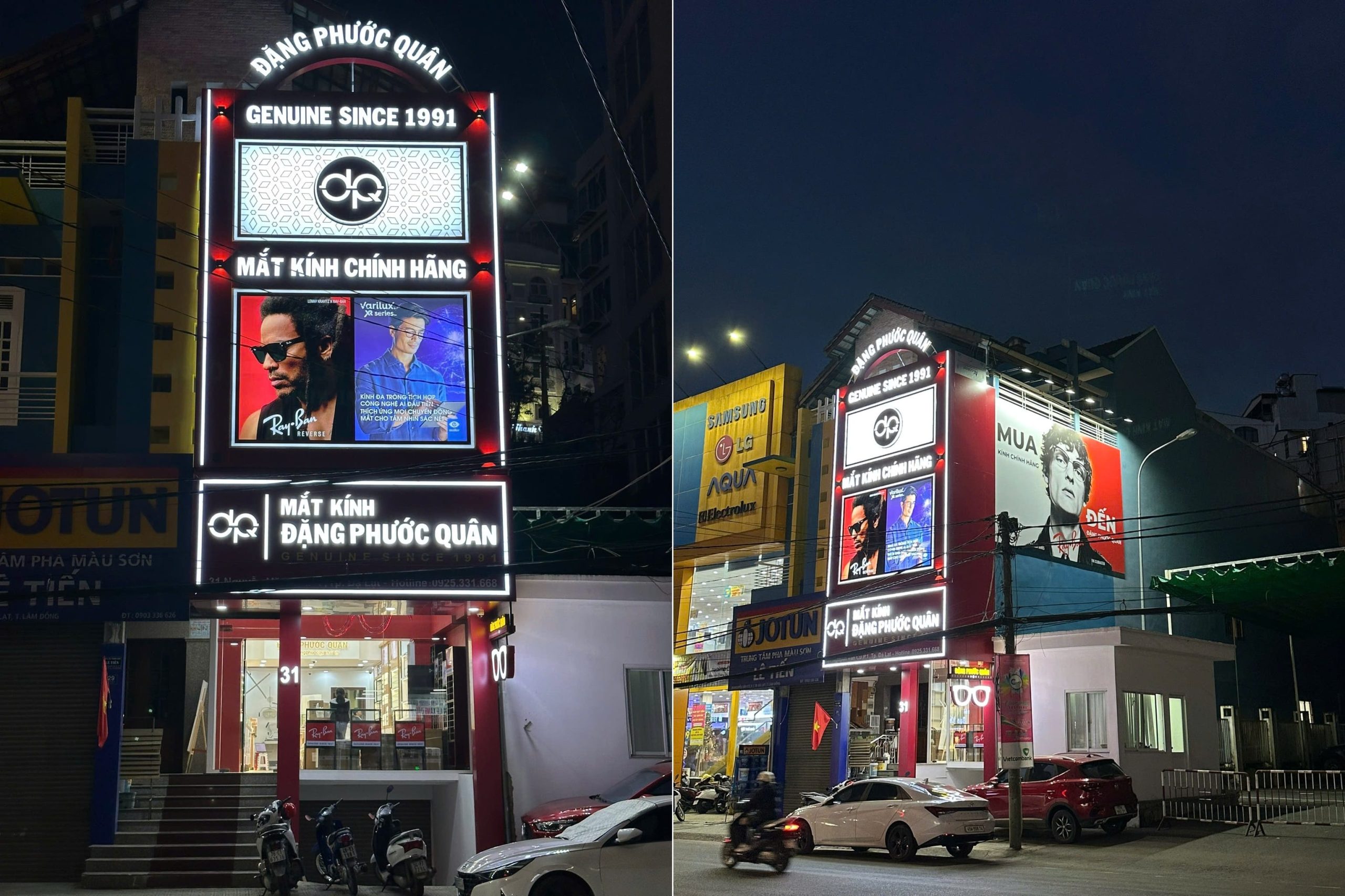
This guide explains exactly how the conversion works, what each value on your prescription means, and what to expect when you walk into Dang Phuoc Quan Eyewear at 31 Nguyen Van Cu, Da Lat — a shop with over 30 years of experience handling international prescription conversion optical Vietnam for both expats and tourists.

What Does International Prescription Conversion Mean for Travelers in Vietnam?
International prescription conversion optical Vietnam refers to the process of reading a glasses prescription issued in another country and using it to produce lenses in Vietnam. The core optical values — SPH, CYL, AXIS, ADD, and PD — follow a universal standard set by the International Organization for Standardization (ISO 8980), meaning the numbers themselves are the same worldwide.
What differs between countries is the prescription layout, notation style, and sometimes the measurement conventions. A US prescription might list values in a different order than a UK one. An Australian prescription may include additional notes about lens coatings or blue light filtering that are specific to that country’s optometric practice. Some prescriptions use positive cylinder notation while others use negative cylinder — both describe the same correction, just expressed differently.
For travelers, the concern is simple: will the optician in Vietnam understand my prescription and make lenses that match? At Dang Phuoc Quan, the answer is yes. The staff handles international prescriptions regularly and understands the notation differences across major prescription formats. This is not a theoretical capability — it comes from decades of practical experience with international prescription conversion optical Vietnam, serving visitors from the United States, the United Kingdom, Australia, Canada, Japan, South Korea, and across Europe.
The process of international prescription conversion optical Vietnam at this shop starts the moment you hand over your prescription. The optician verifies the values, confirms any ambiguities with you, and cross-references the prescription against a quick autorefractor measurement to ensure accuracy before cutting lenses.
Can Vietnamese Opticians Read Prescriptions From the US, UK, or Australia?
Yes — qualified Vietnamese opticians can read and interpret prescriptions from these countries because the underlying optical measurements are internationally standardized. The values SPH, CYL, AXIS, ADD, and PD carry the same meaning whether the prescription was written by an ophthalmologist in Houston, an optometrist in Manchester, or an eye care practitioner in Melbourne.
The key differences between formats are notation-related, not measurement-related. Here is what varies in practice.
US prescriptions typically use negative cylinder notation. The sphere value is listed first, then cylinder, then axis, following the standard American Optometric Association format. Most American prescriptions are clearly formatted and easy to read.
UK prescriptions may use either positive or negative cylinder notation depending on the practitioner. The layout can differ between NHS and private practices. Some UK prescriptions include a BVD (back vertex distance) measurement that is relevant for high prescriptions above -4.00 or +4.00.
Australian prescriptions follow a format similar to the UK model, often using positive cylinder notation. They may include additional recommendations for tint, photochromic lenses, or specific coating preferences that were discussed during the exam.
At Dang Phuoc Quan, the opticians are trained to recognize all three formats instantly. The shop has invested in premium autorefractor equipment valued at over 1 billion VND — the same caliber used in hospitals — which allows them to verify your incoming prescription against a fresh measurement. This double-check step is crucial for international prescription conversion optical Vietnam because it catches any transcription errors and confirms the prescription is still current.
Experience proof: over the past three decades at 31 Nguyen Van Cu, the team has processed thousands of international prescriptions. The most common formats they encounter are US negative-cylinder prescriptions, UK positive-cylinder prescriptions, and Australian mixed-format prescriptions. Each format conversion takes only a few minutes when handled by experienced staff.
What Do SPH, CYL, AXIS, ADD, and PD Mean on Your Prescription?
Understanding your own prescription helps you communicate confidently with any optician — especially during an international prescription conversion optical Vietnam process where you want to verify that every value transfers correctly. Here is what each abbreviation means in plain language.
SPH (Sphere) — Your Main Correction
SPH measures the degree of nearsightedness or farsightedness. A negative number like -2.50 means you are nearsighted (myopic). A positive number like +1.75 means you are farsighted (hyperopic). This value is measured in diopters and is universally understood — a -3.00 in the US is exactly the same as a -3.00 in Vietnam.
The sphere value is the most important number on your prescription. It determines the main optical power of your lens. Most international travelers who visit Dang Phuoc Quan carry prescriptions in the -1.00 to -6.00 range for myopia, which falls well within the common stock lens range available for same-day production.
CYL (Cylinder) and AXIS — Astigmatism Values
CYL corrects astigmatism — a condition where the cornea or lens inside the eye is not perfectly round, causing blurry or distorted vision at certain angles. The AXIS value (measured in degrees from 1 to 180) tells the optician which angle to orient the cylindrical correction.
This is where international prescription conversion optical Vietnam requires the most attention. US prescriptions almost always use negative cylinder notation (for example, CYL -1.25 at AXIS 90). UK and Australian prescriptions may use positive cylinder notation (CYL +1.25 at AXIS 180). These two notations describe the same correction — the optician simply applies a standard transposition formula to convert between them.
At Dang Phuoc Quan, the staff performs this transposition routinely. If your prescription uses positive cylinder and the lab system requires negative cylinder input, the conversion is done before lens ordering with no impact on accuracy.
ADD (Addition) — Near Vision Power
ADD is the additional magnifying power built into the bottom portion of progressive (multifocal) lenses or bifocals. It is prescribed for presbyopia — the age-related loss of near focusing ability that typically begins after age 40.
ADD values range from +0.75 to +3.00 and are the same internationally. If your prescription includes an ADD value, it means you need progressive lenses or reading glasses in addition to your distance correction.
PD (Pupillary Distance) — The Measurement Many Travelers Forget
PD is the distance between your pupils, measured in millimeters. It is essential for centering your lenses correctly — if the optical center of the lens does not align with your pupil, you may experience eye strain, headaches, or blurry peripheral vision.
Here is the problem many travelers encounter: not all prescriptions include PD. In the United States, some optometrists deliberately omit PD from prescriptions to steer patients toward buying glasses at their own practice. In the UK and Australia, PD is more commonly included but not always.
If your prescription is missing a PD measurement, Dang Phuoc Quan measures it on-site using digital pupillometry as part of their standard service. This takes about 30 seconds and ensures the lenses are centered precisely for your face.
How Does the International Prescription Conversion Process Work at Dang Phuoc Quan?
The complete process for international prescription conversion optical Vietnam at Dang Phuoc Quan follows a structured approach designed to eliminate errors and ensure you receive lenses that match your home prescription exactly.
Step one: you bring your prescription to the shop at 31 Nguyen Van Cu, Da Lat. The English-speaking staff reviews the document and identifies the format — US, UK, Australian, or other. They confirm each value with you and note any special requirements like progressive lenses, photochromic coatings, or blue light filtering.
Step two: the optician runs a quick autorefractor measurement using the shop’s premium equipment. This takes about 60 seconds and produces an objective measurement of your current refractive error. The result is compared against your prescription to verify consistency. If the values match closely, the prescription is confirmed as current and accurate. If there is a significant discrepancy, the optician discusses the findings with you and may recommend updating the prescription through a full 12-step eye exam.
Step three: if PD is not included on your prescription, it is measured on-site. The optician also confirms frame measurements to ensure the lenses will be positioned correctly in your chosen frame.
Step four: lenses are ordered or cut from stock. For common single-vision prescriptions within the stock range, lenses are edged on the shop’s in-house machine and fitted into your selected frame — often within the same day. For progressive lenses or complex prescriptions, the turnaround is typically 24 to 48 hours.
Step five: the finished glasses undergo a final fitting on your face. The optician adjusts temple length, nose pad angle, and frame tilt to ensure comfort and optical accuracy. You test the lenses at various distances and confirm clear vision before leaving.
This five-step process is what makes eye prescription translation in Vietnam reliable and repeatable at Dang Phuoc Quan. Every step exists to prevent the errors that could result from format confusion, outdated prescriptions, or missing measurements.
What If Your Prescription Is Outdated or Incomplete?
Many travelers arrive in Vietnam with prescriptions that are more than a year old — or with no written prescription at all. Perhaps you memorized your values but cannot remember the cylinder and axis. Perhaps your prescription is on your phone in a photo so blurry the numbers are unreadable.
None of these situations are a problem at Dang Phuoc Quan. The shop operates a complete optometric service alongside its retail operation. If your prescription is outdated, incomplete, or unavailable, the 12-step professional eye exam produces a fresh, accurate prescription from scratch.
This exam is performed using the same premium autorefractor equipment used in the verification step — a machine valued at over 1 billion VND that measures refractive error, corneal curvature, and pupil response with clinical-grade precision. The exam also includes a subjective refraction (the “which is better, one or two?” test) to fine-tune the results based on your visual comfort preferences.
For travelers who are unsure whether their prescription has changed, this exam provides peace of mind. Vision can shift gradually, and an international prescription conversion optical Vietnam based on an outdated prescription will produce lenses that feel slightly off — close enough to be usable but not quite right. The exam eliminates that uncertainty.
The best optician in Da Lat combines equipment precision with human expertise. The opticians at Dang Phuoc Quan have tested thousands of eyes over three decades. They understand how to communicate the exam process in English and how to interpret results for patients who may not be familiar with Vietnamese optometric conventions.
If your prescription is complete and current, the exam is optional — you are never pressured into services you do not need. The goal is simply to ensure that every pair of glasses leaving the shop delivers the clearest possible vision.
How Long Does It Take To Get Glasses Made From a Foreign Prescription in Vietnam?
The timeline depends on your prescription complexity and lens type. For straightforward single-vision prescriptions in the common range (SPH -0.25 to -8.00 with mild astigmatism), same-day service is available. Travelers seeking international prescription conversion optical Vietnam often complete the entire process — prescription verification, frame selection, lens cutting, and fitting — within 2 to 4 hours.
For progressive lenses, the turnaround is 24 to 48 hours because these lenses require precise customization that cannot be done from stock blanks. The same applies to very high prescriptions, specialty coatings, or specific lens brands that may need to be sourced.
Walk-in service is standard at the eyeglasses shop in Da Lat — no appointment is needed. If you have a flight to catch or a tight travel schedule, inform the staff upon arrival and they will prioritize your order accordingly.
The cost of international prescription conversion optical Vietnam at Dang Phuoc Quan is typically 40 to 60 percent lower than equivalent services in the US, UK, or Australia. This includes the prescription verification, lens production, frame fitting, and any necessary adjustments — all performed in-house at the same location.
Many travelers who originally came in just for a prescription conversion end up ordering a second pair because the quality-to-price ratio makes it worthwhile. Premium brand lenses from Essilor, Zeiss, and Chemi are available at significantly lower prices than in Western countries, and the eyewear fitting experience in Da Lat at Dang Phuoc Quan matches the service level you would expect from a high-end optician back home.
Frequently Asked Questions About International Prescription Conversion in Vietnam
Can I use a digital prescription from my phone or email?
Yes. As long as the values are legible, a digital prescription — whether photographed, emailed, or stored in a health app — works just as well as a paper copy. The optician will confirm each value with you during the verification step. Many international visitors now carry their prescriptions digitally, and the staff is accustomed to working from phone screens and printouts.
Is there a language barrier when explaining my prescription?
No. The staff at Dang Phuoc Quan speaks English and understands international optical terminology. The abbreviations SPH, CYL, AXIS, ADD, and PD are the same in every language, so the core communication is inherently universal. Any questions about lens options, coatings, or pricing are handled in English as well.
What if my prescription uses notation my optician in Vietnam does not recognize?
This is extremely rare because optical prescription notation is standardized globally. However, if your prescription includes country-specific notes — such as NHS codes, insurance reference numbers, or practitioner-specific shorthand — the optician will focus on the clinical values (SPH, CYL, AXIS, ADD, PD) and disregard administrative fields. If any value is genuinely unclear, the autorefractor measurement serves as an independent verification.
Do I need to bring my old glasses as well?
Bringing your current glasses is helpful but not required. If you have them, the optician can use a lensometer to read the existing lens power directly — this provides another reference point to confirm your prescription. If your old glasses are lost or broken, the prescription document and autorefractor measurement together provide sufficient data.
How accurate is the conversion compared to getting glasses made in my home country?
The accuracy is identical. International prescription conversion optical Vietnam at Dang Phuoc Quan uses the same ISO standards and the same lens manufacturing processes as optical shops in the US, UK, or Australia. The equipment is hospital-grade, the lenses come from international manufacturers, and the fitting process follows the same precision protocols. The only difference is the price — which is significantly lower in Vietnam.
—
Bringing a prescription from your home country and having glasses made in Vietnam is one of the smartest moves a traveling expat can make. International prescription conversion optical Vietnam is fast, affordable, and accurate — provided you visit an optical shop that understands international formats and has the equipment to verify your values.
Visit Dang Phuoc Quan Eyewear at 31 Nguyen Van Cu, Da Lat. Over 30 years of experience with international prescriptions. English-speaking staff. Same-day service for most prescriptions. Walk in with your prescription from anywhere in the world and walk out with glasses that match it precisely.
Liên Hệ Ngay Để Trải Nghiệm Không Gian Mua Sắm Kính Mát Tuyệt Vời Nhất Đà Lạt
Mắt Kính Đặng Phước Quân — Nơi bạn tìm thấy sự khác biệt trong từng sản phẩm kính mắt.
- Địa chỉ: 31 Nguyễn Văn Cừ, Phường Xuân Hương — Đà Lạt
- Hotline: 0925 331 668
- Email: [email protected]
- Fanpage: Mắt Kính Đặng Phước Quân Đà Lạt
- Goolemap: https://maps.app.goo.gl/7KNZr7v82PAKAKb47
- Cận thị bao nhiêu độ thì nên đeo kính?
- 5 tiêu chí chọn cửa hàng mắt kính chính hãng tại Đà Lạt
- Zeiss DuraVision — Phân Tích Chi Tiết Các Dòng Lớp Phủ Cao Cấp
- Tại sao nên mua kính ở cửa hàng mắt kính địa phương thay vì mua online?
- Contact Lens Fitting in Da Lat — What Foreigners Need to Know Before Buying Lenses
Bài viết cùng chủ đề:
-

Tròng Kính Chemi — Review Chi Tiết Thương Hiệu Hàn Quốc
-

Gọng Không Viền — 3 Lý Do Dễ Gãy Và Cách Bảo Quản Đúng
-

Gọng Kính TR90 vs Nhựa Thường — Chênh Giá Có Đáng Với Độ Bền?
-
Tròng Kính Kodak — Review Chi Tiết Và Bảng Giá Tại Đà Lạt
-
Zeiss DuraVision — Phân Tích Chi Tiết Các Dòng Lớp Phủ Cao Cấp
-
Dòng Tròng Hoya — Review Chi Tiết Thương Hiệu Nhật Bản
-
Hướng Dẫn Chọn Tròng Kính Từ A-Z — Cho Người Mới Bắt Đầu
-
So Sánh 3 Thương Hiệu Tròng Kính Hàng Đầu
-

Dòng Tròng Zeiss — Review Chi Tiết Công Nghệ Quang Học Đức
-

Vision Test for Foreigners in Da Lat — What to Expect From a 12-Step Professional Eye Exam
-

Comprehensive Eye Exam in Vietnam — What to Expect and Why It Matters
-
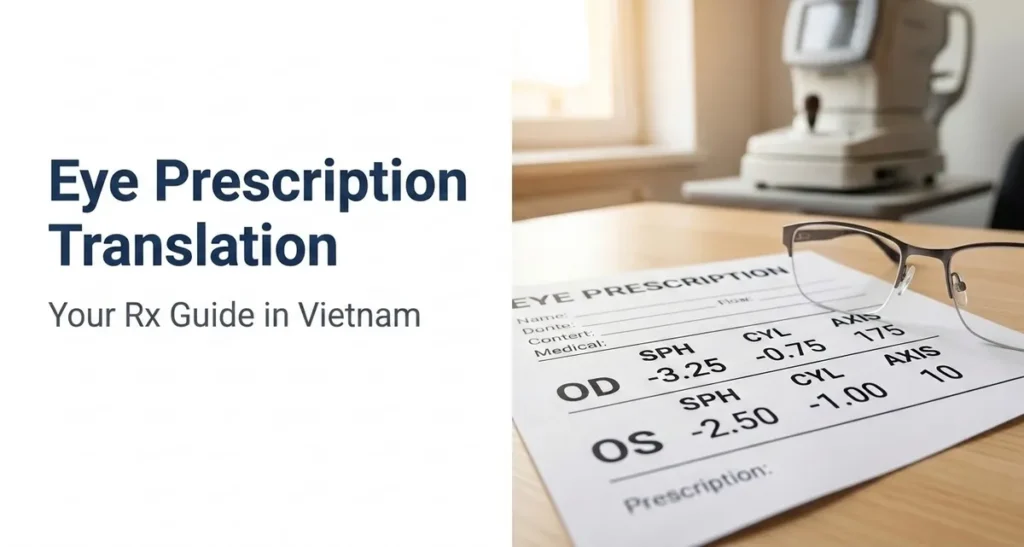
Eye Prescription Translation in Vietnam — How Local Opticians Read Your Foreign Rx
-

Health Insurance Glasses Coverage in Vietnam — What Expats Need to Know
-

Professional Optometry Services in Vietnam — What Foreigners Need to Know Before Their First Eye Exam
-
Tròng Kính Essilor — Review Chi Tiết Thương Hiệu Số 1 Thế Giới
-
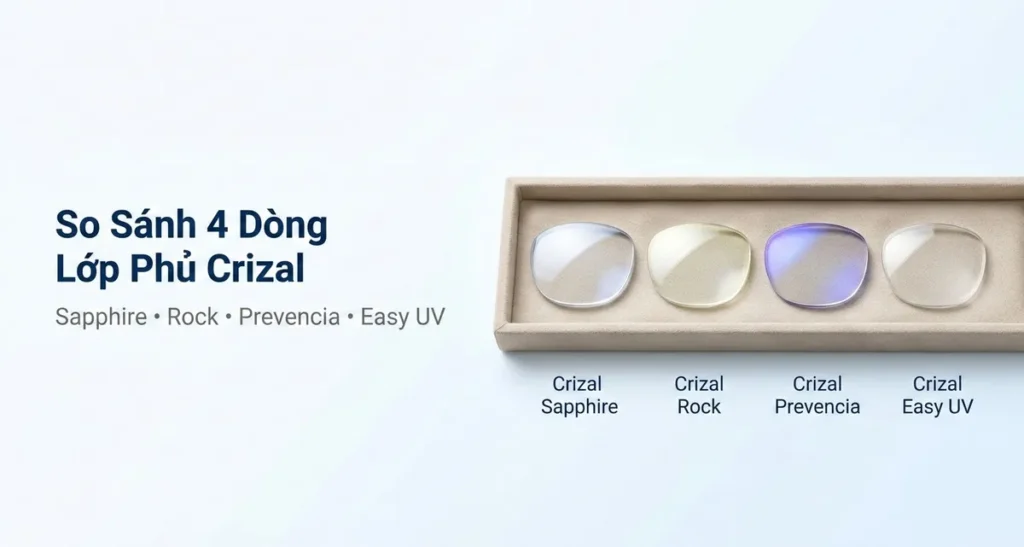
So Sánh Đầy Đủ Các Dòng Lớp Phủ Crizal — Sapphire, Rock, Prevencia, Easy UV

