





Hoya vs Chemi lenses comparison guide
Updated: 10 October 2026
If you wear glasses every day, choosing between Hoya and Chemi can feel harder than it should be. This Hoya vs Chemi lenses comparison looks at what actually matters: visual comfort, coating performance, durability and price. Instead of asking which brand sounds better, ask which one fits your eyes, your routine and your budget.
The practical question is usually: which lenses will feel better after 8 to 12 hours of daily wear, and how much more does that cost? This guide sets out the trade-offs, whether you are comparing Japanese and Korean eyeglass lenses for the first time or replacing an older pair.
Hoya vs Chemi lenses comparison: key differences
The real choice is not simply premium versus affordable. It is about what kind of lens experience you want every day. This section covers brand background, who each brand suits, and the main differences.
Brand background: Japanese vs Korean eyeglass lenses
Hoya is a Japanese optical company with a long-standing global presence in lens manufacturing. It is generally positioned at the premium end, especially in lens design, coatings and more complex prescription lenses. When people compare Japanese and Korean eyeglass lenses, Hoya is usually the premium benchmark.
Chemi is a Korean lens brand that has become popular in many markets because it is widely available and good value. Opticians commonly recommend it to buyers who want dependable performance without moving far up in price.
According to Wikipedia, Hoya has operated across optical and healthcare sectors for decades. Brand depth often influences lens development, product consistency and trust, but country of origin alone should not decide your purchase.
There is no universal answer to whether Hoya or Chemi is better. Your prescription strength, wearing hours, frame and coating can change the outcome more than the logo on the lens packet.
Who Hoya lenses are best suited for
Hoya tends to suit you if you are sensitive to glare, wear glasses all day, or want a more refined visual experience. Premium Hoya lenses suit office work, long screen time and progressive lens wearers.
If your prescription is moderate to strong, or your eyes tire easily, Hoya may be worth the higher price. People upgrading from entry-level lenses usually notice the difference in coating behaviour and comfort over long hours rather than in a dramatic “wow” moment on day one.
Who Chemi lenses are best suited for
Chemi is usually a good fit if you want solid everyday performance at a controlled cost. Students, first-time wearers and value-focused buyers often choose it.
If you mainly need single-vision lenses for regular daily use, Chemi is a sensible option. Satisfaction depends mostly on choosing a good coating and having the lenses fitted properly.
Quick comparison table of features and trade-offs
The short version: Hoya often leads in coating refinement and advanced lens designs, while Chemi usually wins on price and practical value.
- Hoya: Japanese; premium positioning; strong in coatings, progressive and high-index designs; costs more.
- Chemi: Korean; value positioning; wide range of single-vision lenses and coatings at lower prices; refinement varies more by coating tier.
Hoya appeals more to people who prioritise comfort and finish quality; Chemi appeals more to people who want dependable daily wear without stretching the budget.
How Hoya and Chemi lens quality compare
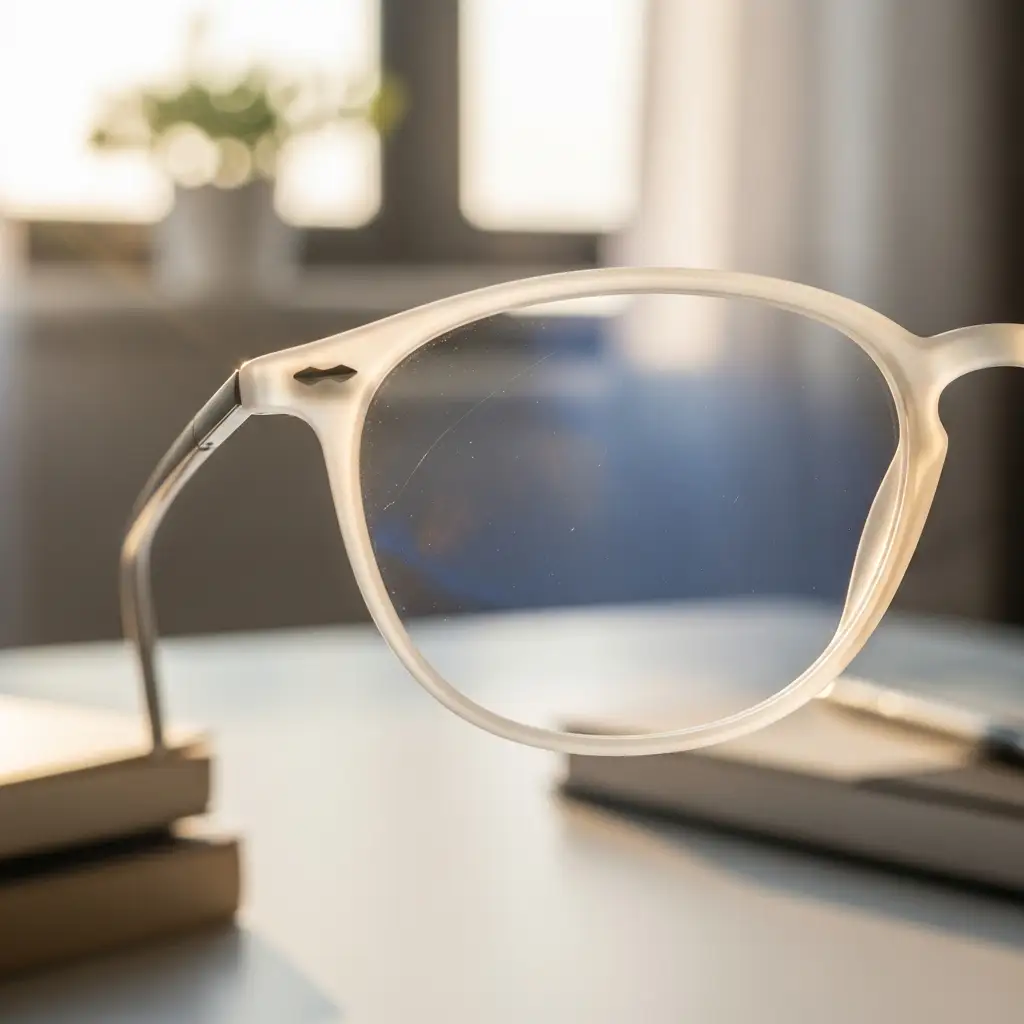
Lens quality is where brand reputation becomes more than marketing. You are paying for clarity, consistency and how your eyes feel after hours of wear.
Optical clarity and prescription precision
Are Hoya lenses good quality? Generally yes. Hoya has a strong reputation in premium categories for crispness, less distortion towards the edges, and consistency with more demanding prescriptions.
Chemi can still perform very well for standard prescriptions. If your prescription is fairly simple and the fitting is done properly, the difference may feel modest rather than dramatic. The shop’s measurement accuracy matters as much as the lens brand.
Even an excellent lens can feel wrong if the pupillary distance, fitting height or frame alignment is off by a few millimetres.
Material options and durability in daily use
Both brands offer common indexes such as 1.56, 1.60 and higher, depending on the market. For thinner lenses in strong prescriptions, Hoya often feels more polished in its premium ranges, but Chemi is perfectly acceptable for daily wear if you choose the right index and coating.
Durability depends heavily on coatings and care. Coating wear becomes more noticeable over time and is often the reason lenses get replaced. Wiping lenses dry with tissue or a shirt shortens coating life regardless of brand.
Consistency across single vision and progressive lenses
With single-vision lenses the gap feels smaller, especially for standard prescriptions. With progressive lenses, design differences become more noticeable, because adaptation, side distortion and the width of the reading corridor matter much more.
Hoya is positioned for premium progressive wearers. Chemi focuses on single-vision and value categories, though some wearers do well with Chemi progressives depending on expectations and budget.
Real-world comfort for long hours of wear
Comfort is hard to measure but matters most. Office workers can spend 7 to 9 hours a day in front of screens, and glare and surface cleanliness affect how tired your eyes feel by evening.
A better coating can bring more comfort than a brand upgrade alone. If your eyes are easily bothered by reflections, fingerprints or low-light glare, you may notice a bigger difference between coating tiers than between base lens materials.
Hoya lenses review: strengths and limitations
Hoya has a strong reputation, but a premium brand does not mean every Hoya lens is automatically right for you. Here is where it usually performs well and where you may hesitate.
What stands out in Hoya lens design
Hoya stands out for refined lens designs and premium coatings. This is especially relevant if you wear progressives, have a strong prescription, or want lenses that feel more “finished” in daily use.
Hoya is often considered easier to adapt to with advanced designs, although not every wearer notices a big difference immediately.
Common advantages reported by wearers
The positives most often mentioned for Hoya are good anti-reflective performance, cleaner-looking surfaces and comfortable all-day wear. Premium Hoya lenses are also considered easy to keep clear during work and driving.
Hoya is also strong in advanced categories. If you need progressive lenses, thin high-index lenses or more specialised designs, it is a safe premium choice.
Potential downsides to consider before buying
The obvious downside is cost. Hoya usually sits higher than Chemi, especially once you add premium coatings or specialty designs.
Availability varies by store and region. Not every optical shop carries the same Hoya range.
A premium brand only pays off if you are measured properly and the lens is explained clearly. Paying more without matching the lens to how you use your eyes can waste money.
Who should prioritize Hoya over competitors
Prioritise Hoya if your main goals are long-hour comfort, refined coatings and confidence in premium designs. It is especially worth it if you wear glasses full-time, drive often at night, or are moving into progressive lenses.
If your budget is flexible and you dislike frequent cleaning or glare, Hoya may justify the extra cost. That is why the Hoya-or-Chemi question so often ends with “it depends on how demanding your daily use is”.
Chemi lenses review: strengths and limitations
Chemi is often underestimated because it is seen as the “budget” option. That is not entirely fair: for many buyers it offers the right balance between function and price, which is why opticians recommend it so often.
What makes Chemi appealing to buyers
The biggest appeal is value. Chemi gives you decent lens performance at a lower entry price, especially for standard single-vision needs. In our catalogue, Chemi lenses currently start from around 168,000₫ per pair.
It is also easy to find in practical options for student budgets, routine office use or backup glasses.
Common benefits for budget-conscious shoppers
Chemi’s strengths are affordability, good clarity for everyday prescriptions, and a wide product range. If you need a reliable pair for regular use without premium expectations, Chemi makes financial sense.
The difference between Hoya and Chemi is not “good versus bad”. It is whether paying 20% to 50% more brings a benefit you will actually notice in your routine.
Potential drawbacks in premium comparisons
In head-to-head premium comparisons, Chemi may feel less refined in coating performance or advanced designs. Depending on the coating, some wearers notice more smudging, faster visible wear or weaker glare control.
These drawbacks are not universal; Chemi performance varies a lot by coating tier. For basic daily lenses, a well-chosen Chemi lens may satisfy you completely. The gap grows in premium or specialised use rather than with simple prescriptions.
Who should consider Chemi lenses first
Consider Chemi first if price matters, your prescription is straightforward, or you want dependable everyday glasses without premium add-ons. It is also a sensible choice for a second pair, for students, or for buyers who replace lenses often.
Chemi works best when you focus on practical needs rather than brand prestige.
Hoya and Chemi coating comparison for daily wear
Coatings often decide whether you love or regret a pair of lenses. You may tolerate average optics, but you notice glare, smudges and scratches every day.
Anti-reflective and glare reduction performance
Hoya is often praised for anti-reflective performance, especially in its premium coatings. People who spend long hours under office lighting or drive at night tend to value this.
Chemi coatings can still perform well, but premium Hoya coatings often feel more refined in difficult lighting. If glare reduction is your top priority, this is one of the clearest reasons to pay more.
Scratch resistance and long-term durability
No coating is scratch-proof, but some hold up better in daily handling. If you wear the same glasses every day for 1 to 2 years, coating longevity matters more than initial clarity.
Hoya may have an edge in premium durability, while Chemi is fully adequate when handled properly. Either way, cleaning habits matter enormously.
Blue light, UV, and screen-use protection options
Both brands offer UV protection and blue-light options, though names and features vary by market. If you spend 8 or more hours a day on digital devices, these may interest you, but comfort also depends on glare control and an accurate prescription.
According to the World Health Organization, uncorrected refractive errors remain a major cause of vision impairment worldwide. The practical point: a correct prescription and everyday comfort matter more than trendy add-ons.
Cleaning ease, smudge resistance, and maintenance
This affects satisfaction more than many buyers expect. A lens that attracts fingerprints or is hard to clean becomes annoying within days, even if the optics are fine.
Hoya’s coatings are positioned as easier to wipe clean. Chemi is still practical, but if you are picky about smudges, Hoya has the stronger reputation. That does not make Hoya the right daily lens by default: on a tight budget, the right lens is one you can afford, with an accurate prescription and a coating good enough for your routine.
Hoya vs Chemi price comparison by lens type
Price is where most decisions are made. You may like the premium option, but if the jump is too steep, value matters more. Here is how prices compare by lens type. All prices below are per pair, from our current catalogue, and may change; check the category pages for current prices.
Single vision lens pricing differences
For standard single-vision lenses, Chemi is usually more affordable, which makes it the easy entry point for students, first-time buyers or anyone on a tighter budget. Our catalogue currently lists around 27 Chemi lens lines, starting from about 168,000₫ per pair (current Chemi prices).
Hoya usually costs more even before premium coatings are added, and the gap widens once coatings are included. The Hoya line currently listed on our website is 837,000₫ per pair (Hoya lenses).
Progressive and multifocal price ranges
Progressives are where Hoya most clearly justifies its premium image. If you need easier adaptation, wider usable zones or more comfort over long wear, Hoya may be worth the extra cost.
Chemi progressives can still serve budget-conscious wearers, but keep expectations realistic. If you are sensitive to distortion or have struggled with progressives before, Hoya may give you a better chance of success. Across brands, progressive and bifocal lenses in our catalogue currently range from about 841,600₫ to 3,904,000₫ per pair.
High-index and specialty lens cost factors
Stronger prescriptions need thinner materials, which cost more regardless of brand. High-index materials, photochromic lenses or advanced coatings can push prices up quickly; across brands, thin high-index lenses currently range from about 308,000₫ to 6,240,000₫ per pair in our catalogue.
A Hoya lens with a premium coating and high index can cost significantly more than a standard Chemi lens. The exact difference depends on the retailer and the lens.
When paying more actually makes sense
Paying more makes sense when your use is demanding. If you wear glasses 12 hours a day, drive often at night, use progressives or dislike lens maintenance, a premium upgrade pays back every day.
Sometimes the smart move is not the most expensive lens but the one that solves your biggest daily annoyance, whether that is glare, thickness, smudging or adaptation.
Best eyeglass lenses for daily wear needs
The right lens is not always the one with the strongest brand reputation; it is the one that fits your routine with the fewest compromises.
Best choice for office workers and screen users
If you spend most of your day at a desk, Hoya often has the edge when glare control and coating performance matter. Reducing reflections and smudges consistently makes long days more comfortable.
On a tighter budget, Chemi with a decent anti-reflective coating still works well. For everyday office use, the coating matters more than the marketing.
Best choice for driving and outdoor use
For frequent drivers, especially at night, Hoya may be the better fit because of its glare-reduction reputation. Outdoor users may also appreciate more durable coatings and easier cleaning.
Chemi is a practical choice for daytime driving or general outdoor wear if your expectations are modest. It depends on how often you face difficult lighting.
Best option for durability and easy maintenance
If you want a pair that is easier to own, Hoya often gets the nod, as its coatings are positioned around resisting visible smudges.
Careful handling makes either brand last longer. A case, a microfibre cloth and proper lens spray matter more than many buyers realise.
Best fit for value-focused everyday wear
If your priority is spending wisely, Chemi is often the stronger answer. With a simple prescription, it gives reasonable performance at a lower cost, and you do not pay for premium refinements you may not notice.
Which lens brand is better Hoya or Chemi?
Neither brand wins for everyone. The right pick depends on how much you value premium comfort versus budget.
Choose Hoya if premium performance matters most
Choose Hoya if you want more refined coatings, confidence in premium designs and more comfort for demanding daily use. It is often the better pick if you wear glasses full-time, use screens heavily or need progressive lenses. If small improvements in comfort and finish matter to you, the higher price may be justified.
Choose Chemi if value is the top priority
Choose Chemi if you want a sensible everyday lens at a more accessible price. It is often the smarter option for standard prescriptions, backup pairs, students, or anyone who prefers practical value over premium branding. You may give up some refinement, but you keep most of the function you need.
How prescription type can influence the decision
With a simple prescription, the quality gap may feel small. With a stronger, more complex or progressive prescription, Hoya’s advantages become easier to notice over time.
That is why the question cannot be answered in isolation: your prescription, frame fit and coating all affect the result.
Final recommendation based on buyer profile
If you want a premium-leaning choice, Hoya is easier to recommend. If you want a budget-friendly everyday lens, Chemi is very competitive. Either way, buy for how you live, not for how a brand is marketed.
Buying Hoya and Chemi lenses at Mắt Kính Đặng Phước Quân in Da Lat
Mắt Kính Đặng Phước Quân is an authorized dealer for Chemi lenses, sells genuine Hoya lenses, and displays its dealer certificates in store. The store is at 31 Nguyễn Văn Cừ, Phường Xuân Hương, Đà Lạt (open in Google Maps), open daily 09:00–21:00. The eye test is free and walk-in, using Nidek equipment (about the eye test).
Single-vision lenses in stock are usually fitted in about 20–40 minutes, depending on prescription and lens type; progressive, high-index and special lenses may need to be ordered. To check stock and prices first, send a photo of your prescription by Zalo or WhatsApp to 0925 331 668. See also our full lens catalogue.
FAQ
What is the main difference between Hoya and Chemi lenses?
Positioning. Hoya (Japan) is generally a premium brand, while Chemi (Korea) is known for practical value and lower prices. In real use, performance still depends on lens type, coating, prescription strength and fitting quality.
Is Hoya better than Chemi for daily wear?
It can be, especially if you care about glare reduction, coating refinement, easy cleaning and long-hour comfort. If your prescription is simple and budget matters more, Chemi can still be a very good daily-wear choice.
How does Hoya vs Chemi lens quality compare?
Hoya lenses are good quality, with a strong reputation for optical consistency, advanced designs and coatings. Chemi is competitive for standard daily use, especially with simpler prescriptions. How accurately the lenses are measured and fitted affects your experience significantly with either brand.
Are Chemi lenses good for budget buyers?
Yes. Chemi is a solid option for cost-conscious buyers who want reliable everyday performance without paying for top-tier features, especially for single-vision lenses and routine wear.
How does the Hoya vs Chemi price comparison usually look?
Hoya usually costs more, especially with premium coatings, progressives or high-index materials. In our catalogue, Chemi lenses currently start from around 168,000₫ per pair and the listed Hoya line is 837,000₫ per pair. Prices may change.
Which is better for progressive lenses, Hoya or Chemi?
Hoya is often preferred for progressive lenses because of its comfort-focused premium designs. Chemi can still work for budget-conscious progressive wearers, but if adaptation is a concern, Hoya may be the safer choice.
More
Need to ask before an eye test?
Message us on WhatsApp or Zalo, and the store will answer for your case.