






Lightweight rimless glasses in Da Lat: a buying guide
Updated: 24 October 2026
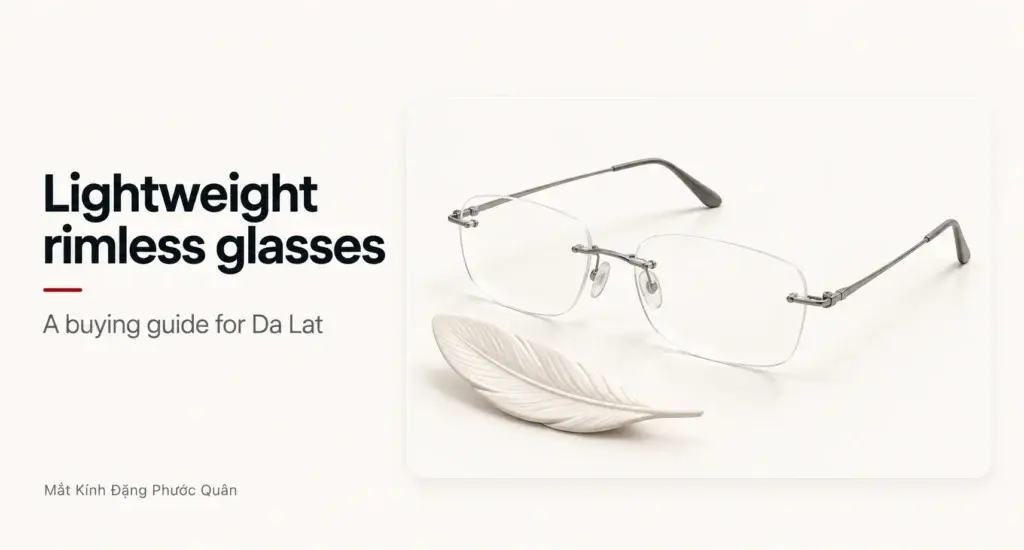
If you are looking for lightweight rimless glasses in Da Lat that are really light, do not leave marks on your nose and still look elegant every day, you are not the only one. A minimalist style that is neat on the face and easy to match with outfits suits you well if you work on a computer for many hours, travel often or simply like the feeling of wearing almost nothing.
This article explains how to choose lightweight rimless glasses, from the frame material and lens type to durability, cost and how to find a suitable place to have them made. If you want a pair you will use for a long time instead of buying on impulse, this guide is worth reading before you decide. A Vietnamese-language guide to rimless frames and who they suit is in Gọng kính không viền: ưu điểm và cách chọn chuẩn.
Why choose lightweight rimless glasses in Da Lat

When you live and go about your day in Da Lat, the need for a light, comfortable and refined pair of glasses is often clearer than you think. The cool climate, a flexible way of life and the habit of working in cafés or open spaces make lightweight rimless glasses a reasonable choice.
How rimless frames suit Da Lat’s relaxed daily style
Da Lat has a fairly distinctive pace of life: gentle, aesthetic and not showy. That is why rimless glasses often suit people who like a slim look that is still polished at work, at school or when meeting clients.
Without a thick frame around the lenses, rimless glasses make the face look brighter and more open. For many people this is a big advantage when you want to keep a natural look instead of letting the frame take too much attention.
If you switch from a thick plastic frame to ultra-light rimless glasses, the lighter feel on the bridge of your nose and on your ears is usually easy to notice.
A good-looking pair depends on the total weight, the balance between the two temples and how the glasses fit your face as much as on being rimless.
Key comfort benefits for all-day wear
If you wear glasses many hours a day, a difference of a few grams can matter. Rimless frames are usually lighter than traditional frames.
That is why ultra-light eyeglasses interest many office workers, teachers, sales staff and computer users. Low weight reduces pressure on the bridge of the nose, limits marks and reduces the tired feeling after long wear.
Ultra-light glasses can give a feeling of “forgetting you are wearing them”. This is especially useful when you read documents for a long time, study online or keep changing environments during the day.
Who benefits most from ultra-light glasses
Not everyone needs ultra-light glasses, but some groups will notice the benefit clearly. If you have a low nose bridge, a small face, glasses that slip or you have found thick frames uncomfortable, rimless glasses are worth considering.
People who work many hours a day usually put wearing comfort ahead of a striking design. Also, if you like a minimalist style, minimalist glasses are easy to pair with shirts, blazers, knitwear or casual clothes.
Are rimless glasses suitable for everyday wear? Yes, as long as you choose the right material and the right lenses and have the frame adjusted properly from the start.
What makes rimless glasses feel truly lightweight
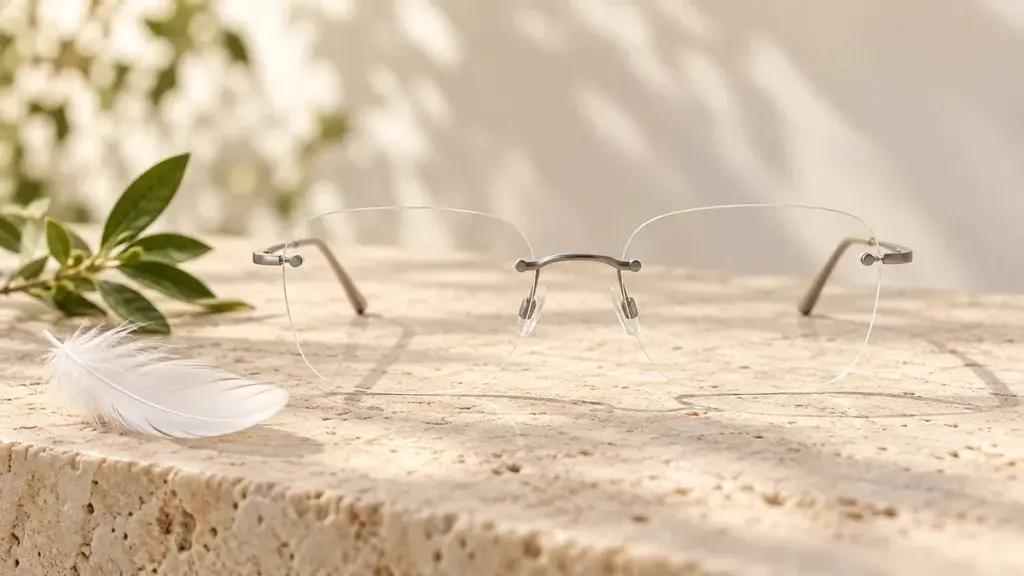
You may see two pairs both advertised as “ultra-light” and find that real wear feels quite different. Actual weight depends on the frame, the material, the lens thickness, the nose pads and the overall balance.
Titanium, beta-titanium, and other low-weight materials
Titanium is a common material for good-quality rimless frames. The reason is simple: it is light, resists corrosion well and suits people who wear glasses for long hours every day.
Beta-titanium is even more flexible and usually gives a comfortable fit on the face without being too stiff. There are also stainless steel alloys and other ultra-light materials, but if you put durability and low weight first, titanium is still often a safe starting point.
When you buy for the first time, look at the temple material as well as the style, because it directly affects durability over long use.
How lens index affects total glasses weight
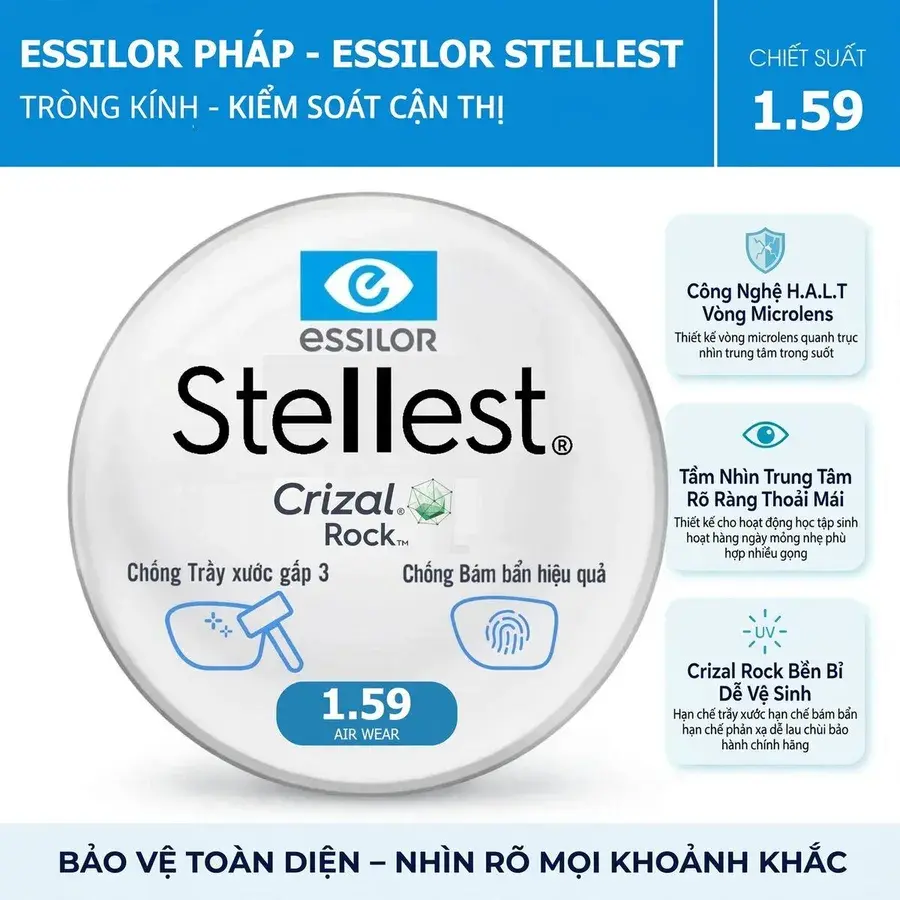
Many people think the frame decides everything, but in many cases the lenses make up most of the weight. If you have a high nearsighted or farsighted prescription, high-index lenses make the glasses noticeably thinner and lighter.
People with a stronger prescription usually notice the difference when they move from standard lenses to high-index lenses. For lightweight prescription glasses, this upgrade usually matters more than switching to a frame that looks slimmer.
Lens quality and coatings directly affect how well glasses perform. This matters even more for rimless glasses, because the lens is both the optical part and the main structure.
Thinner lenses also make the glasses look slimmer at the edges, especially in a design with no frame around the lens. It is a small detail but makes a big difference in looks.
Why bridge fit and temple balance matter
A light pair of glasses with the wrong contact points can still be uncomfortable. If the bridge does not match your nose or the temples carry force unevenly, you can still get marks, slipping and pain behind the ears.
Soft silicone nose pads usually help fine-tune the fit, especially for people with a low nose bridge. The temples should be flexible enough to sit on the ears without squeezing too tight.
The adjustment after the glasses are made has a big effect on how they feel. Some pairs look good on paper but only become comfortable after the tilt, the temple opening and the nose pad height are adjusted again.
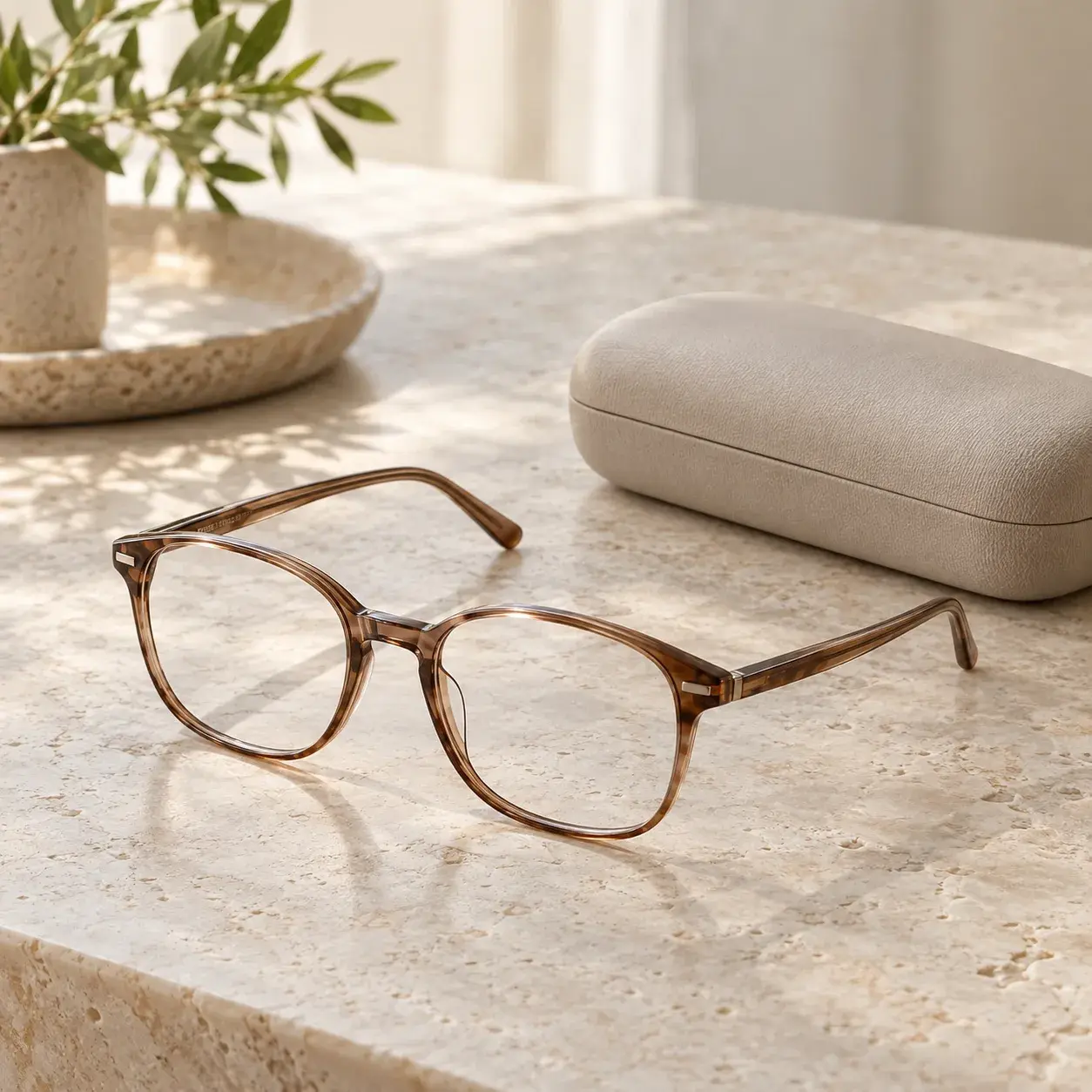
Choosing lenses for rimless glasses
Because the lens is fully exposed, thinness, coating, edge durability and anti-reflective performance all directly affect how the glasses feel to use.
High-index lenses for lightweight prescription glasses
If your prescription is low, standard lenses may still be enough. But as the prescription rises, high-index lenses are usually the first option to consider if you want to keep the glasses light.
High-index lenses reduce thickness and weight and improve the look at the lens edge. This matters especially for rimless glasses, because the lens edge is much more visible than on a full-rim frame.
With thinner lenses, the glasses are lighter and less likely to “pull down” at the front of your face. That is a big plus if you want to wear them all day without constantly adjusting them.
Anti-reflective and UV coatings for daily comfort
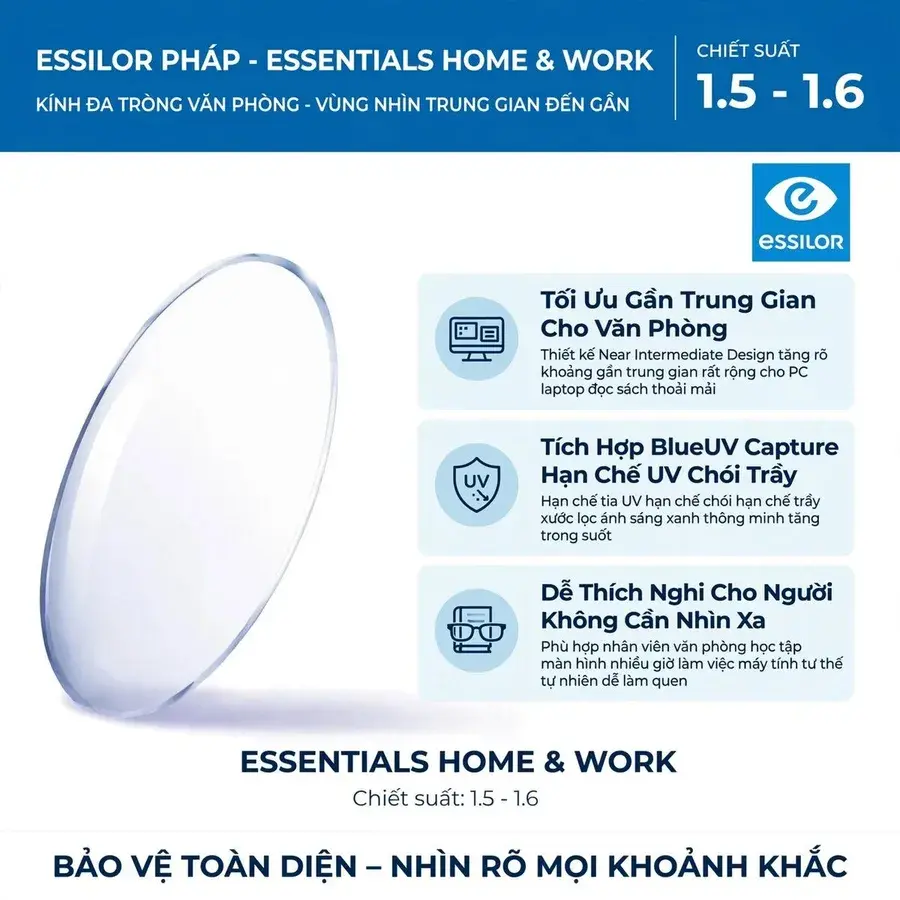
The light in Da Lat changes fairly quickly through the day. A bright morning, a harsh noon and a possibly misty afternoon make an anti-reflective coating a worthwhile upgrade for glasses you wear every day.
An anti-reflective layer helps reduce glare when working with screens, driving and talking face to face. A UV coating is just as important, because UV is still present even when it is cool or cloudy.
The World Health Organization notes that some studies strongly support UV-B as a risk factor for cortical cataract, so ask whether the lenses include UV protection.
A good coating also makes the glasses easier to clean and less likely to pick up dirt. With rimless glasses, a clean lens surface makes the whole pair look brighter and neater.
Impact resistance and edge finishing for rimless lenses
Rimless glasses need lenses that can be drilled or screw-mounted well. So not every lens suits a rimless mount.
Ask clearly about impact resistance, resistance to cracking around the drill points and the edge-grinding technique. A well-finished lens edge looks better and lowers the risk of chipping over long use.
Some people take their glasses off with one hand or put them down with the lenses on the table. With rimless glasses, these habits increase the risk of loose screws and damaged lens edges.
How to find a minimalist style that suits you
Light weight is only part of the choice; the glasses should also look right on your face and suit your taste. Minimalist glasses look good when they are refined without being showy and still bring out your face shape and everyday style.
Lens shapes that flatter different face types
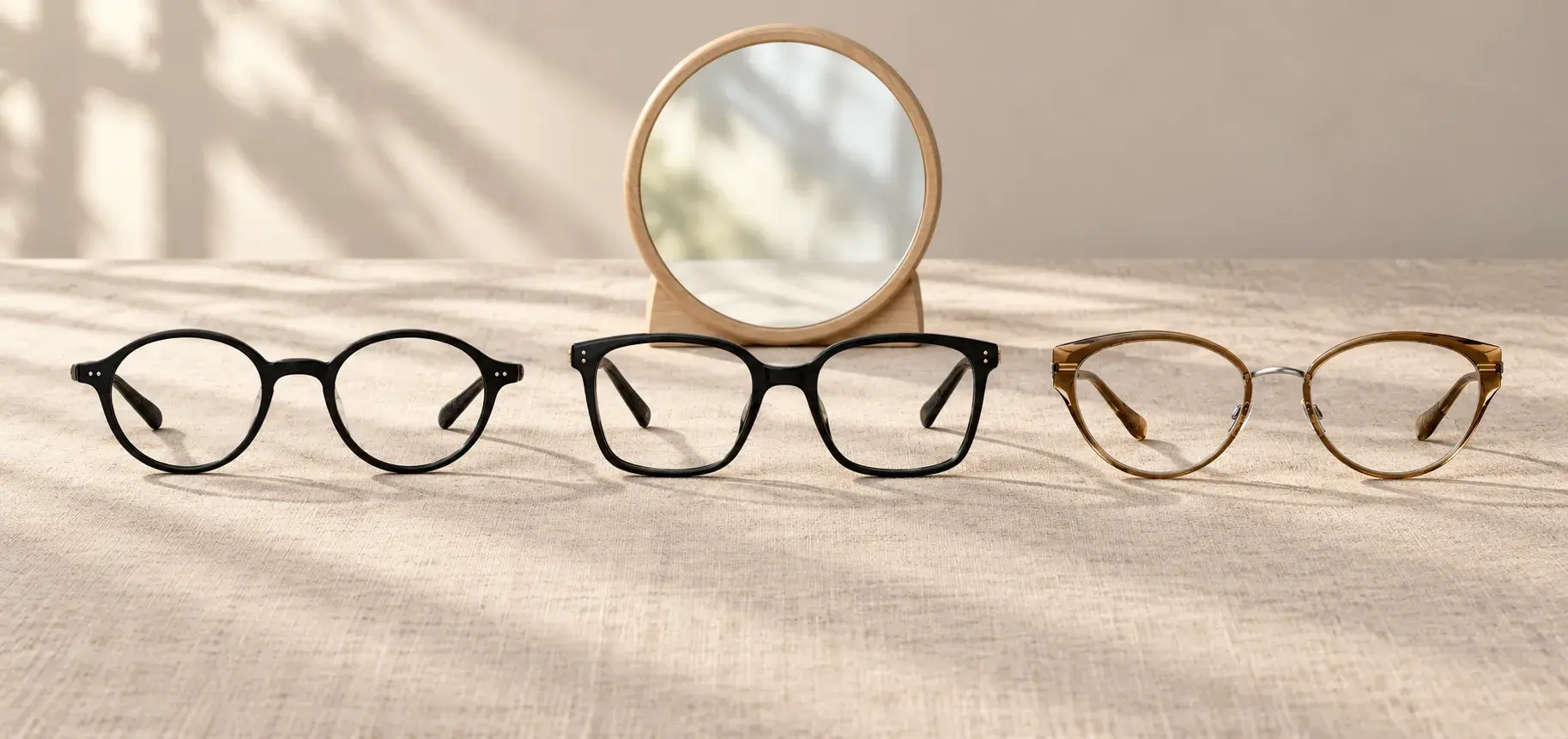
If your face is round, slightly square or softly rounded rectangular lenses usually make the face look slimmer. If your face is angular, oval or rounded lenses usually give a softer and more balanced feel.
People with a small face should avoid lenses that are too big, because they take away the natural slimness of the glasses. Conversely, if your face is long, lenses of moderate height help the proportions look more harmonious.
The rimless style often suits you more than you expect because it does not “take over the face”. As long as you choose the right lens shape, it will feel much more natural than a thick frame.
Temple colors and details for understated style
Temple colors such as matte silver, titanium gray, champagne gold or matte black can all give a rimless frame a modest accent.
If you like a discreet style, choose a color close to your skin tone or a neutral tone. If you want a little personality without breaking the minimalist look, you can choose dark blue, smoky brown or gunmetal temples.
The details that matter most in minimalist glasses are often ones other people do not notice right away. A thin temple line, a clean joint or clear nose pads all help make the whole look more refined.
How minimalist glasses pair with work and casual outfits
A big advantage of lightweight rimless glasses is that they are easy to match with outfits. You can wear them with a shirt, trousers and blazer for work, or with a T-shirt, cardigan or light jacket for a weekend coffee.
Rimless glasses also suit many ages. Students, office workers and business people can all wear them without looking too young or too old.
If you want just one pair for many situations, this is a practical choice. That flexibility is why rimless glasses are worth considering.

Where to buy rimless glasses
Buying rimless glasses should not depend only on the display models. You need a place that measures your eyes carefully, advises the right lens type and can adjust the glasses properly, because this type needs more technical skill than ordinary frames do. To see the frames the store carries, you can browse the eyeglass frames range on our website (in Vietnamese).
Mắt Kính Đặng Phước Quân has been open in Da Lat since 1991. The eye test is free, and the shop offers lifetime cleaning, adjustment and screw replacement.
How to evaluate an optical shop before ordering
First, see whether the shop measures eyes properly or only does a quick check. A good place usually explains your prescription clearly, advises lenses that suit your needs and lets you try several shapes to compare.
A good shop should also be open about the frame material, the origin of the lenses and the warranty period. If the advice is only about closing the order quickly and skips the fitting, think again.
Size matters less than a clear process, good frame-adjustment skills and readiness to support you after the sale.
Questions to ask about fittings, adjustments, and repairs
Ask the shop at least 5 things: do they adjust nose pads for free, do they tighten screws regularly, do they replace nose pads, do they help re-shape the frame when the glasses become crooked, and do they replace lenses if you want to upgrade later?
These questions sound small, but for lightweight rimless glasses they matter a lot. The thinner the glasses, the more proper maintenance is needed.
Good aftercare is usually just as important as the style for long-term use.
Why warranty and lens replacement policies matter
When you buy rimless glasses, read the warranty policy carefully for the screws, hinges, temples and technical faults when fitting the lenses. These are the parts more likely to cause problems if the shop does careless work.
The lens replacement policy is also worth noting if your prescription may change later. A place with flexible support can save you a lot compared with having to replace the whole pair from scratch.
How much should lightweight rimless glasses cost
There is no single fixed price for every ultra-light rimless model. The real cost depends on the frame material, how complex the prescription is, the lens type, the coating and the warranty that comes with it.
Entry-level versus premium rimless frame pricing
In the basic range you usually see lightweight alloy frames or common materials with a simple design. The higher range usually uses titanium or beta-titanium, with a better finish and more durability over long wear.
The price difference comes partly from the brand and partly from the precision of the joints, how well the frame keeps its shape and how stable it feels after many months of use.
With rimless glasses, the lowest price can cost more in the end. If the frame soon gets loose screws, slips on your nose or is hard to adjust, you will spend more money and time afterwards.
Prescription lens upgrades that affect total cost
High-index lenses, a good anti-reflective coating, UV protection, water repellence and a neat edge finish all raise the total cost. But these are also the upgrades that most clearly affect everyday quality.
If you have a high prescription or astigmatism, the price will rise further. Even so, for lightweight prescription glasses the lens cost usually deserves more attention than the frame cost alone.
Some shops quote a very attractive frame price that does not include lenses suitable for rimless glasses. Ask for the full-set price so you can compare accurately.
How to compare value instead of price alone
Instead of only looking at the final number, compare 4 factors: the frame material, the lens type, the fitting after purchase and the warranty. This is the right way to judge the real value of a pair of glasses.
If two places differ by a small amount but one has better lenses, free adjustment and help replacing nose pads, the more expensive choice is sometimes more economical. For glasses worn almost every day, the daily feel matters more than a small difference in price at the start.

Are rimless glasses durable enough for daily wear?
Many people like rimless glasses but still worry about durability. That worry is understandable. Durability depends a lot on the material, how the lenses are mounted, your habits and how well the glasses suit your way of life.
Common durability myths about rimless eyewear
A rimless pair with a good titanium frame and lenses suited to drilling can be used steadily every day.
However, they are usually less able to take hard knocks than a thick full-rim frame. If you play high-intensity sports, work in a rough environment or often drop your glasses, think about it carefully.
Rimless glasses for office work, school, driving and meeting clients are usually fine. Problems usually come from hard impacts or careless storage.
Care habits that extend frame and lens life
Take your glasses off with two hands to limit the frame going out of shape. When you put them down, always rest them on the temples or put them in a case instead of putting them directly on the lenses.
Cleaning properly also helps the glasses last noticeably longer. If you often wipe them dry with your shirt or a tissue, the lens surface and coating can wear much faster.
Rimless glasses need regular screw checks. Even one slightly loose screw can make the glasses crooked and put uneven pressure on the lens.
When you need a sturdier frame
If you need comfortable everyday glasses but often go to building sites, move around a lot or have small children who touch your glasses, a semi-rimless or thin full-rim frame may be safer.
Rimless suits you when your first priority is a light, neat and elegant look. If your first priority is impact resistance, choose a more durable solution even if it is a little heavier.
How to look after ultra-light glasses
After you have found a pair you like, keeping them durable and stable to wear is an important step. Ultra-light glasses usually feel good to wear, but they need a little more careful care to keep their shape and last long.
Safe cleaning methods for rimless lenses and mounts
Rinse the glasses under clean water first to wash away fine dust. Then use a dedicated solution or mild soap and wipe with a clean microfiber cloth.
Do not wipe the lenses dry when they still have dust, because friction can cause tiny scratches over time. With rimless glasses, scratches on the lenses show more easily, so cleaning properly matters even more.
How to store glasses to prevent screw loosening
When you are not using them, keep your glasses in a hard case. Do not leave them in a shirt pocket, a backpack with no separate compartment or a vehicle compartment that gets very hot for long.
Constant vibration can gradually loosen screws and joints. That is why many people feel their glasses “wear out fast” when the real problem is how they are stored.
When to visit a shop for professional adjustments
If the glasses slip, sit crooked, press unevenly on the ears or feel unbalanced when you look straight ahead, take them to the shop for adjustment. Do not try to bend the temples yourself if you have no experience.
Even one small adjustment to the nose pads or the temple angle can clearly improve how they feel. With lightweight rimless glasses, a proper adjustment often makes a bigger difference than you think.
Final tips before buying rimless glasses
Before you decide to buy, look at the whole picture instead of only which model looks best on the shelf. A good pair of glasses is one you can wear comfortably for hours, that suits your face and your prescription and is well supported after you buy.
A quick checklist for first-time buyers
Check the frame material, the lens type, how well it fits your nose bridge, how it sits on your ears, the overall weight and the warranty policy. If you can, try them on for several minutes before you decide.
For first-time buyers, lightweight rimless glasses should come with lenses suitable for rimless mounting and a good anti-reflective coating. This is the foundation for long-term comfort.
Red flags to avoid when comparing stores
Be careful if the shop does not explain the materials clearly, does not advise according to your prescription or avoids questions about the warranty. Places that only say “this model is trending” but do not care about fitting are usually not a good choice for rimless glasses.
Another sign is a very cheap quote that does not say which lenses, which coating or whether adjustment after purchase is supported. When choosing a shop for rimless glasses, openness matters more than advertising.
How to choose a pair for long-term comfort
If you need a pair to wear every day, put a balance of light weight, good fit and easy maintenance first. Do not chase a style that is too thin if it does not suit your prescription or your way of life.
For long-term use, a slightly more expensive pair that fits well and lasts is usually worth more than a cheap but uncomfortable one. That is a sensible way to choose lightweight rimless glasses for the long term.
FAQ
Are lightweight rimless glasses good for everyday use?
Yes, if the glasses are fitted properly, use suitable lenses and your daily needs do not require an especially impact-resistant frame. For office work, study, driving and everyday life, lightweight rimless glasses can be comfortable to wear every day.
Which lenses suit lightweight prescription glasses?
High-index lenses are usually a good choice if you have a moderate to high prescription. Also prioritize an anti-reflective coating, UV protection and a durable finish that suits a rimless structure.
Do rimless glasses break more easily than full-frame glasses?
Rimless glasses can be durable if made with good materials and stored properly. Still, in general they cannot take hard knocks as well as a thick full-frame pair, so they suit light to moderate use better.
How do I choose a minimalist style that suits my face?
Choose a lens shape that balances your face: a round face suits a slightly square shape, an angular face suits a softly rounded shape. Also, minimalist glasses look better when the temple color is refined and the nose pads are adjusted to fit your nose bridge.
How do I find a reliable shop for rimless glasses?
Look for a place with a clear eye measurement, advice on suitable lenses, fitting support after purchase and an open warranty policy. Size matters less than careful advice and aftercare.
What decides the cost of ultra-light glasses?
The cost depends on the frame material, your prescription, the lens type, the coating and the warranty. So when comparing ultra-light glasses, look at the value of the whole package, not only the starting frame price.
More
Need to ask before an eye test?
Message us on WhatsApp or Zalo, and the store will answer for your case.