




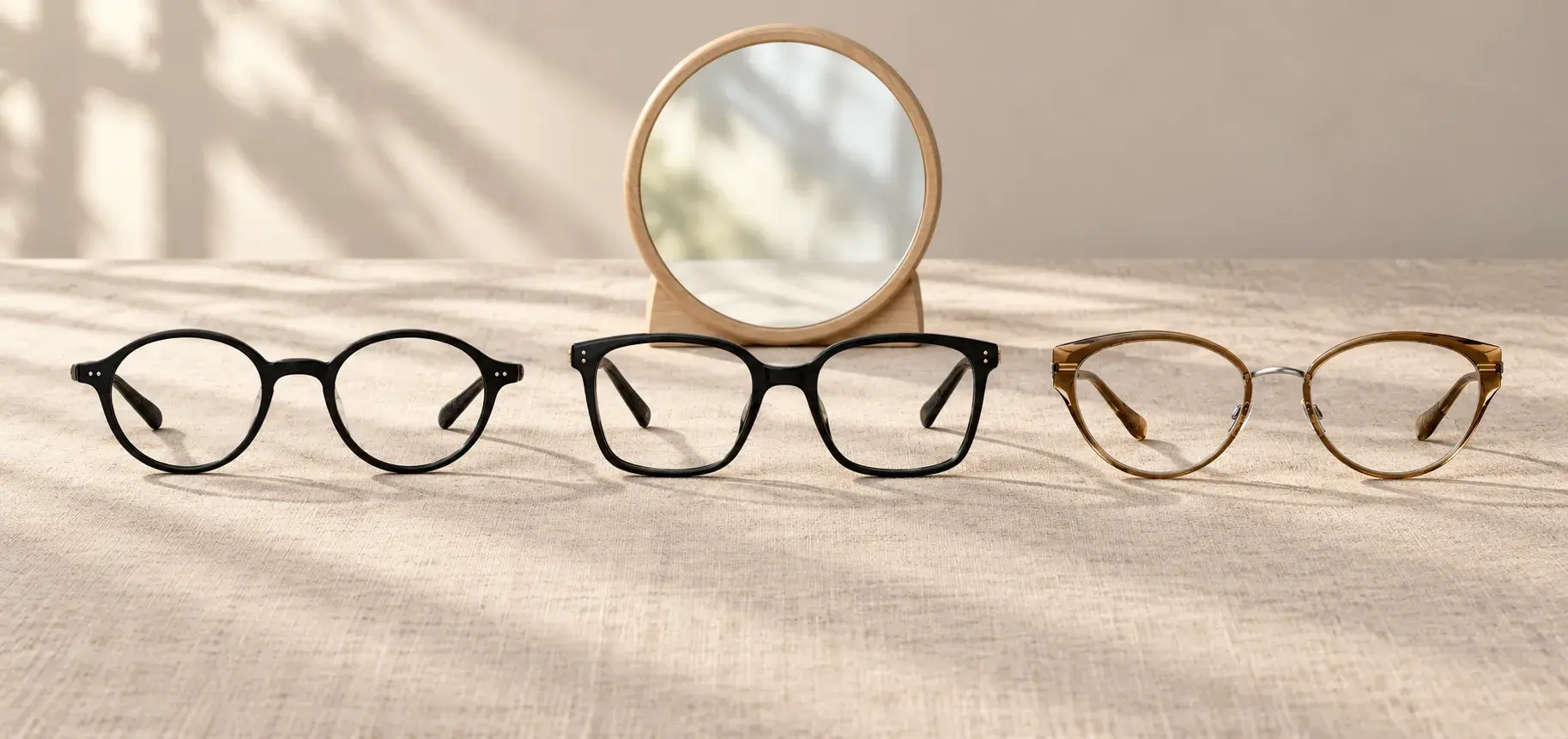

Pure Titanium Glasses Frames in Vietnam: A Buyer’s Guide
Updated: 22 October 2026
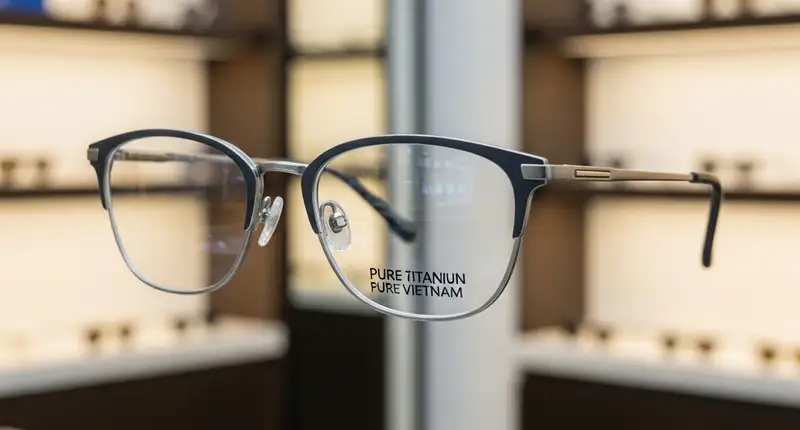
If you are shopping for pure titanium glasses frames in Vietnam, you are probably after more than a nice-looking material. You want a frame that is light on your nose, holds up in heat and humidity, and does not irritate sensitive skin. This guide explains what “pure titanium” actually means, how it compares with titanium alloy, how to check what you are buying, and what prices to expect.
If you wear glasses every day, the frame material makes a bigger difference to comfort than most people expect, so it is worth understanding before you pay a premium for it.
Why choose pure titanium frames for everyday wear

A frame that feels fine for ten minutes in a shop can start pressing on your nose or behind your ears after six to eight hours. That is the main reason people look at titanium: it lets a frame be strong while staying very light.
Pure titanium is a high-purity metal that is lightweight, corrosion-resistant and stable over time. Standard metal frames are often made from nickel alloys, stainless steel, copper blends or plated base metals. These can be heavier, and some of them irritate sensitive skin.
Be aware that some frames are sold with a “titanium color” or “titanium finish” without being made of titanium at all. The word on the label matters, which is why the identification section below is worth reading before you buy.
Who benefits most
- Full-day wearers. If you wear glasses 8–12 hours a day for work, study or driving, a lighter frame means fewer pressure points.
- People with sensitive skin. If metal frames have caused itching or redness before, titanium is generally a lower-risk option than nickel-containing frames.
- People who sweat or spend time outdoors. Vietnam’s heat and humidity are hard on plated metals; titanium resists corrosion much better.
Not everyone needs pure titanium. If you wear glasses only occasionally, a good alloy or acetate frame may be all you need.
Key benefits of pure titanium
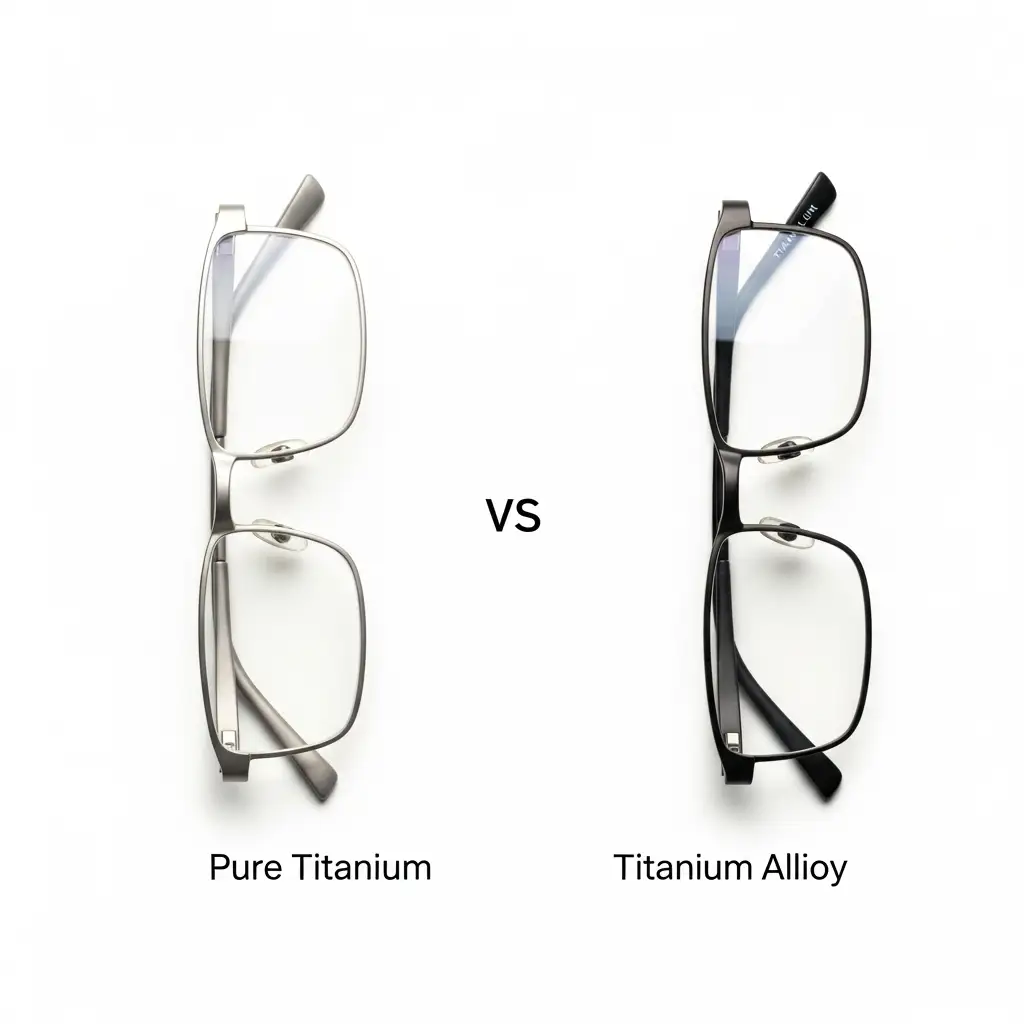
Lower weight, more comfort
Weight is the biggest practical advantage. A lighter frame pulls down less on the bridge of your nose and puts less pressure near the temples. A small difference in grams becomes noticeable when you wear your glasses for ten hours or more.
Pairing a light frame with thinner lenses makes the whole pair feel more balanced. A lighter pair also tends to slide less when you sweat, so you push your glasses back up less often during the day.
Suitable for sensitive skin
Titanium is widely used in medical implants and other products that touch the body because it is highly biocompatible. In eyewear, that means pure titanium is far less likely to cause skin reactions than frames made with nickel-containing alloys. No material is guaranteed to suit every person, but titanium is the usual recommendation for people who have reacted to metal frames before.
Resistant to sweat and humidity
Heat, humidity and sweat break down some metals and plated finishes quickly, leading to discoloration, green marks or flaking. Titanium forms a stable oxide layer that protects it from corrosion. For everyday users that usually means fewer surface problems and a frame that keeps its appearance for longer.
Pure titanium vs titanium alloy
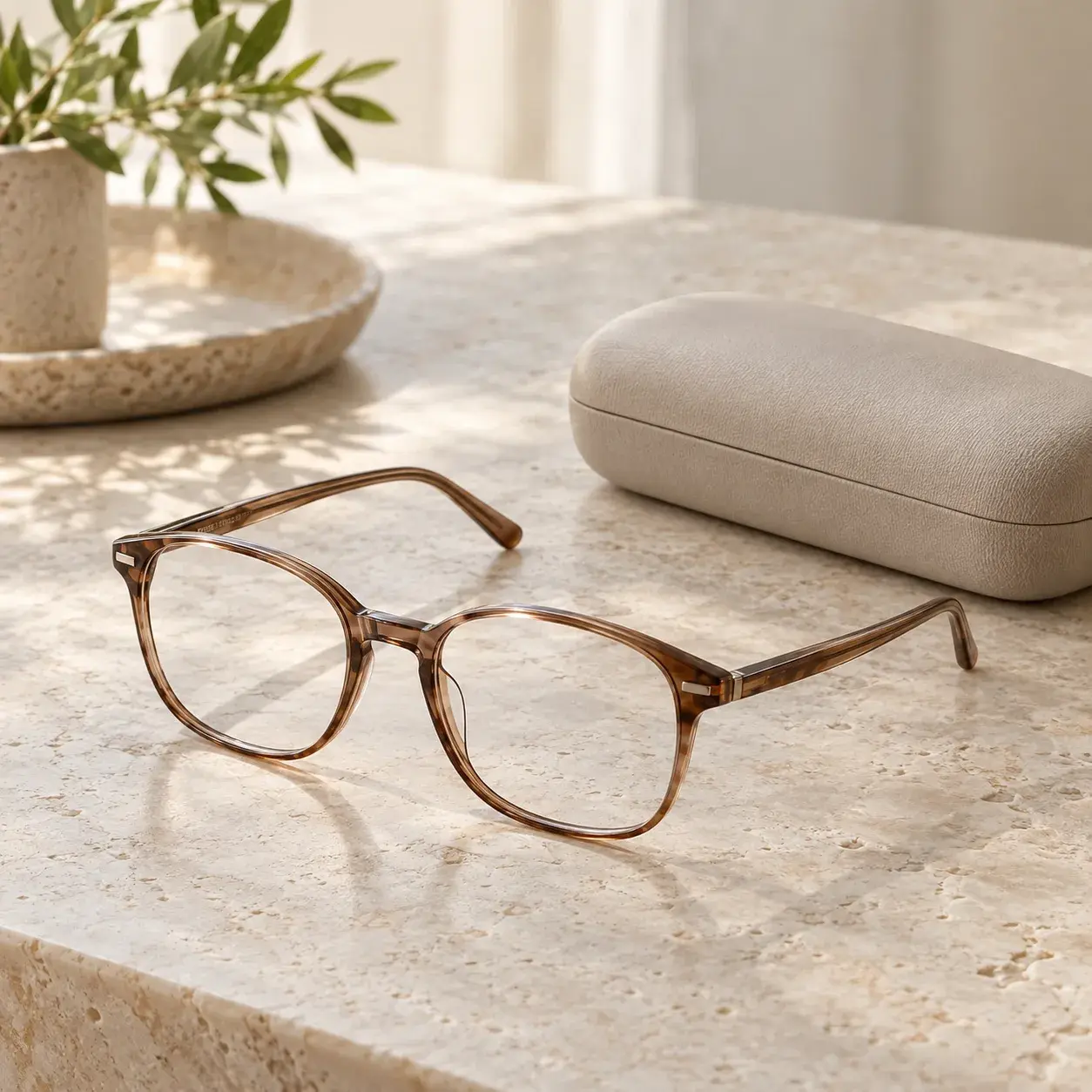
Many frames sold as “titanium” are alloys, so this is the first thing to understand when comparing pure titanium glasses frames in Vietnam. Neither material is perfect for everyone. The choice is about trade-offs between comfort, flexibility and budget.
What the terms mean
Pure titanium frames are made from commercially pure titanium. Titanium alloy blends titanium with other metals to change stiffness, flexibility, strength or cost. You will also see names such as beta titanium and memory titanium. These are alloys designed to be springy and flexible. They can be very good frames, but they are not the same thing as pure titanium.
Weight, flexibility and durability
Pure titanium is usually lighter and is the safest choice for sensitive skin. Alloys such as beta titanium often allow thinner, springier temples and more sculpted shapes, which some people find more comfortable on the face. The quality of an alloy frame varies more with the manufacturer, so finishing and hinge quality matter.
Which one gives better value
A simple rule of thumb:
- If budget is the priority, or you wear glasses part-time, titanium alloy is an easier entry point and still lighter and more corrosion-resistant than basic metal.
- If you wear glasses all day, have sensitive skin, or plan to keep the frame for two to four years, pure titanium usually justifies the higher price.
Not being “pure” does not make a frame bad. An alloy design that fits your face well is a better buy than a pure titanium frame that does not.
How to identify genuine pure titanium frames
Do not rely on marketing words alone. Check the markings, ask direct questions and compare how clearly each seller describes the material.
Markings and labels
Genuine frames usually carry a material marking on the inside of the temple, such as “Pure Titanium”, “Ti-P”, “Titanium” or “β-Ti”. Well-known brands also state the material in their product specifications. A listing that says only “metal frame” or “titanium style” should make you cautious.
Read the description carefully
A good seller separates pure titanium, beta titanium and titanium alloy rather than calling everything “titanium”. Some frames use titanium for only one part, such as the front, while the temples or hinges are another metal. That can be perfectly acceptable, but it should not be priced like a full pure titanium frame.
Red flags
- A “pure titanium” frame priced close to a basic metal frame.
- No model number, unclear photos or no information about the material.
- No warranty or return support.
- Exaggerated claims such as “100% anti-allergy for everyone”.
- Uneven color around joints or rough finishing near the hinges. This does not prove the material is fake, but it is a reason to ask more questions.
Questions to ask before paying
Ask whether the frame is pure titanium or an alloy, and whether the front, bridge and temples are all the same material. Ask what the warranty covers, for example corrosion, solder points, nose pad arms and manufacturing defects. If you buy online, request the frame measurements and a close-up photo of the temple markings.

Choosing a titanium frame style and fit
Fit should come first, because a poorly fitted frame is uncomfortable no matter how good the material is.
Popular shapes
Titanium frames are usually thin and minimal: slim rectangles, soft rounds, ovals and clean business styles. Rectangular and browline-inspired shapes are common choices for office wear. Slim ovals, soft cat-eye shapes and round frames are also popular, and most of these styles are now unisex.
Matching the frame to your face
As a general guide, angular frames add structure to a round face, while softer round or oval frames balance a square face. Oval faces suit most shapes, so focus on bridge fit and lens width. For heart-shaped faces, lighter, lower-profile frames usually look balanced.
Full-rim, half-rim or rimless
Full-rim frames protect the lens edges and give a stronger outline. They are a safe choice for daily wear. Half-rim frames look lighter and suit office settings. Rimless frames are the least visible but need more careful handling.
Your prescription affects the choice too. Thicker lenses usually look neater and sit more securely in a full-rim or half-rim frame. If your prescription is strong, read about high-index 1.67 and 1.74 lenses before choosing a very minimal frame.
What affects the price of pure titanium glasses frames in Vietnam in 2026
Prices vary widely depending on material purity, brand and where you buy. The tiers below are a rough guide for frames only (lenses are extra). They are not a price list for any particular store.
- Entry-level titanium alloy: the most affordable group.
- Mid-range titanium alloy: a step up from entry-level alloy.
- Pure titanium: generally priced higher than titanium alloy, and higher still for premium imported brands.
- Designer or Japanese-made titanium: can cost more again.
Material is only one factor. Design complexity, hinge quality, finishing, brand and import status all affect the price. Premium Japanese and Korean brands often charge more for precise finishing and quality control.
Judge value by cost per year of use rather than shelf price. A pricier frame that you wear comfortably for three years can work out cheaper than a budget frame you replace within a year. Look at weight, nose pad design, hinge smoothness and after-sales adjustment support as well as the brand.

Caring for titanium frames
Titanium is durable, but poor cleaning and storage still cause scratches and misalignment.
- Cleaning: rinse with lukewarm water and a little mild soap, then dry with a microfiber cloth. Avoid household cleaners, which can damage lens coatings and frame finishes.
- Sweat: if you sweat a lot, rinse your glasses at the end of the day to reduce buildup around the nose pads and hinges.
- Storage: keep them in a hard case. Loose in a bag is one of the fastest ways to scratch lenses and bend temples.
- Heat: do not leave glasses in a parked car. The titanium will cope, but lenses, coatings and nose pads may not.
If the frame starts sliding, pinching or sitting unevenly, have it adjusted early. The same applies to repeatedly loose screws or worn nose pads. Professional adjustment is safer than bending a premium frame yourself.
Buying titanium frames at Mắt Kính Đặng Phước Quân in Da Lat
Mắt Kính Đặng Phước Quân has been an optical store in Da Lat since 1991, at 31 Nguyễn Văn Cừ, Phường Xuân Hương, in the city center. The website currently lists around 452 optical frames from brands such as Bolon, Molsion, Seeson, Ray-Ban and Burberry. Materials vary by model, so check the temple markings with staff if you specifically want pure titanium. You can browse the range on the eyeglass frames page.
The eye test is free and walk-in, and single-vision lenses that are in stock are usually fitted in about 20–40 minutes, depending on the prescription and lens type. Progressive and high-index lenses may need to be ordered and take longer. Frames and lenses bought here are covered against manufacturing defects under the store’s warranty policy (frames 6 months or 1 year depending on price; lenses by brand), and cleaning, frame adjustment and screw replacement are free, even for glasses bought elsewhere. See the eye test guide or the prescription glasses guide, or message +84 925 331 668 (Zalo / WhatsApp) with a photo of your prescription to check stock first.
FAQ: pure titanium glasses frames
Are pure titanium frames better than titanium alloy?
Not always, but pure titanium is usually lighter, more corrosion-resistant and safer for sensitive skin. Alloys such as beta titanium can be cheaper and more flexible. Choose based on how long you wear your glasses each day and your budget.
How can I tell if a frame is pure titanium?
Look for a material marking on the temple, such as “Pure Titanium” or “Ti-P”, and check the brand’s product specifications. The seller should clearly state pure titanium rather than vague terms like “titanium style” or “metal”.
Are titanium frames suitable for sensitive skin?
Usually, yes. Titanium is highly biocompatible and far less likely to cause reactions than nickel-containing frames. If you have a known metal allergy, check that the whole frame, not just the front, is titanium.
How much do pure titanium glasses frames cost in Vietnam?
Prices vary by material, brand and finish: titanium alloy frames are generally priced below pure titanium frames, and premium brands cost more again. Lenses are extra. Ask for a quote for the frame you want.
Are titanium frames good for Vietnam’s hot, humid weather?
Yes. Titanium resists corrosion from sweat and humidity much better than most standard metals and plated finishes, which makes it practical for daily wear in Vietnam.
Is it safe to buy pure titanium frames online?
It can be, if the listing gives the exact material, measurements and model number, and the seller offers clear warranty and return terms. Ask for a close-up of the temple markings before you order.
More
Need to ask before an eye test?
Message us on WhatsApp or Zalo, and the store will answer for your case.