





Transitions GEN 8 lenses in Da Lat: a practical guide
Updated: 3 November 2026
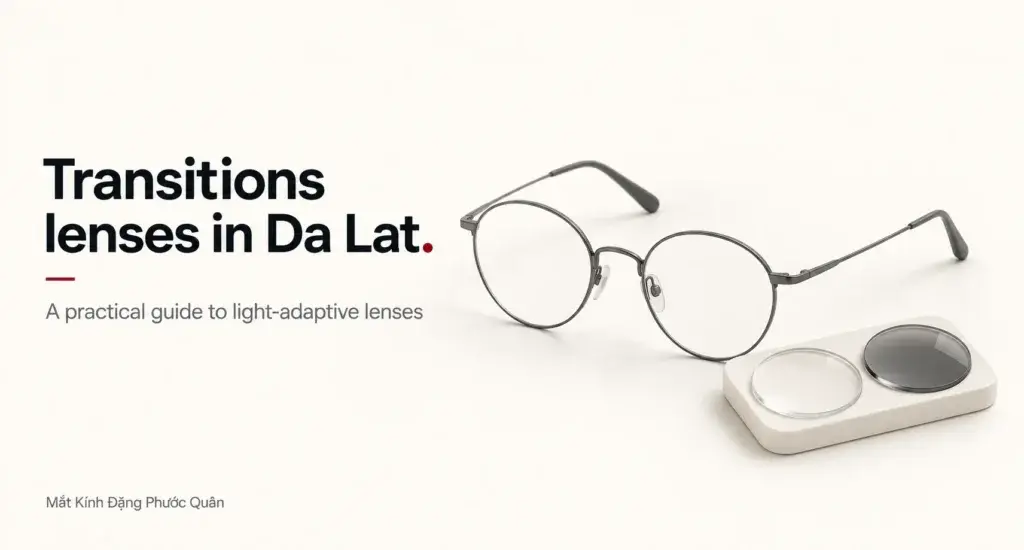
If you are thinking about Transitions Gen 8 lenses in Da Lat for school, work and getting around outdoors, you are not the only one. Color-changing lenses interest many people in Da Lat because the weather changes fast during the day, from a chilly morning to strong midday sun. This article explains how they work, their strengths, what they cost and how to choose what fits your real needs.
Transitions Gen 8 lenses in Da Lat: what to know
When you look into Gen 8 lenses, check whether they change color and whether they suit the UV intensity, your daily routine and the typical weather in Da Lat. This section gives you the overall picture before you spend any money.
What makes Transitions Gen 8 different from older generations
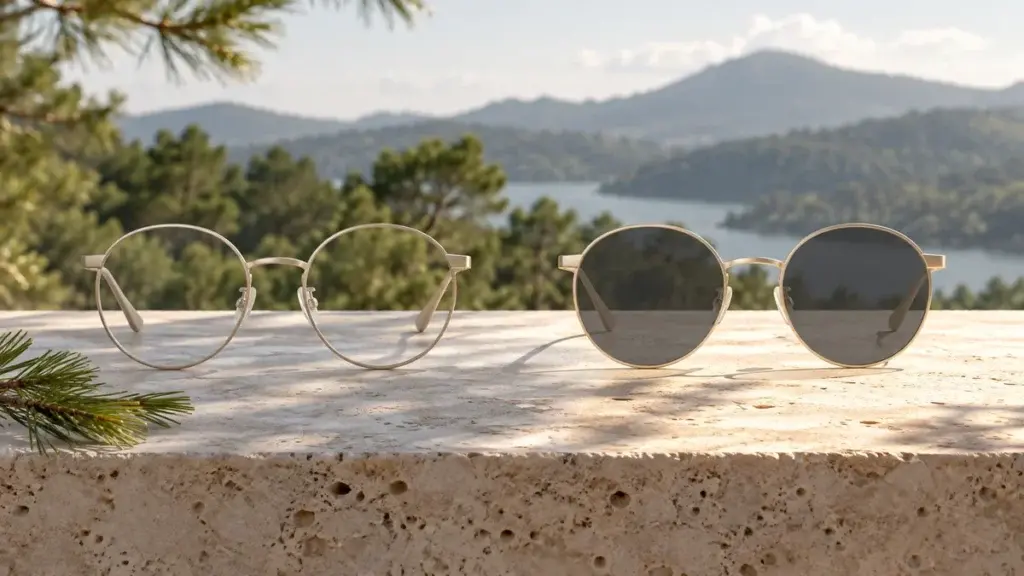
Transitions Gen 8 is a newer generation of photochromic lenses, designed to react faster to UV light and to be more convenient to use every day. Indoors, the lenses are almost clear. Outdoors, they darken to cut glare and make things more comfortable for your eyes.
Compared with older generations or basic photochromic lenses, Gen 8 is designed to change color faster when you keep moving between places. If you often go from the office to the street, or from a café to an outdoor space, this feature can help. A detailed comparison with the newer Transitions Gen S, in Vietnamese, is in Transitions Gen S và Gen 8: so sánh tròng đổi màu Essilor.
The appeal of Gen 8 is that you have one pair of glasses you can use for almost the whole day.
Do not expect color-changing lenses to fully replace dedicated sunglasses in every kind of harsh sun. Still, for most everyday needs in the city and on the plateau, they balance convenience with glare reduction.
How photochromic technology adapts to changing light
Photochromic lenses work by reacting to ultraviolet light. When UV increases, the molecules in the lens change structure and the lens darkens. When you return to a low-UV environment, the lens gradually clears.
Keep in mind that cool weather does not mean low UV. According to WHO, UV can still affect the eyes and skin even when the sun does not feel harsh. This is relevant in Da Lat, where the cool temperature can make you careless.
Color-changing lenses are useful when you walk outdoors, ride a motorbike for a short trip or sit in open-air cafés. With Gen 8, not having to keep switching glasses is a practical benefit.
Who should consider these lenses in Da Lat
Consider this lens line if you are nearsighted, farsighted or have astigmatism and want a more flexible pair for both indoors and outdoors. Students, office workers, creatives, motorbike riders and travelers staying for a longer period are all good fits.
If you currently use two separate pairs, one prescription pair and one pair of prescription sunglasses, Gen 8 can reduce how often you swap between them. That helps when you move in and out of bright and dark places during the day.
Color-changing lenses suit people who value convenience over fashion.
Why Transitions Gen 8 suits Da Lat weather conditions
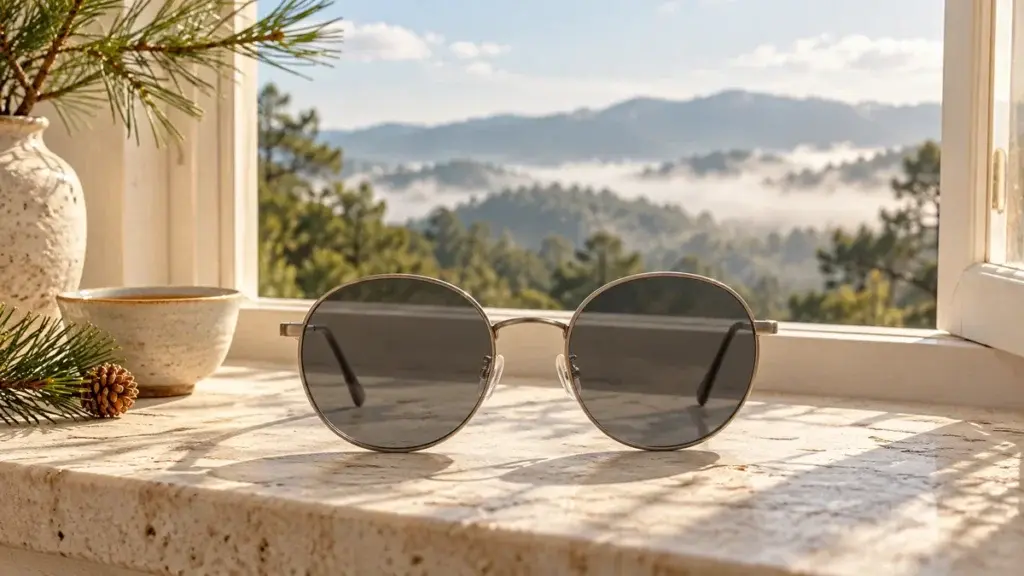
Da Lat has a cool climate, but the light changes quickly across the hours of the day. That change creates a clear need for color-changing lenses, especially if you want to reduce glare without carrying two pairs of glasses. This is why Gen 8 lenses are worth considering.
Choosing lenses for Da Lat weather and daily outdoor use
When it comes to lenses for Da Lat weather, look at how you live as well as the specifications. Da Lat has gray mornings, strong midday sun and softer afternoons. A lens that adapts quickly suits that better than an ordinary clear lens.
If you often ride a motorbike, walk around the town center, sit in outdoor cafés or take photos, color-changing lenses help cut glare when you step outside.
UV increases with altitude, so on a highland like Da Lat you still need to think about protecting your eyes from UV, even when the weather is cool.
If it is cold in Da Lat, do you still need color-changing lenses? You may well need them, because how warm or cold it feels does not fully reflect the glare and UV level your eyes are exposed to.
How lenses respond to mist, clouds, and bright UV exposure
Many people think photochromic lenses will not work well when it is cloudy. In fact, clouds do not block UV completely. On days with thin cloud or light mist, the lenses can still darken to some degree.
How dark the lenses get depends on the actual UV, the time of day and where you are standing. So do not be surprised if, on the same day, the lenses tint lightly in the morning and noticeably darker at noon.
This adaptability means you do not have to guess the weather so much.
Comfort for driving, walking, and café-to-outdoor transitions
One of the biggest inconveniences of wearing prescription glasses is constantly changing environments. You sit in a café, step outside to take a photo, then go back into a shop or office. Having to take off your glasses and swap them can interrupt your day.
Gen 8 suits this kind of movement because you keep the same pair on your face most of the time. That convenience is worth a lot if you are busy or often get around the city.
Color-changing lenses mean you carry sunglasses less often, because they already cover many everyday uses.
Key benefits of photochromic lenses in Da Lat
You may hear a lot about technology, but what finally matters is the real benefit when you wear the glasses every day. With a highland climate and a flexible routine, photochromic lenses bring comfort and convenience to many people in Da Lat.
Color-changing lenses for UV protection and visual comfort
Color-changing lenses are worth considering for UV protection if you are often outdoors during the day. They reduce glare and also help protect your eyes from UV during daily use.
When glare is lower, you usually squint less and things feel more comfortable to look at. This helps when you walk or work somewhere with a lot of reflected light.
How much UVA and UVB filtering you get differs by product, so ask clearly about the coating, the origin and the specifications before you buy.
If you work on screens a lot, you can add an anti-reflective coating. According to Transitions, Transitions Signature GEN 8 lenses filter up to 26% of blue-violet light indoors and up to 86% outdoors, tested on grey CR39 and polycarbonate lenses with a premium anti-reflective coating (blue-violet light is 400 to 455 nm). Filtering blue light does not replace UV protection.
Everyday wear and UV protection
If you want glasses with UV protection that you can wear every day with little fuss, Gen 8 lenses are a reasonable fit. You do not need to remember to bring sunglasses every time you go out, especially when your schedule keeps changing.
That is why color-changing lenses suit students and office workers. They need flexibility more than a pair that is too specialized and only works in a few situations.
With Gen 8, the benefit is that you simplify how you use your glasses. The busier you are, the more you notice it.
Reduced need to switch between clear glasses and sunglasses
Switching between clear glasses and prescription sunglasses is always a bit inconvenient. You carry a case, clean more often and sometimes forget the other pair at home or at work.
Color-changing lenses reduce that loop. For most daily activities, one pair is enough from indoors to outdoors.
Of course, if you drive long distances in very strong sun or spend long periods outdoors, dedicated sunglasses still have their place. But for common needs, Gen 8 lenses are a well-balanced solution.
Available lens options and prescription choices
Before you buy, note that Gen 8 comes in several configurations. From simple single vision prescriptions to progressives, and from standard to thinner lens materials, each choice directly affects how the glasses feel and what you pay in total.
Prescription lenses: single vision and progressive
You can get prescription color-changing lenses for many kinds of prescriptions. The most common are single vision lenses for nearsightedness, farsightedness or astigmatism. There are also progressive lenses for people who need to see far and near through one lens.
If you are over 40 or starting to struggle with near vision, progressive lenses may be worth a look. However, they need more careful eye measurement, centering and frame adjustment than single vision lenses.
Discomfort when wearing glasses can also come from wrong measurements or an unsuitable frame. Ask about the eye measurement as well as the price.
Index materials, blue-light options, and anti-reflective coatings
The lens index affects thickness, weight and price. For low to moderate prescriptions, a standard index may be enough. For a high prescription, consider a thinner lens so the glasses are lighter and look better.
An anti-reflective coating is something you should almost always have if you wear glasses every day. If you work on screens for many hours a day, you can also ask about blue-light filtering options; Essilor notes that there is currently not enough research to confirm that blue-light filtering lenses reduce eye strain.
Many cheap packages sound attractive but cut back important coatings. After a few months you may find the surface picks up dirt easily, reflects a lot of light or wears out faster than you expected.
Frame compatibility and style considerations
Not every frame suits color-changing lenses equally. If you have a high prescription, a frame that is too thin or too large can make the lenses thicker and heavier at the edges.
A frame that fits your face, has comfortable nose pads and is well balanced makes for a better experience. These are small details, but they matter a lot if you wear glasses all day.
In looks, Gen 8 appears modern and practical. In its clear state it is still neat enough for school and work; in the sun, the lenses feel like light sunglasses.
Transitions Gen 8 price and value factors
Price is the question people ask most, and the right price depends on more than the first number on the price list. Look at the type of prescription, the lens index, the coatings and the services included to know whether you are buying cheap or buying at the right price.
What decides the price of Gen 8 lenses in Da Lat
Transitions GEN 8 lens prices in Da Lat depend mainly on the lens design (single vision or progressive), the lens index and the coatings you add. The configurations and their listed prices are on the Essilor Transitions Gen 8 product page (in Vietnamese).
A higher index, extra coatings or progressive lenses all raise the total, and a brand-name frame adds to it too, so ask for a quote for your own prescription before you decide.
When you ask for a price, ask for each part to be listed so you do not confuse the lens price, the frame price and the full-set price.
What influences total cost beyond the base lens price
Four main groups of factors affect cost. First, your prescription and the lens design. Second, the lens index. Third, coatings such as anti-reflective and water-repellent. Fourth, the eye test service and aftercare.
If you have high astigmatism or need progressive lenses, the price usually rises noticeably. If you want thinner, lighter lenses for a high nearsighted prescription, a high index will also raise the total.
A small price difference can matter, because differences in coating and finish affect long-term use. That is why you should not choose only on the lowest price.
How to compare premium packages and promotions
When comparing promotions, ask clearly whether they include the eye test, frame adjustment, regular cleaning and coating warranty. A package that costs a bit more but has good aftercare is sometimes cheaper in the long run.
Also check the warranty period and the return policy in case the glasses do not suit you. For higher-end lenses, this matters a lot.
If a shop quotes an unusually low price compared with the general level, ask carefully about origin. Genuine product and sound advice matter more than a small price difference at the start.
How to choose the right Transitions lenses for your needs
To choose the right lens, start from your lifestyle, how long you spend outdoors, how much you use screens and your budget. Looking at it this way makes the decision easier and you are less likely to buy the wrong thing.
Choosing by occupation, travel habits, and screen time
If you are a student or office worker, you usually wear your glasses all day, go outside a few times and use a computer a lot. In that case, color-changing lenses with an anti-reflective coating are a reasonable setup.
If you work outdoors more, often travel by motorbike or like traveling around the highlands, prioritize how well the lens adapts to light and how well it helps filter UV. If you have a high prescription, do not forget to pick a suitable index so the glasses are lighter.
Choosing by your real lifestyle is how you avoid paying for features you do not need or missing ones you do.
When photochromic lenses are better than separate sunglasses
Photochromic lenses suit you better when you keep changing environments and do not want to carry many accessories. They also fit if you like things tidy and want one pair that works from morning to afternoon.
However, if you often drive long distances in strong sun or take part in long outdoor activities, dedicated sunglasses still have an advantage. Sometimes the right choice is to use each in the situation it suits.
For city users who move in and out of many spaces, color-changing lenses are a practical choice. They cover the most common everyday need.
Questions to ask before placing an order
Before you decide, ask five questions. Are the lenses genuine? How long is the warranty? Which coatings does the price include? Are the eye measurement and centering done carefully? If the glasses are not comfortable, what support do you get?
Also ask how long the finished glasses will take and how to check the lenses when you pick them up. A shop that advises well usually explains things in plain terms, does not avoid technical details and does not push you onto a package bigger than you need.
This is a simple way to choose where to buy Gen 8 lenses without being confused by too much marketing.
Where to buy Transitions lenses in Da Lat safely
Buying from the right place is almost as important as choosing the right product. A good shop will measure your eyes properly, advise the right configuration and make the origin clear. That matters especially if you are investing in mid-range to higher-priced color-changing lenses.
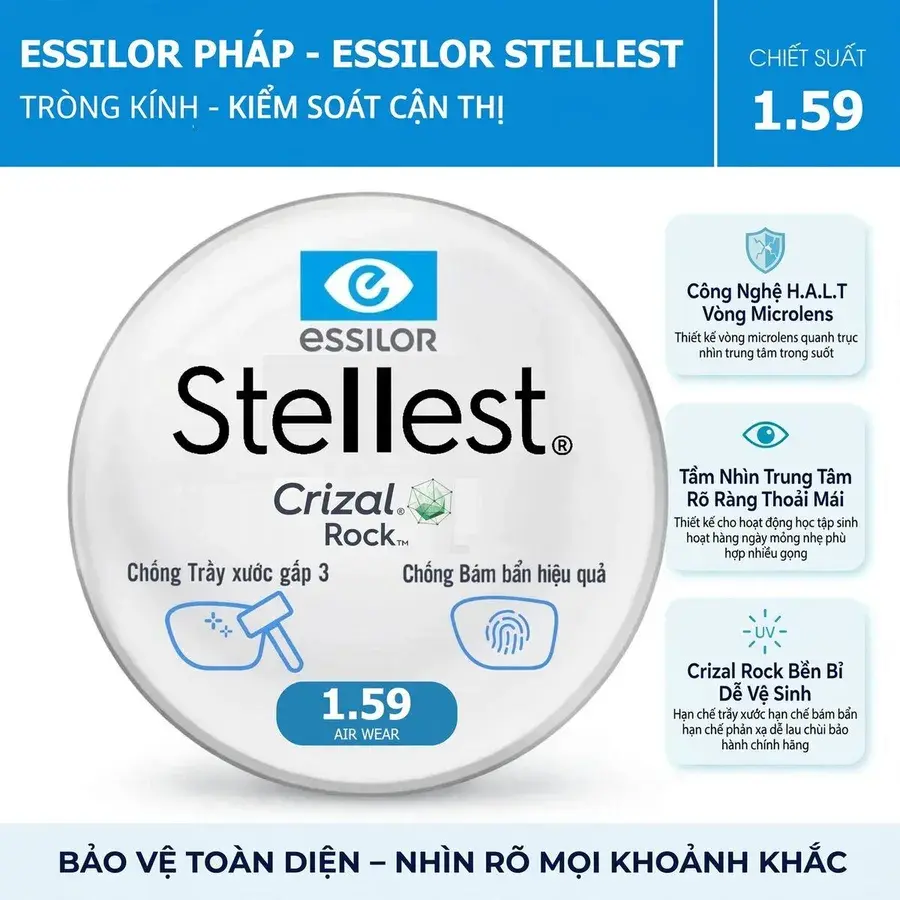
Mắt Kính Đặng Phước Quân orders Essilor Transitions Gen 8 lenses to the customer’s prescription. The Essilor Transitions Gen 8 product page (in Vietnamese) lists single vision lenses in the Transitions Signature GEN 8, Transitions Style Colors GEN 8 and Transitions XTRActive lines, with lens indices from 1.50 to 1.67 and coatings such as Crizal Rock and Crizal Sapphire HR. The lenses are made to order, and the shop confirms the timing when you order. The eye test is free.
What to look for in an optical shop
When looking for a place to buy Transitions lenses in Da Lat, prefer optical shops that measure eyes properly, quote prices openly and are willing to explain where the lenses come from. If you can, choose a place that lets you see sample lenses, the warranty card or specific product information.
Avoid places that give only rushed advice or quote a price very quickly without asking what you really need.
A good experience usually comes from a place that listens and adjusts the frame carefully. That matters as much as the lens brand.
How to verify authenticity, warranty, and lens origin
Ask about the label, the warranty card, the packaging and the origin information. Genuine products usually have clearer identification and more specific warranty terms than unbranded goods.
Also ask them to explain clearly whether you are buying real Gen 8 or another photochromic line. Many people confuse “color-changing lenses” in general with Transitions Gen 8 in particular.
If the shop answers vaguely or cannot show where the lenses come from, it is best to think again.
What a good fitting and eye exam experience should include
A good experience should include a refraction measurement, a check of your viewing habits, advice on a suitable frame and accurate centering. If you get progressive lenses, this step needs even more care.
After fitting, the shop should adjust the temples, nose pads and the grip of the frame to suit your face. It is a small detail, but it decides whether you want to wear the glasses all day.
Some good places also offer regular cleaning and frame adjustment, and remind you to have your eyes rechecked from time to time. Services like these add real value to what you buy.
Care tips to maintain lens performance longer
After you buy, how you use and clean your glasses directly affects how long the lenses last. With proper care, you can keep the color-changing performance and the lens surface stable for longer, instead of wearing out early from very basic mistakes.
How to clean and store transition lenses properly
Rinse your glasses with clean water before wiping, to reduce grit that causes scratches. Then use a soft microfiber cloth and a suitable lens cleaning solution.
When you are not using them, keep your glasses in a hard case. Do not put the lenses face down on a table, and do not leave glasses for a long time in a vehicle compartment that gets very hot.
Common mistakes that shorten lens lifespan
The most common mistake is wiping dry lenses that have dust on them. This easily leaves fine scratches and makes the surface wear faster than you think.
Using a T-shirt, tissue or an unsuitable cleaning liquid can also damage the coating. If you invest in good lenses but clean them the wrong way, real-world performance can drop noticeably after just a few months.
Often the problem lies in how the lenses are used. Good care is the simplest way to protect the value of the money you spent.
When to replace your lenses or update your prescription
If your vision gets blurrier, or you get eye strain, headaches or heavily scratched lenses, it is time to get checked. For regular wearers, a routine eye check is a good habit.
If your prescription changes or the coating is clearly worn, replacing the lenses is better than trying to keep using them. This is especially true if you wear glasses every day from morning to night.
Good everyday results come from all three: the right lens, the right measurement and the right care.
FAQ
Are Transitions Gen 8 lenses worth buying in Da Lat?
Yes, if you need a flexible pair for fast-changing weather and the daytime UV level in Da Lat. They are especially worth considering if you go to school or work, ride a motorbike for short trips and do not want to switch between prescription glasses and sunglasses.
How much do Gen 8 transition lenses cost in Da Lat?
It depends on the lens design, the index and the coatings: single vision lenses cost less than progressive ones, and a higher index or extra coatings add to the price. Ask the store for a quote for your prescription, or browse the photochromic lens range (in Vietnamese).
Do photochromic lenses work on cloudy days in Da Lat?
Yes, because cloudy weather does not mean there is no UV. The lenses can still change color to different degrees depending on the actual UV, how thick the cloud is, the time of day and where you are.
Can I get prescription Gen 8 lenses in Da Lat?
Yes. You can get lenses for nearsightedness, farsightedness, astigmatism and also progressives at many optical shops. What matters is a correct eye measurement, centering and frame adjustment so the glasses are as comfortable as possible to wear.
Where should I buy Transitions lenses in Da Lat?
Choose an optical shop or eye clinic with clear advice, genuine products, an open warranty policy and a proper eye measurement process. This is the safest approach.
Are Transitions Gen 8 lenses enough for UV protection?
They are a good option for everyday UV protection, as long as you choose a well-made lens and a suitable coating. However, in very strong sun or long outdoor activities, you can still consider dedicated sunglasses for extra comfort.
If you want a tidy solution that is easy to wear all day and fits a highland routine, Gen 8 lenses are worth a look. What matters most is that you buy from the right place, get measured correctly and choose the right configuration for your real needs.
More
Need to ask before an eye test?
Message us on WhatsApp or Zalo, and the store will answer for your case.