


No products in the cart.
Authentic Zeiss Lenses in Vietnam Buying Guide
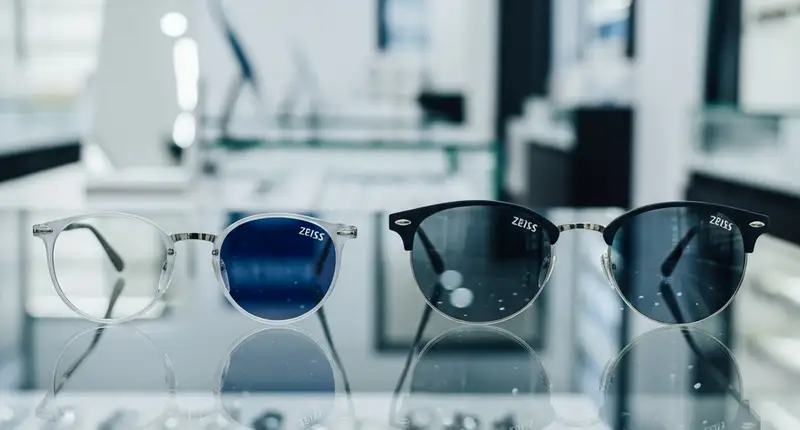
If you are looking for authentic Zeiss lenses in Vietnam, you are probably trying to avoid one problem: paying a premium price for lenses that do not deliver premium quality. That concern is reasonable, because buyers now see many offers online and offline, and not all of them are clear about what is actually being sold.
When you wear prescription lenses 8 to 12 hours a day, “clear enough” is not enough. You need reliable optics, a transparent origin, a proper fit, and after-sales support you can actually use if something goes wrong. A good ZEISS purchase is less about the brand name and more about knowing how to check authenticity, how to compare sellers, and how to choose the right lens design and coating for your daily life.
How to buy authentic Zeiss lenses in Vietnam
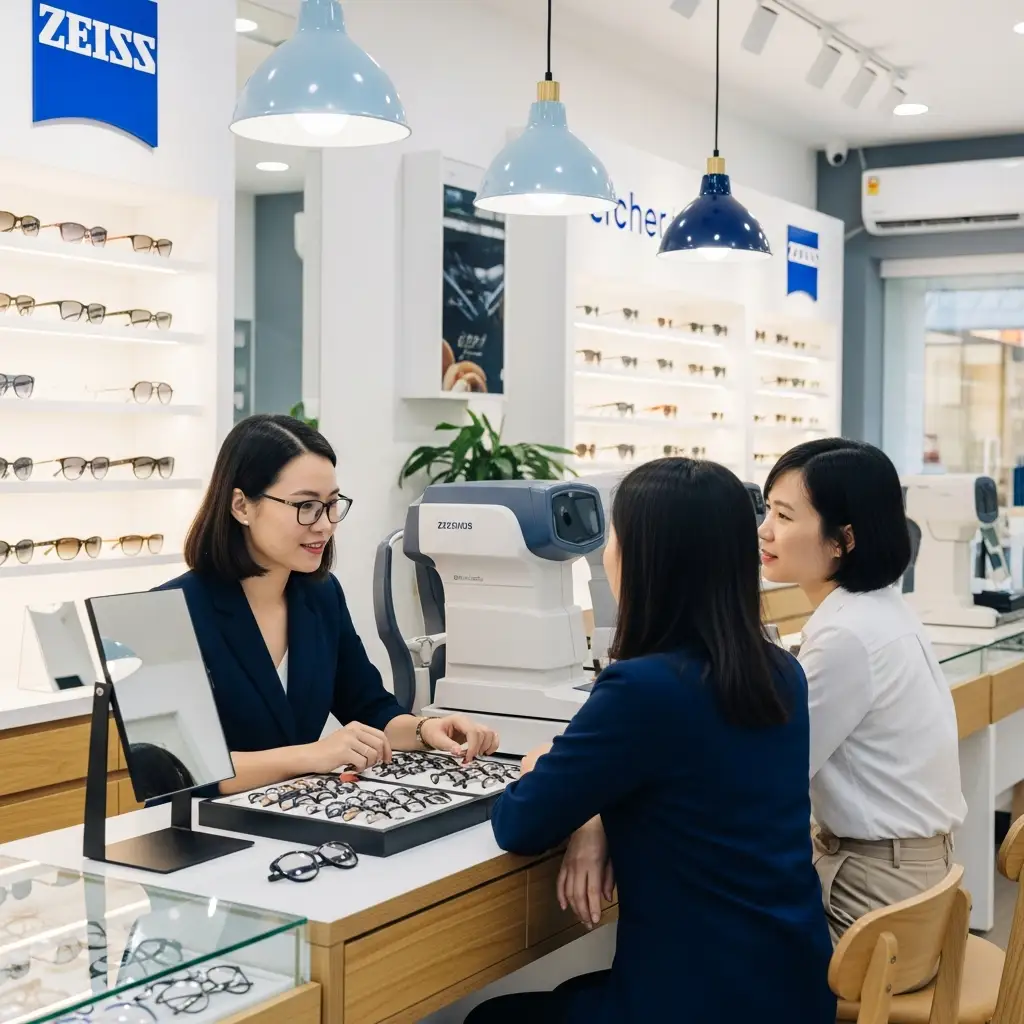
Buying lenses can be confusing because many stores talk about quality but do not explain product origin, lens design or warranty clearly. A simple buying checklist helps you filter out vague offers and focus on sellers who can show what they sell.
Why authenticity matters for vision quality and durability
Choosing genuine lenses protects more than your budget. It also protects your visual comfort, the durability of the lenses, and your right to proper support after purchase.
Genuine lenses are made to consistent manufacturing standards. That matters because small deviations in optical design, coating quality or lens finishing can affect how comfortable your eyes feel after long hours of use.
Many wearers do not notice the difference in the first 10 minutes. They notice it after a few weeks, when glare feels lower, cleaning is easier, and their eyes feel less strained during work or driving.
Who this guide is for in the Vietnam market
This guide is useful if you are buying your first premium lenses, replacing older lenses, or upgrading from basic ones. It is especially relevant if you spend more than 6 hours a day on screens, drive at night often, or have a higher prescription that needs more precise lens customisation.
According to the WHO, uncorrected refractive error remains one of the major causes of visual impairment worldwide, which is why lens accuracy and fitting quality matter.
Premium lenses are not always necessary. But if you depend on your glasses every day, better optics and coatings can make a noticeable difference in long-term comfort.
Common buying mistakes first-time shoppers make
The first mistake is comparing only price. A cheaper quote may refer to a more basic lens design, fewer coating features, or unclear documentation.
The second mistake is ordering with an outdated prescription. Even the best lenses cannot compensate for inaccurate numbers or poor fitting measurements.
The third mistake is not checking the seller. If a store cannot clearly explain the product source, invoice details, lens type and warranty terms, slow down before paying.
Why Zeiss lenses are trusted by many buyers
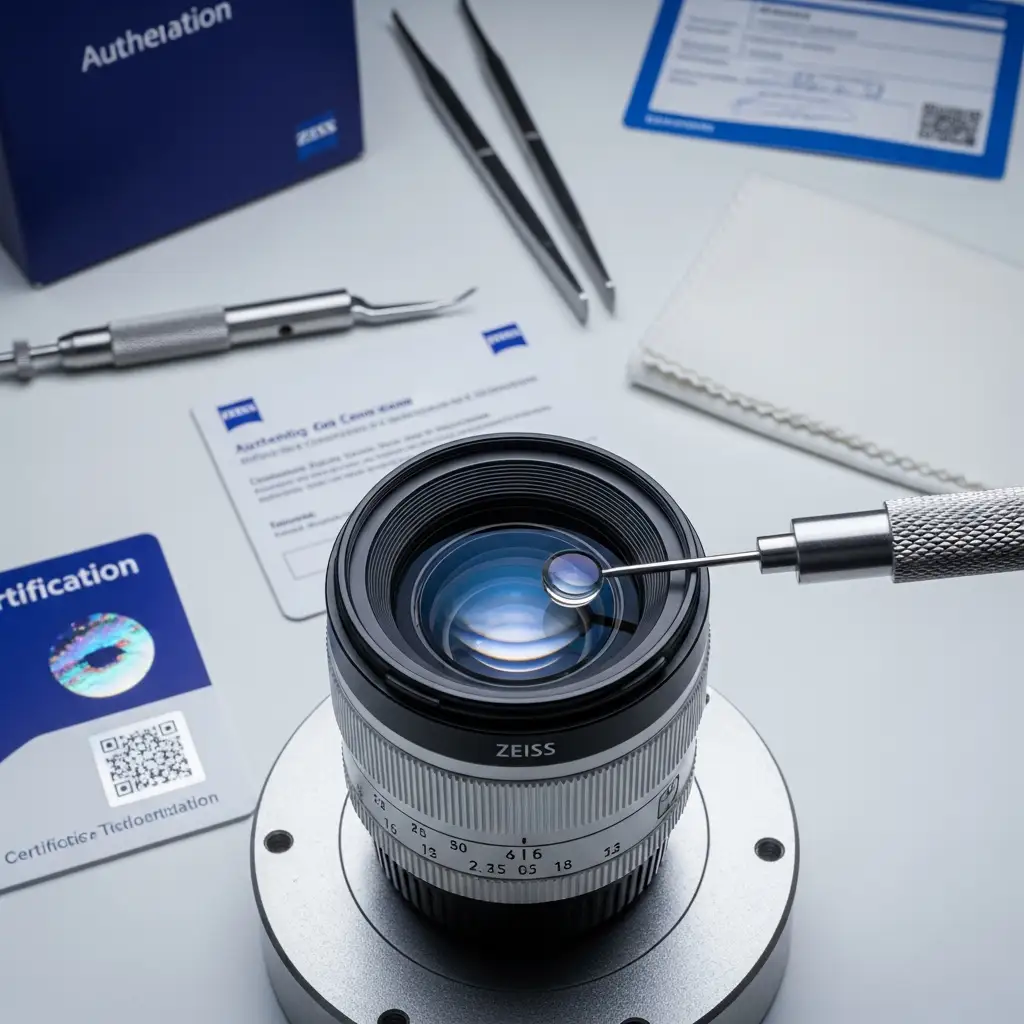
Trust is not built by branding alone. Buyers usually choose ZEISS because they want consistent optical performance, advanced lens technology, and options that match different prescriptions and lifestyles.
Optical performance and everyday visual comfort
ZEISS has long been associated with optical precision, and that matters when you wear lenses every day. A better lens design can improve clarity across different viewing zones and reduce distortion, especially with stronger prescriptions.
Premium lenses are rarely described as “dramatically sharper” every second. They are easier to live with: less eye fatigue during long screen work, smoother focus when switching between distance and near tasks, and fewer annoying reflections under bright indoor lighting.
The difference is often clearest at night. Headlight glare, LED reflections and screen discomfort are common complaints, and a good anti-reflective coating helps reduce them.
Popular lens categories for prescription wearers
ZEISS prescription lenses fall into a few broad categories: single-vision lenses, office or digital-support designs, progressive lenses, and options for thinner or more customised lenses.
Single-vision lenses correct myopia, hyperopia or astigmatism. Progressive lenses are for people who need several focal distances without switching glasses.
Digital-lifestyle lenses are relevant for adults who spend most of the working day in front of screens. Some designs are made to support near and intermediate tasks more comfortably.
Lens material and index also matter. With a high prescription, a thinner lens improves both appearance and comfort, especially in light frames.
Who benefits most from premium Zeiss options
Premium ZEISS options are especially useful if you wear glasses all day, have a demanding job, or switch often between devices and real-world tasks. They also help if you are sensitive to reflections, want easier cleaning, or need more precise lens personalisation.
You may benefit more from premium lenses if:
- You use screens more than 8 hours a day
- You drive at night several times a week
- You have a prescription stronger than -4.00 or significant astigmatism
- You are considering progressive lenses for the first time
- You want better long-term coating durability
Comfort tends to matter more with age and work intensity. What felt good enough at 22 can feel tiring at 35 or 40.
Carl Zeiss Vision, ZEISS Vision Care and “Zeiss lenses”: the same family
Carl Zeiss Vision (today called ZEISS Vision Care) is the eyeglass-lens business of the German ZEISS group, so searches for “Carl Zeiss lens”, “Zeiss Vision lens” and “Zeiss lens” usually lead to the same range of products. It covers single-vision lenses, progressive lenses for presbyopia, and lens coatings such as DuraVision (anti-reflective, scratch-resistant, easy to clean).
Mắt Kính Đặng Phước Quân, 31 Nguyễn Văn Cừ, Da Lat, is an authorized ZEISS dealer and displays its dealer certificates in store. Bring your prescription or take a free eye test, and the staff will tell you which ZEISS lens designs and indexes are in stock and which need to be ordered.
How to verify Zeiss lenses before purchasing
Before you pay, you need proof, not assumptions. Verification should be part of the buying process, not something you think about after the lenses are fitted. A legitimate seller will explain origin, documentation and specifications clearly.
Checking packaging, branding, and product documentation
Start by asking what documentation comes with the lenses. Depending on the product and the seller, you may receive product information, order details, or authenticity-related paperwork tied to your prescription order.
Do not rely on logo printing or verbal assurance alone. Genuine ZEISS lenses should come with a traceable sales process, not just a premium-sounding promise.
Packaging alone never proves authenticity. Counterfeit or unclear goods can imitate branding, so documentation and seller transparency matter more than appearance.
Asking for authenticity proof and invoice details
To verify ZEISS lenses, ask the seller direct questions:
- Is this product sourced through official distribution?
- Can you provide a detailed invoice with the lens model and coating?
- What warranty or remake policy applies?
- Is there documentation linking the order to my prescription?
A proper invoice proves what you actually bought. If it only says “premium lens” or “German lens” without specific product details, be cautious.
The invoice is not just for accounting. You will need it for warranty support or a remake if there is a manufacturing issue.
Verifying lens markings and order specifications
Some prescription lenses, especially progressive and other customised designs, carry laser engravings or identifying markings. Ask the store which markings should be visible and how they correspond to your order.
Also check that the written order matches your prescription, pupillary distance, fitting height, lens index, coating and frame. Small fitting errors can ruin the experience even if the lenses are genuine.
Many poor outcomes come from incorrect measurements rather than bad lens quality. Authenticity and fitting accuracy have to go together.
Questions to ask the seller before payment
Before you confirm any order, ask:
- Which exact ZEISS lens line am I buying?
- Which coating is included?
- What documents will I receive?
- How long will production take?
- What happens if I cannot adapt to the lenses?
- Is there a remake or adjustment policy?
A trustworthy answer is clear and specific. If the seller becomes vague when you ask for details, treat that as a warning sign.
Signs of an authorized Zeiss dealer in Vietnam
Optical stores differ in transparency, fitting skill and after-sales care. Choosing the right retailer is as important as choosing the right lens model, and a reliable dealer should leave you informed, not pressured.
Official dealer credentials and store transparency
An authorized ZEISS dealer should be able to explain its relationship with official supply channels and present product information confidently. You should also see clear store details, business identity and a consistent service process.
Start with the basics:
- Does the store clearly list its location and contact information?
- Does it have a proper eye test and fitting process?
- Can staff explain the differences between lens lines and coatings?
- Can they show order documentation clearly?
A legitimate store does not need to dodge basic questions. Transparency is one of the strongest trust signals.
After-sales support and fitting expertise
Good after-sales support is a major reason people prefer established optical stores. If your prescription changes slightly, the fit feels off, or adapting to progressive lenses takes time, you need someone who can help.
First-time progressive wearers often need frame adjustments or guidance on how to use the lenses. A store with real fitting experience solves those issues more effectively than a seller focused only on closing the sale.
Lens comfort depends on more than the prescription numbers. Frame wrap, pantoscopic tilt, fitting height and pupillary distance all affect real-world performance. A premium lens with a poor fit can still be disappointing, which is why the dealer’s competence matters almost as much as authenticity.
Why professional eye exams and consultation matter
An eye test makes sure your prescription is current and suits how you use your eyes now. Visual demands change over time, especially if your work involves multiple screens, frequent meetings or night driving.
Refractive needs can shift subtly, and differences of 0.25 to 0.50 dioptre can affect comfort for sensitive wearers. If you are ordering premium lenses, do not skip the eye test and fitting.
A good consultation also asks about your working distance, driving habits and screen time, so the lens design matches how you actually use your eyes, not just a printed prescription.
Understanding Zeiss lens coatings and their benefits
Many buyers focus on lens power and treat coatings as optional extras. In reality, coatings strongly affect comfort, glare, cleaning and how long your lenses keep looking good, so understanding them helps you judge value.
Anti-reflective, scratch-resistant, and easy-clean options
The main benefit of a good coating is reduced reflection. Anti-reflective coatings improve clarity, reduce distracting glare, and make your lenses look clearer in photos and meetings.
Scratch resistance matters because cleaning, storage and dust all cause friction. No coating makes lenses scratch-proof, but better surface protection improves durability over time.
Easy-clean properties are underrated. If you clean your lenses several times a day, a coating that resists smudges, water and dirt saves time and frustration.
Blue light and UV-related protection features
Blue-light features are popular with office workers and students who use screens for long periods. Marketing claims vary, but many buyers choose them as part of a lens package suited to screen-heavy routines.
UV protection matters in bright outdoor conditions. The level of protection depends on lens material and product design.
Not everyone needs to pay for every coating. Match upgrades to your real lifestyle instead of stacking features you may never use.
How coatings affect clarity, maintenance, and comfort
If you work in air-conditioned offices, move between indoors and outdoors, or drive often, coatings make a practical difference every day. Reduced glare and easier cleaning are usually the most noticeable benefits.
Wearers usually appreciate a good coating in three situations:
- When night glare feels less harsh
- When lenses stay clean for longer
- When surface wear appears more slowly after months of use
Zeiss lens warranty and after-sales support in Vietnam
Ask about warranty before you buy, not after a problem appears. You need to know what the seller covers, which documents to keep, and how support works in practice.
What warranty terms usually cover
Warranty terms for ZEISS lenses in Vietnam vary by seller, lens line and local service policy. In general, they may cover manufacturing defects, coating problems under defined conditions, or remakes in eligible cases.
Warranty does not usually mean unlimited replacement for all damage. Accidental breakage, improper cleaning or misuse may not be covered.
Always ask for the terms in writing. Verbal promises are not enough for a premium purchase.
Documents to keep after your purchase
Keep these after purchase:
- Detailed invoice
- Copy of your prescription
- Lens order details
- Warranty card or policy document, if provided
- Store contact information
These documents prove exactly what you ordered and make it easier to request support if a lens defect or fitting issue appears later. Many support delays happen because buyers cannot show the original lens model, coating or purchase date.
How to handle defects, adjustments, or replacement requests
If you notice coating peeling, unexpected discomfort, or a mismatch between what you ordered and what you received, contact the seller quickly. Do not wait months hoping the problem will disappear.
Explain the issue clearly and bring photos, the invoice and your order documents. If the problem is adaptation, ask whether a frame adjustment or a re-check of the measurements is needed before assuming the lenses are defective.
Some issues are solved with a frame adjustment rather than a full remake. A good store will help you find the real cause.
Where to buy Zeiss prescription lenses in Vietnam
You can buy through independent optical stores, chains, clinics or online-assisted orders. Convenience should never replace verification: accuracy and legitimacy come first.
In-store purchase versus online inquiry or reservation
Buying in store lets you have an eye test, frame fitting and measurement checks in one place. That is usually the safest route for complex prescriptions, progressive lenses or first-time premium buyers.
Online enquiries are still useful: you can compare models, ask for quotes and confirm availability before visiting.
Use online contact to gather information, not to skip the fitting. Prescription lenses made to order are not an off-the-shelf product.
What to check before placing a custom prescription order
Before you place an order, confirm that:
- Your prescription is current
- Your pupillary distance is measured correctly
- The frame suits your lens type
- The coating is clearly specified
- Delivery time and remake policy are written down
This is especially important for progressives and higher prescriptions. Even excellent lenses underperform if the frame and fitting measurements are wrong.
Also ask whether the store will guide you through adaptation. Some premium lens types need a short adjustment period, and good guidance helps a lot.
How pricing varies by lens design and coating package
Price differences come from lens design complexity, material index, coating tier and level of customisation. That is why one ZEISS quote can be much higher than another even when both are genuine.
An advanced progressive design can cost significantly more than a basic single-vision lens. Premium coatings and thinner materials also add cost.
Price gaps of 20% to 50% between packages are not unusual once you compare index, coating and design. Compare specifications, not just headline numbers.
Mistakes to avoid when comparing Zeiss lens offers
A low quote is tempting, especially when several stores say they sell the same brand. If you compare offers without checking specifications, documentation and service, you risk choosing the wrong product for the wrong reasons.
Red flags in unusually cheap promotions
If a deal is dramatically cheaper than other offers, pause and investigate. A low price may reflect basic specifications, old stock, missing service or unclear sourcing.
Warning signs include:
- No exact lens model listed
- No coating details
- No written warranty terms
- Pressure to pay quickly
- Vague answers about authenticity
A difference of 5% to 10% between stores can be normal. A difference of 30% or more deserves careful questioning.
Why incomplete prescriptions lead to poor outcomes
A lens order is only as good as the measurements behind it. With an old prescription or skipped fitting measurements, even genuine lenses can feel uncomfortable.
This is common with online-only orders. Sphere and cylinder numbers are not enough; pupillary distance, fitting height and frame shape matter just as much. Often the brand did not fail; the ordering process was incomplete.
Comparing total value instead of headline price
Compare the total value:
- Product authenticity
- Lens design quality
- Coating package
- Measurement accuracy
- Adjustment support
- Warranty service
A slightly higher quote may give much better long-term satisfaction. If you wear the lenses every day for 1 to 3 years, comfort and service matter more than a small upfront saving.
Final checklist for choosing the right Zeiss lenses
To decide, confirm four things before ordering: an accurate prescription, a legitimate seller, the right coating, and clear warranty support.
Prescription, frame, and lifestyle fit checklist
Before buying, confirm that:
- Your prescription is recent
- Your frame suits your lens type and thickness
- Your daily routine has been considered in the lens choice
- You know whether you need single-vision, digital-support or progressive lenses
If you work long hours on screens or drive often at night, say so during the consultation. Lifestyle details affect which lens will feel best.
Authenticity and dealer verification checklist
Quick verification list:
- Ask whether the store is an authorized ZEISS dealer
- Request a detailed invoice with lens model and coating
- Ask what documentation confirms the lenses are genuine
- Check that the order details match your prescription exactly
A reliable seller answers these questions without hesitation. If not, keep looking.
Warranty and after-sales questions to confirm
Before payment, ask:
- What does the warranty cover?
- Which documents must I keep?
- Is there a remake policy?
- Who do I contact if adaptation is difficult?
- How long does support take?
Clear answers in writing put you in a much stronger position.
Buying ZEISS lenses at Mắt Kính Đặng Phước Quân in Da Lat
Our store is at 31 Nguyễn Văn Cừ, Phường Xuân Hương, Đà Lạt, open daily 09:00–21:00. The eye test is free and walk-in, no appointment needed (more about the eye test). ZEISS lenses are ordered to your prescription; they are not listed on our website yet, so ask in store or send a photo of your prescription by Zalo or WhatsApp to +84 925 331 668.
For glasses made at the shop, there is a 30-day prescription adaptation guarantee and a 1-year warranty against manufacturing defects for frames and lenses. If you are comparing brands, see Essilor vs ZEISS and our lens catalogue.
FAQ
How can I tell if Zeiss lenses are authentic in Vietnam?
Check that the seller is a transparent retailer with clear business information and product knowledge. Then ask for a detailed invoice, order documentation and lens specifications, and ask how the lenses are sourced through official distribution. Do not rely on packaging or logos alone; documentation, seller credibility and accurate order details are much stronger indicators.
Where can I find an authorized Zeiss dealer in Vietnam?
Start with official ZEISS channels or optical stores that clearly explain their sourcing and service process, then check their credentials, fitting experience and after-sales support before ordering. An authorized dealer should be able to discuss lens lines, the consultation steps and support policies clearly.
Do Zeiss lenses in Vietnam come with a warranty?
Usually yes, but the exact terms depend on the seller and lens type. Warranty support typically covers manufacturing defects, certain coating issues, or remakes under defined conditions. Keep your invoice, prescription and any warranty documents; without them, support becomes harder.
What are the main benefits of Zeiss lens coatings?
Reduced glare, better visual comfort, easier cleaning and better surface durability. Some coatings are designed for screen-heavy routines or bright conditions. The right choice depends on your lifestyle; if you use screens a lot or drive at night, coating quality matters.
Can I buy Zeiss prescription lenses online in Vietnam?
You can usually start online with an enquiry, a quote or a reservation. You should still verify the seller, confirm your prescription and have your fitting measurements taken properly in person, especially for progressive lenses or stronger prescriptions.
Why are some Zeiss lens prices much lower than others?
Lower prices may reflect simpler lens designs, more basic coatings, less customisation or weaker after-sales service, and sometimes unclear specifications or questionable sourcing. Compare the full package: lens model, coating, warranty, fitting accuracy and store support.
Xem thêm:
- Vision Test for Foreigners in Da Lat — What to Expect From a 12-Step Professional Eye Exam
- Comprehensive Eye Exam in Vietnam — What to Expect and Why It Matters
- Eye Prescription Translation in Vietnam — How Local Opticians Read Your Foreign Rx
- high index lenses 1.67 1.74 in Vietnam guide
- Photochromic lenses price in Da Lat 2026
Bài viết cùng chủ đề:
ZEISS DuraVision Benefits, Coatings & Price Guide
Essilor vs Zeiss: Which Lenses Are Better?

Handmade Acetate Frames in Da Lat: Smart Buyer Tips
Hoya vs Chemi lenses comparison guide
essilor vs zeiss lenses price in Vietnam guide
Kodak Lenses in Vietnam: Buying from an Authorized Dealer

Hoya Blue Control Lenses in Da Lat: A Practical Guide

Essilor Crizal Lenses in Da Lat: A Buying Guide

Anti Meaning, Uses, and SEO Guide
Anti Meaning: Definition, Uses, and Examples

What Is Scratch? Beginner Guide for Kids
Pure Titanium Glasses Frames in Vietnam: A Buyer’s Guide

Molsion Glasses Frames in Da Lat: Styles, Sizes and Prices
Genuine Oakley in Da Lat: How to Check and Where to Buy

Oakley Sports Sunglasses in Da Lat Buying Guide

Ray in Vietnam: Meaning, Uses & Buying Guide


