





Photochromic lenses price in Da Lat 2026
Updated: 3 November 2026
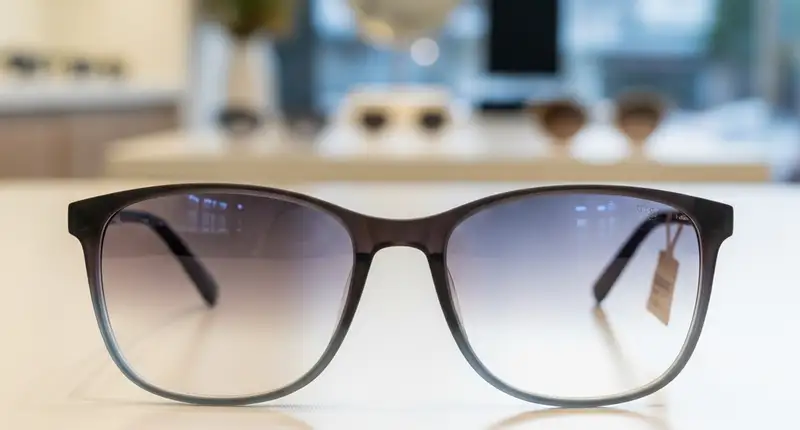
Photochromic lenses are clear indoors and darken outdoors, so one pair of prescription glasses can do the job of both your everyday glasses and a pair of sunglasses. If you are buying in Da Lat, the photochromic lenses price you are quoted depends mostly on lens index, brand, coatings and your prescription. This guide gives realistic price ranges, explains what each upgrade buys you, covers Transitions (including Gen 8), and lists the questions worth asking before you order.
Photochromic lenses price in Da Lat: the short answer

The price of photochromic lenses depends on the lens index, the brand and the coating. A rough breakdown by tier:
- Basic: the entry tier. Suits mild prescriptions and everyday wear on a budget.
- Mid-range: a step up in price. Usually better clarity indoors and more durable coatings.
- Premium: the top tier, for international brands, high-index material or advanced coatings.
At our shop, the photochromic lenses currently listed in the online catalogue start from 662,400₫ per pair. Prices are per pair of lenses, do not include the frame, and can change; see the photochromic lens category for current prices.
When you compare quotes, make sure they cover the same thing. One store may quote a basic lens only, while another includes anti-reflective and water-repellent coatings.
How lens index affects the price: 1.56, 1.60 and 1.67
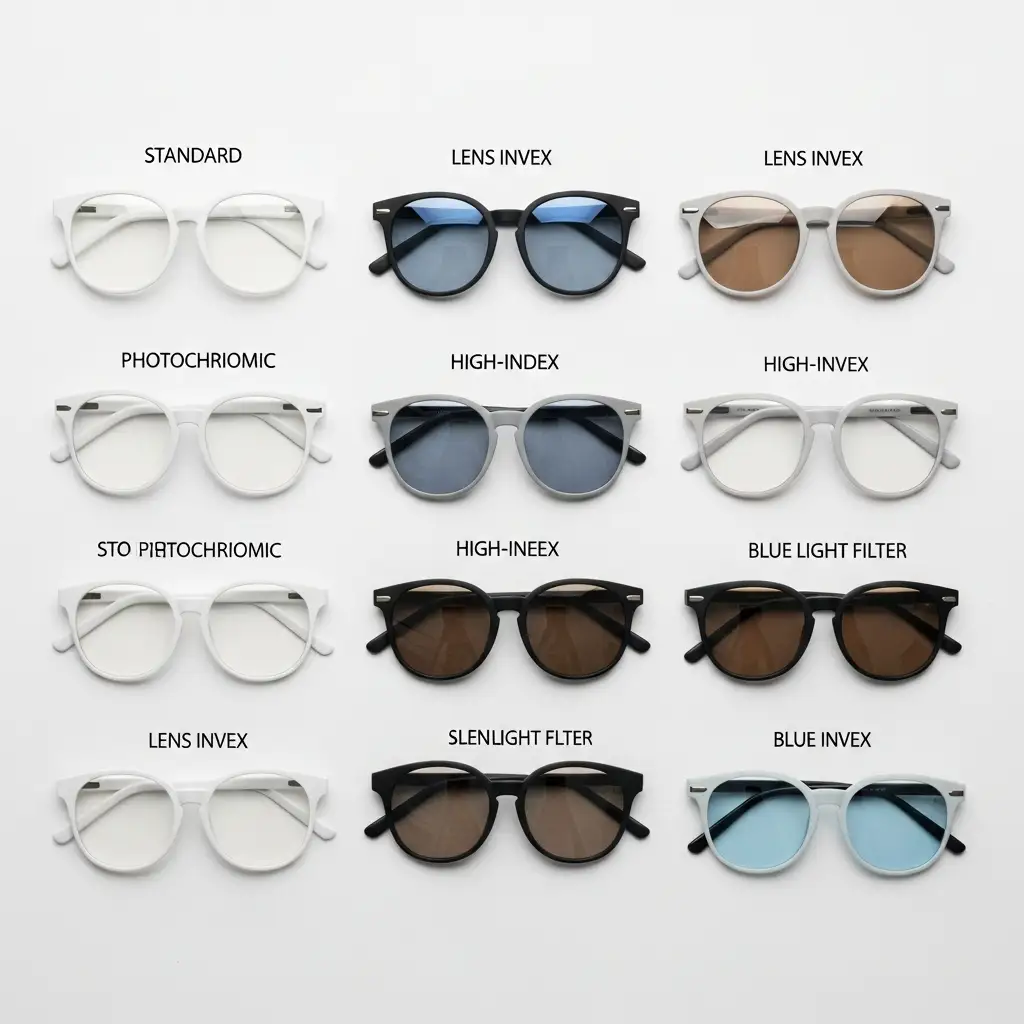
The index (how thin the material can be made for a given prescription) is the single biggest price factor. Typical tiers by index:
- 1.56: the entry index. Fine for low prescriptions and thicker plastic frames.
- 1.60: usually costs more than 1.56. A common balance of price, looks and comfort.
- 1.67: usually costs more again. Noticeably thinner edges for strong prescriptions.
Which index suits your prescription?
As a general guide: below about -2.00, a 1.56 lens is usually enough and the extra thinness of a higher index is hard to see. Between about -3.00 and -5.00, 1.60 often makes the glasses look neater. From about -6.00 and up, 1.67 is worth considering seriously, especially with thin metal or semi-rimless frames.
A strong prescription does not automatically require 1.67. With a small, thick-rimmed frame, 1.60 can still look good and save money. If the budget is tight, a better coating often makes more difference day to day than a higher index. Our guide to high-index lenses in Vietnam covers this in more detail.
Other factors that change the price
Brand and photochromic technology
Budget and house-brand photochromics can cost less per pair than major brands. Branded lenses generally aim for faster darkening and fading, a clearer state indoors and more consistent color. Compare specific lens lines rather than brand names alone.
Color
Gray is the most common choice because it keeps colors natural. Brown gives a warmer view and a bit more contrast in some light. Green and fashion colors exist for some lines but are less common and may cost more.
Lens type
Single-vision photochromic lenses are the simplest to compare. Some lines combine photochromic tint with blue-light filtering. Progressive photochromic lenses for people over about 40 cost noticeably more because of the more complex design; see our guide to progressive lens costs.
Coatings
Anti-reflective, scratch-resistant and water-repellent layers make lenses easier to clean, clearer at night and more durable. They raise the price, but they also account for much of the difference in daily comfort.
Transitions and Gen 8: what to know
Transitions is a well-known brand of photochromic lenses, and many people search for it by name. “Gen 8” (also sold as Transitions Signature GEN 8) is one generation of the brand’s everyday photochromic technology. The manufacturer describes it as darkening and fading back faster than earlier generations and being very clear indoors. Newer generations have since been released, so the exact product on offer depends on what your lens supplier currently provides.
Transitions technology is applied to lenses from partner lens makers, so availability depends on the lens brand, index and design you choose, and on your prescription. If you want Transitions specifically, ask whether the version you want is in stock or needs to be ordered, and compare it with other photochromic lines in your budget. As with any photochromic lens, real-world darkening depends on UV levels and temperature.

UV protection and Da Lat’s changing light
Da Lat is cool, but UV outdoors is still significant, especially at midday. The WHO notes that UV radiation can harm the eyes over time. Most quality photochromic lenses block UV, but ask to confirm UV400 protection.
Light in Da Lat changes quickly: bright sun, then a café, then cloud and mist. That is where photochromics are convenient, since you do not have to swap between prescription glasses and sunglasses. This suits students, office workers and anyone who moves in and out a lot during the day.
Photochromic lenses on a motorbike or in a car
Photochromic lenses react mainly to UV. Car windshields block most UV, and a helmet visor can block some, so the lenses may darken less than you expect while driving or riding. This is normal behavior, not a defect. Photochromics also tend to darken less in heat and more in cold, which is one reason they often perform well in Da Lat’s cool weather.
When separate sunglasses make more sense
Photochromic lenses are not always as dark as dedicated sunglasses. If you drive long distances in strong sun, work outdoors all day, or are very sensitive to light, a separate pair of prescription sunglasses may be the better choice.
How to read a quote in Da Lat
Ask for a quote broken down line by line: lens brand and line, index, photochromic technology, coatings, frame and any fitting work. Then compare the same configuration across stores, for example 1.60 index, gray, anti-reflective, UV400. Without that, quotes for “photochromic lenses” are not comparable.
Questions worth asking:
- Is the price per pair, and does it include the frame?
- Which index and which coatings are included?
- Is it UV400, and how quickly does it typically darken and clear?
- Is the lens in stock or does it need to be ordered?
- What does the warranty cover, and for how long?

Buying photochromic lenses at Mắt Kính Đặng Phước Quân in Da Lat
Mắt Kính Đặng Phước Quân is an optical store in Da Lat since 1991, at 31 Nguyễn Văn Cừ, Phường Xuân Hương, in central Da Lat. The eye test is free and walk-in, and its length depends on the condition of your eyes. Single-vision lenses that are in stock are usually fitted in about 20–40 minutes depending on prescription and lens type; photochromic lenses in a particular index, color or design may need to be ordered and take longer. See glasses turnaround times in Da Lat for details.
The shop is an authorized dealer for Essilor, Chemi and Kodak lenses, and it sells genuine ZEISS, Hoya and Nikon lenses. Frames and lenses are covered against manufacturing defects under the store’s warranty policy (frames 6 months or 1 year depending on price; lenses by brand), and cleaning and frame adjustment are free. Open daily 09:00–21:00; send a photo of your prescription via Zalo or WhatsApp on +84 925 331 668 to check which photochromic options are available before you visit.
FAQ: photochromic lenses price in Da Lat
How much are photochromic lenses in Da Lat?
Photochromic lens prices depend on the index, brand and coating, so ask for a quote for your prescription. Our catalogue currently lists photochromic lenses from 662,400₫ per pair; prices can change.
How different are 1.56, 1.60 and 1.67 photochromic lenses in price?
1.56 is usually the cheapest, 1.60 sits in the middle and 1.67 is clearly more expensive because it is thinner and lighter. The gap depends on the lens line and brand, so ask for a quote for your prescription.
Can I get Transitions Gen 8 lenses in Da Lat?
Transitions availability depends on the lens line, index and prescription. Ask whether the version you want is in stock or needs ordering, and compare it with other photochromic lines.
Do photochromic lenses work on a motorbike?
Yes, but they may darken less behind a visor or windshield because these block UV. For long rides in strong sun, prescription sunglasses may work better.
Do photochromic lenses protect against UV?
Most quality photochromic lenses block UV whether clear or dark, but always confirm UV400 protection for the specific lens.
More
Need to ask before an eye test?
Message us on WhatsApp or Zalo, and the store will answer for your case.