






Progressive lenses cost in Vietnam: 2026 guide
Updated: 3 November 2026
If you are planning new glasses in Vietnam and need to see near, middle and far through one pair, the first question is usually the progressive lenses price. The honest answer is a range, not a single number: a basic progressive pair costs far less than a personalized premium design. This guide explains what those price bands mean, what actually drives the cost, and how to avoid paying for features you will not use.
How much do progressive lenses cost in Vietnam?
Quotes for progressive (multifocal) lenses in Vietnam usually fall into four rough bands. These are per pair of lenses, without the frame, and they move with exchange rates and brand price lists, so treat them as a guide rather than a price list:
- Basic: the entry band. Standard designs for people starting out or wearing glasses part of the day.
- Mid-range: above the entry band. Better designs and more durable coatings; the band most people end up in.
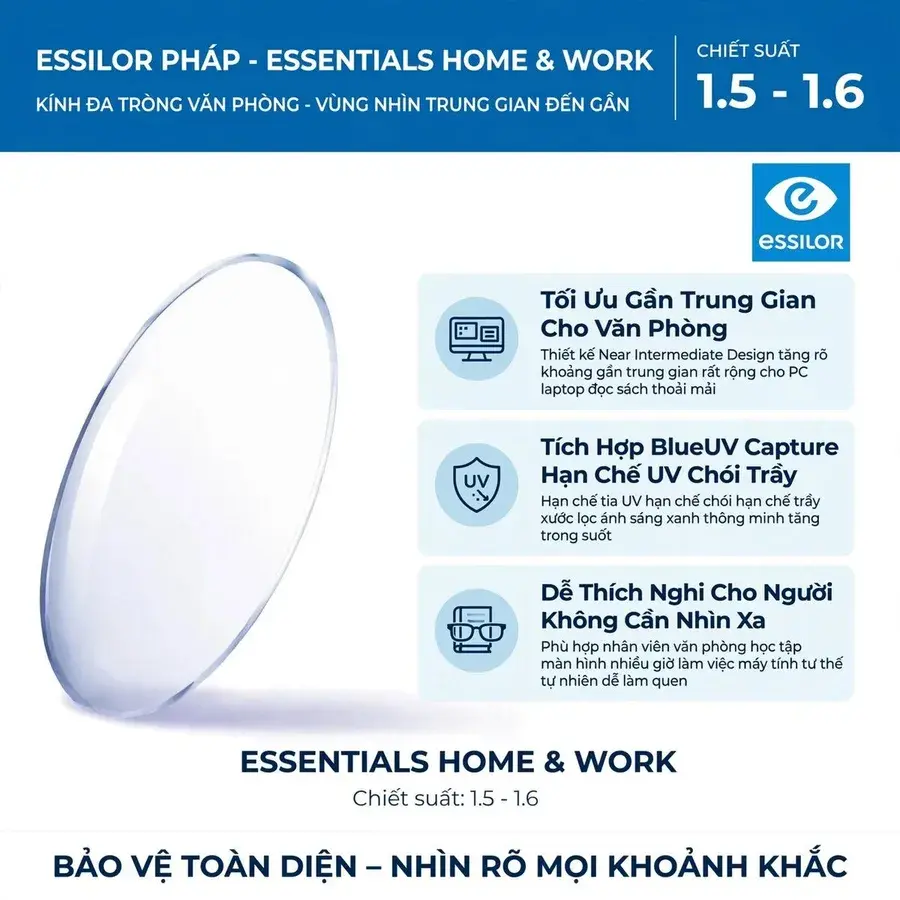
- Office / advanced: above mid-range. Wider intermediate zones for long screen days, or better-optimized all-round designs.
- Premium personalized: the top band, especially with thin high-index material or photochromic tint added.
At our shop, the progressive and bifocal lens lines currently listed in the online catalogue start from 841,600₫ per pair. Prices can change, so check the progressive and bifocal lens category for current figures. Higher-end designs that are not listed online can be quoted when you visit.
Two practical points before comparing any progressive lenses price you are quoted. First, some places quote per lens, not per pair, so always confirm. Second, the same prescription can be priced quite differently from one store to the next, because the quote may or may not include coatings, a thinner material or the fitting work.
What drives the price of progressive lenses
Four things explain most of the difference between a cheap and an expensive pair.
1. Lens design
This is the biggest factor. A standard progressive design works, but the intermediate and reading zones are narrower and the soft blur at the edges is more noticeable. Digital or freeform designs are surfaced more precisely to your prescription, and personalized versions also take into account how the frame sits on your face (wrap, tilt and the distance from lens to eye). The result is usually a wider clear zone and an easier first week, at a higher price.
2. Lens index (thickness)
If your prescription is strong, a higher index such as 1.60, 1.67 or 1.74 keeps the lenses thinner and lighter. That upgrade adds to the price, by an amount that depends on brand and design. For a high prescription, the prescription itself often pushes the price up more than the brand name does. Our guide to high-index lenses in Vietnam explains when thinner material is worth it.
3. Coatings and add-ons
Anti-reflective coating is close to essential: it cuts glare from lights and screens and makes night driving more comfortable. Water- and smudge-repellent layers make cleaning easier. Blue-light filtering is optional: the American Academy of Ophthalmology says digital eye discomfort is not caused by blue light but is linked to long screen time and reduced blinking, and Essilor notes there is not yet enough research to confirm that blue-light filtering glasses reduce eye strain. Photochromic (light-adaptive) tint is one of the more expensive upgrades, and the extra cost depends on the brand.
A very low quote sometimes leaves out a good anti-reflective coating. Lenses with weak coatings scratch and smudge sooner, so ask exactly which layers are included.
4. Brand
House labels and lesser-known brands can be noticeably cheaper than international brands. They can be fine for simple needs, but ask about origin, coating quality and what happens if you cannot adapt. Mid-range lines from established brands are where many wearers get good value; top-tier designs make most sense for long daily wear, strong astigmatism or a large difference between the two eyes.
Choosing the right level for how you use your eyes
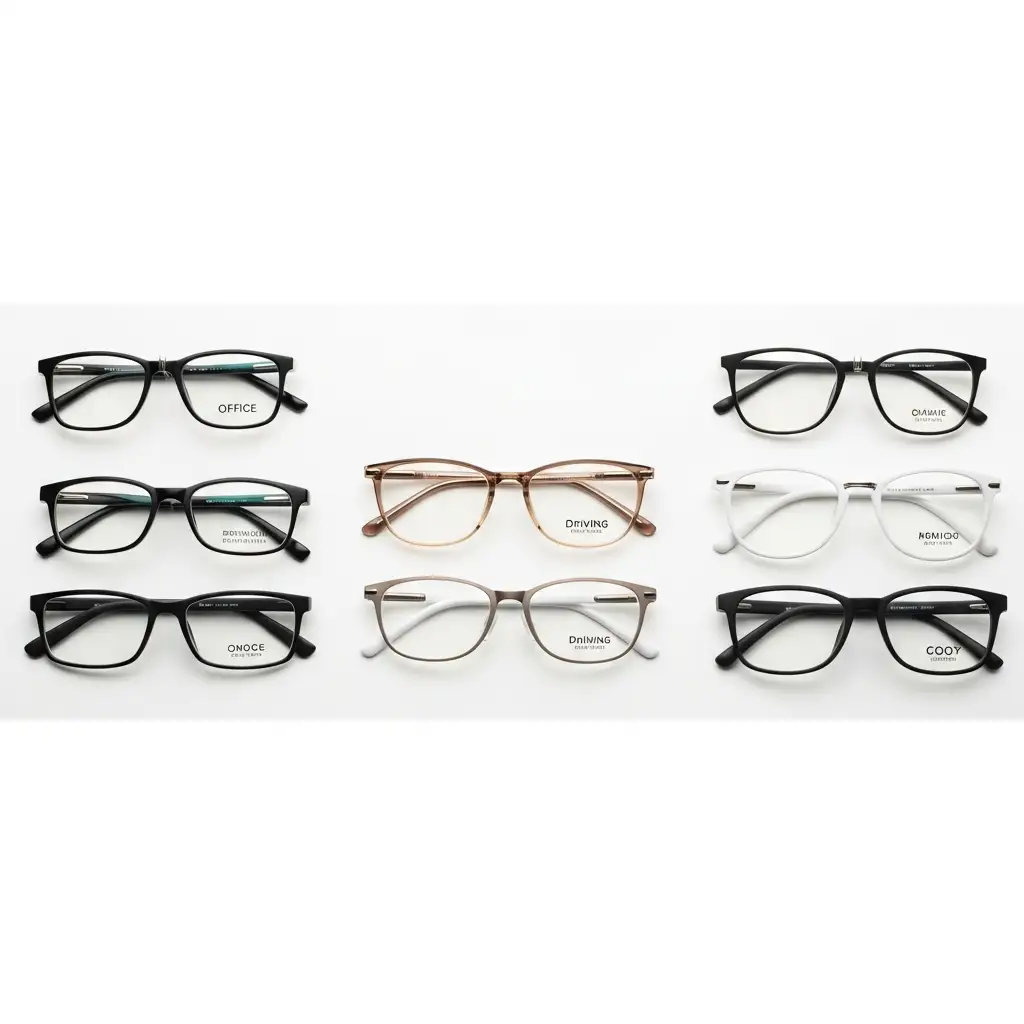
Everyday wear and first-time wearers
If you are moving from single-vision glasses to your first progressives and wear them for part of the day, a basic or lower mid-range design is a reasonable start. You can see far away, read your phone and do light work. Because the zones are narrower, expect to point your nose a little more toward what you want to see.
Office and screen work
Office (or “indoor”) progressives give more room to the intermediate and near zones, which helps when you move between a laptop, a second monitor, a phone and paper. They reduce head tilting at the desk. The trade-off: distance vision is not their priority, so they are not a replacement for a general pair if you drive a lot.
All-round premium and personalized designs
If you wear glasses most of the day, switch constantly between indoors and outdoors, or have been disappointed by a basic pair before, a wider premium design is often worth the extra cost. You are paying for wider clear zones, smoother transitions and less distortion at the sides. Not everyone needs it; plenty of people are comfortable with a well-fitted mid-range lens.
Progressive vs bifocal: the price difference
Bifocals are almost always cheaper up front. They have two zones, distance and reading, separated by a visible line, so they are simpler to make. In Vietnam the gap depends on the lens brand and design.
Progressives cost more because they add a continuous intermediate zone and have no visible line. If you use a computer, look at a dashboard or move between distances all day, that middle zone is what makes them comfortable. Bifocals still suit people who only need distance and reading, rarely use a screen, or have worn bifocals for years and do not want to change. Our Vietnamese-language guide to bifocal vs progressive lenses goes into more detail.
Adapting to progressive lenses
Most people need some time to get used to progressives. A few days to around two weeks is typical; the first days can feel slightly “swimmy” at the edges, and stairs need a little attention. Tips that usually help:
- Wear the new pair consistently from morning to evening instead of switching back and forth with old glasses.
- Turn your head toward what you want to see rather than moving only your eyes sideways.
- Look down through the lower part of the lens to read and straight ahead for distance.
If you still feel dizzy, need to tilt your head a lot, or cannot find a clear reading zone after about two weeks, go back to the shop. The cause is often the fitting height, frame position or prescription, not that you “cannot wear progressives”.
Why the frame and fitting matter as much as the lens
A progressive lens only works well if it is centered correctly for your eyes. The fitting includes your pupillary distance, the fitting height (where your pupil sits in the frame), frame tilt and the distance from lens to eye. An error of a few millimetres in height can make the reading zone hard to find.
The frame you choose matters too. A frame that is too shallow leaves little room for the reading zone, and a strongly curved frame can distort the view. That is why progressives should be fitted with the frame you will actually wear, and why a good optician may suggest a different frame before cutting the lenses.
Hidden costs that raise the progressive lenses price
- Strong prescriptions: thinner high-index material, prism, or a large difference between eyes can raise the price.
- Coating upgrades: better anti-reflective, scratch-resistant or water-repellent layers.
- Photochromic or tinted versions: see our guide to photochromic lens prices in Da Lat.
- The frame: usually priced separately from the lenses.
Ask for a quote broken down by lens design, index, coatings and frame so you can compare like with like. If you are comparing prices across countries, our guide to buying glasses in Vietnam gives a broader picture.
Questions to ask before you buy
- Is the price per pair or per lens?
- Is this a standard, digital/freeform or personalized design?
- What index is the lens, and which coatings are included?
- Does my frame suit progressives, or should I choose another one?
- Are the lenses in stock or ordered, and roughly when will they be ready?
- What happens if I cannot get used to them?
Buying progressives online is possible if you already have a current prescription, your pupillary distance and fitting height, and know which design you need. For a first pair, an in-person fitting is much safer, because the fitting height has to be measured with the frame on your face.
Buying progressive lenses at Mắt Kính Đặng Phước Quân in Da Lat
Mắt Kính Đặng Phước Quân has been an optical store in Da Lat since 1991, at 31 Nguyễn Văn Cừ, Phường Xuân Hương, about a 15-minute walk from the Night Market. The eye test is free and walk-in; the length of the check depends on the condition of your eyes, starting with an objective reading on Nidek equipment followed by a subjective check comparing lenses. Prescriptions written abroad (SPH/CYL/AXIS/ADD) can also be read, and staff use a real-time translation app with foreign visitors. More details are on our prescription glasses in Da Lat page.
The shop is an authorized dealer for Essilor, Chemi and Kodak lenses, and it sells genuine ZEISS, Hoya and Nikon lenses. Progressive lenses are usually ordered to your prescription and fitted to the frame you choose, so they are not same-day; ask for the expected date when you order. Glasses come with a 1-month prescription adaptation warranty, which matters most with a first pair of progressives, plus a warranty against manufacturing defects; the periods and conditions are set out in the store’s warranty policy. Cleaning, frame adjustment and screw replacement are free. The store is open daily 09:00–21:00, and you can send a photo of your prescription via Zalo or WhatsApp on +84 925 331 668 to check options first.
FAQ: progressive lenses price in Vietnam
How much do progressive lenses cost in Vietnam in 2026?
The bands run from basic designs, through mid-range and office or advanced designs, up to premium personalized lenses. Our catalogue currently lists progressive and bifocal lenses from 841,600₫ per pair; prices can change.
Why do quotes differ so much between stores?
Because they often include different things: some quote only a basic lens, others include a better coating, thinner material, personalized measurements or the frame. Ask for a breakdown.
Are progressive lenses more expensive than bifocals?
Usually yes. The extra cost pays for the continuous intermediate zone and the absence of a visible line.
How long does it take to get used to progressives?
Typically a few days to about two weeks. If you still struggle after that, have the fitting and prescription rechecked. Glasses from our shop include a 1-month prescription adaptation warranty, under the conditions of the store’s warranty policy.
Can I get progressive lenses the same day?
Usually not. Progressive lenses are normally ordered to your prescription and fitted afterwards. Single-vision lenses that are in stock are a different case; see same-day glasses in Da Lat.
More
- Eye Prescription Translation in Vietnam — How Local Opticians Read Your Foreign Rx
- ZEISS DuraVision Benefits, Coatings & Price Factors
- Comprehensive Eye Exam in Vietnam — What to Expect and Why It Matters
- Essilor vs Zeiss: Which Lenses Are Better?
- Vision Test for Foreigners in Da Lat — What to Expect From a 12-Step Professional Eye Exam
Need to ask before an eye test?
Message us on WhatsApp or Zalo, and the store will answer for your case.